

More news on this day
Hundreds of air travelers were left scrambling for options in Las Vegas this week as a cascade of April delays and cancellations at Harry Reid International Airport disrupted connections across the United States and Canada.
Get the latest news straight to your inbox!
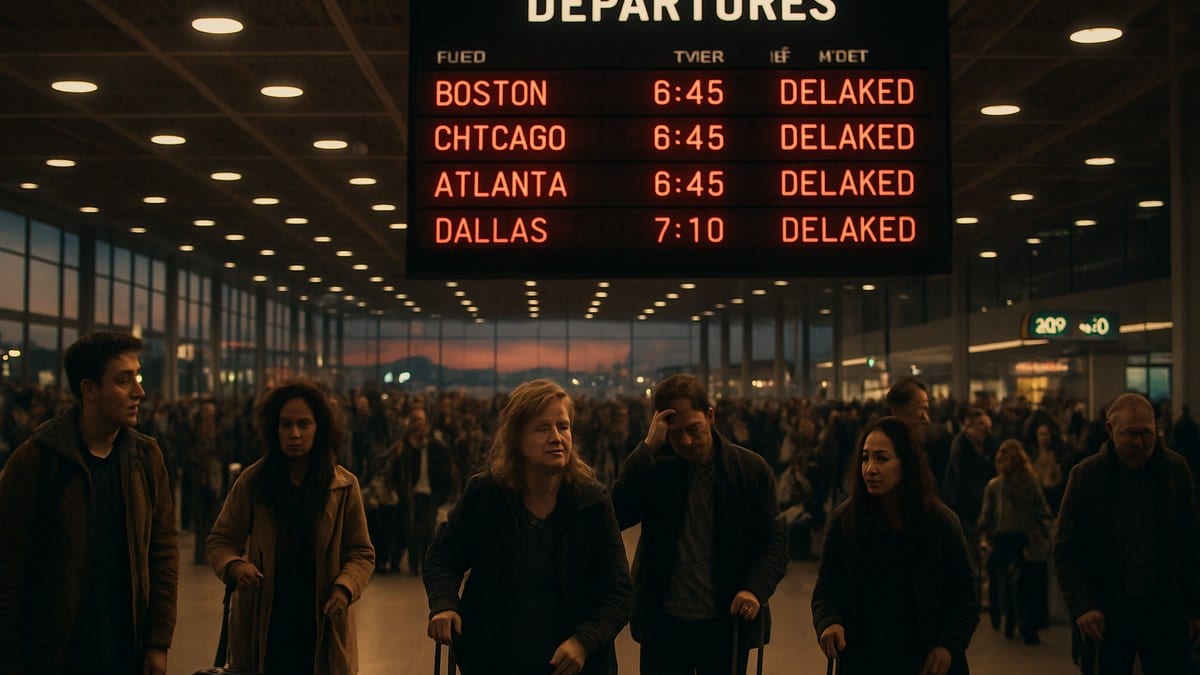
Wave of April Disruptions Hits Las Vegas Hub
Publicly available flight-tracking data and aviation industry reports show that Harry Reid International Airport has emerged as one of the hardest-hit U.S. hubs in a turbulent start to April 2026. On April 5, data compiled by travel-industry outlets indicated at least 124 delayed flights and seven cancellations at the Las Vegas airport, leaving departure boards filled with yellow and red alerts and forcing passengers into long rebooking lines.
The pattern did not ease as the week progressed. Additional analysis of nationwide statistics for April 7 and April 9 highlighted Harry Reid among the top airports for disruption, with further waves of delays and sporadic cancellations affecting departures and arrivals. One dataset focused on April 9 cited more than 3,200 delayed flights and 145 cancellations across major U.S. hubs, with Las Vegas flagged as one of the worst bottlenecks, alongside Atlanta, Denver and Houston.
On April 11, travel trade coverage described another difficult day for Las Vegas travelers, noting more than 250 delayed flights and a small number of outright cancellations at Harry Reid. While the percentage of cancellations remained relatively low compared with overall operations, the volume of delays meant packed gate areas, missed connections and growing queues at customer service desks.
The result for passengers was a sense of rolling disruption rather than a single, clearly defined incident. Travelers who began their journeys on one chaotic day often found themselves caught in knock-on effects several days later, as tight aircraft rotations and crew schedules left airlines with little margin to recover.
Causes Range from Weather to Network Strain
Published coverage of the April disruption wave points to a combination of factors rather than a single point of failure. Weather systems affecting parts of the West and Midwest, congestion in key airspace corridors and ongoing infrastructure work at several major airports all contributed to slower operations and tighter capacity.
Industry analysts note that even when Las Vegas itself is not experiencing severe weather, issues at upstream hubs can quickly cascade. With Harry Reid serving as a major connecting point for flights linking the West Coast, the Mountain West and the Midwest, schedule disruptions in cities such as Denver, Chicago or Houston can ripple into Nevada, filling gates with aircraft waiting for new departure slots or delayed inbound crews.
High travel demand in early April has further strained the system. Harry Reid recently reported that it closed 2025 with nearly 55 million passengers, making it one of the busiest airports in the country. That growth trajectory appears to be continuing into 2026, leaving airport infrastructure and airline schedules operating close to capacity during peak periods.
Consumer-focused travel advisories published this month emphasize that when networks are running near their limits, even relatively minor weather fronts or air traffic control restrictions can produce outsized effects. For Las Vegas, that has meant a series of days where small operational hiccups elsewhere turned into prolonged waiting and missed departures for visitors heading home from the Strip.
Impact on Passengers and Popular Routes
The April disruptions at Harry Reid have hit both leisure travelers and business flyers on some of the airport’s busiest domestic and international routes. Travel industry reports highlight delays and cancellations affecting flights to and from major hubs including Los Angeles, Denver, Chicago, Toronto and New York, creating a chain reaction across North American networks.
For passengers, the most immediate effects have been long lines at rebooking counters, crowded seating areas near gates and a scramble for last-minute hotel rooms when same-day alternatives were not available. Social media posts and online travel forums in recent days describe travelers sleeping in terminal chairs, searching for power outlets and attempting to rearrange onward connections after missing tight layovers.
Some carriers serving Las Vegas have adjusted their schedules or swapped aircraft in an effort to restore reliability, but tight fleet utilization has left limited room for additional backup capacity. When even a small number of flights are removed from the schedule or significantly delayed, the knock-on effects can strand connecting passengers far from their final destinations.
International travelers have faced added uncertainty, particularly those connecting through Las Vegas to Canadian cities such as Toronto or Calgary. Reports indicate that a handful of suspended or rescheduled services on cross-border routes contributed to longer overall journey times and increased risk of missed connections to Europe and other long-haul destinations.
How Travelers Are Coping and What Rights They Have
As the April flight chaos unfolded, passenger-rights organizations and travel advisers have urged flyers to monitor their trips closely and understand the compensation or support they may be entitled to when flights are severely delayed or canceled. Guidance published this month reiterates that U.S. regulations typically provide for refunds when airlines cancel a flight and the traveler chooses not to fly, even when the original ticket was sold as nonrefundable.
However, accommodation, meal vouchers and rebooking policies vary widely by airline and by the cause of the disruption. Some carriers have offered hotel and meal assistance during the Las Vegas disruptions when delays were tied to factors within their control, such as crew scheduling or mechanical issues. When problems were linked to weather or air traffic restrictions, support was more limited, leaving many travelers to rely on travel insurance or personal funds.
Travel advisories circulating in early April recommend that passengers departing Harry Reid or connecting through Las Vegas build in additional buffer time, especially when linking to international flights. Experts also suggest that travelers make use of airline mobile apps, airport displays and push alerts to identify problems as early as possible, improving the chances of securing alternative routings before flights fill up.
For visitors already in Las Vegas, some have chosen to extend their stays by a night rather than risk tight connections amid unstable schedules. Others have turned to alternative regional airports or long-distance driving for shorter routes when airline options became too uncertain or expensive at the last minute.
Airport and Airlines Look Ahead to Busy Spring and Summer
The April turbulence has arrived just as Las Vegas prepares for a packed calendar of conventions, sports events and entertainment drawcards that typically boost passenger volumes at Harry Reid. Airport traffic reports show that 2025 marked one of the busiest years on record, and new international services planned for 2026 are expected to add further pressure during peak travel windows.
In response to broader concerns about crowding and bottlenecks, Harry Reid has recently introduced new tools intended to give travelers more real-time information about conditions inside the terminals. Local coverage this week highlighted that the airport is adding live TSA checkpoint wait times to its website, allowing departing passengers to see estimated screening queues before they arrive.
Aviation analysts note that while tools such as queue-time tracking can help passengers navigate the airport more efficiently, the deeper challenge lies in balancing strong demand with infrastructure and staffing levels that can flex to absorb irregular operations. The recent days of flight chaos in Las Vegas underscore how quickly a busy but functioning schedule can tip into widespread disruption when several stress factors converge.
With spring break traffic still flowing and summer travel on the horizon, observers expect airlines and airport managers to watch Harry Reid’s performance closely. The experience of early April 2026 suggests that travelers using Las Vegas as either a destination or a connecting point may need to plan for greater uncertainty, even on routes that normally run like clockwork.