

More news on this day
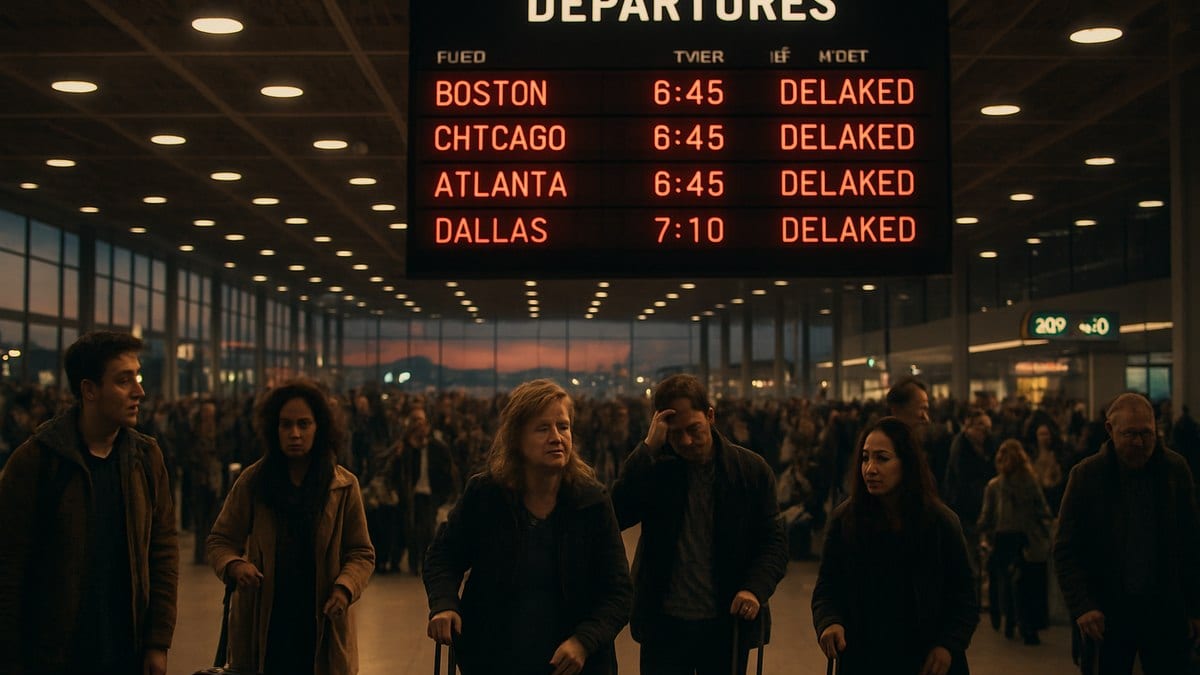
Hundreds of travelers were left sleeping in chairs and lining terminal corridors at Las Vegas Harry Reid International Airport in early April 2026 as a wave of delays and cancellations turned routine departures into overnight ordeals and forced last minute changes to travel plans across the United States.
Get the latest news straight to your inbox!
Spike in Disruptions Turns Busy Hub Into Waiting Room
Publicly available flight tracking data for April 10 and 11 shows Las Vegas among the hardest hit U.S. hubs as spring travel picked up, with Harry Reid International Airport recording well over one hundred delayed departures and a cluster of cancellations in the space of roughly 24 hours. Coverage in aviation trade outlets indicates that one recent snapshot captured more than 250 delayed flights and a smaller number of outright cancellations at the airport, a scale of disruption large enough to strand hundreds in the concourses as aircraft and crews fell out of position.
These operational snags arrived on the heels of an already difficult week for national air travel. Earlier in April, industry reporting highlighted more than 4,700 delays and several hundred cancellations across the United States in a single day, with Las Vegas listed among the major hubs contributing to the totals. That broader turbulence meant there was limited slack in the system when additional issues emerged around Harry Reid, making it harder for airlines to recover quickly or reroute affected passengers.
Visuals shared in local and national coverage show crowded gate areas, with passengers clustered around departure boards and makeshift camps forming near charging stations. Accounts compiled by travel media describe travelers facing missed connections, resort checkouts that no longer lined up with revised flight times, and difficulty securing same day rebookings as remaining seats filled.
For an airport that handled nearly 55 million passengers in 2025, according to recent airport statistics, the early April spike in irregular operations underscores how even a relatively short period of disruption can rapidly overwhelm seating, concessions and ground transport capacity when aircraft across multiple airlines are delayed at once.
Weather, Congestion and Knock On Effects Across the Network
Analysts tracking the nationwide situation in April 2026 point to a combination of unsettled spring weather and tight scheduling as key contributors to the Las Vegas flight chaos. Recent FAA advisory summaries and media roundups list Las Vegas alongside New York, Boston, Philadelphia and several Florida and Midwest cities on weather related delay maps, with low clouds, gusty winds and intermittent instrument flight conditions forcing aircraft spacing on key airways and arrivals.
When those restrictions intersect with peak departure windows out of Harry Reid, airlines must reduce movement rates, which in turn pushes some flights beyond their scheduled slots. Once delays pass a certain threshold, aircraft often miss downstream rotations, tightening the squeeze on available planes for later departures from Las Vegas and other cities. Industry commentary around the April disruptions notes that several airlines, including large U.S. network carriers and low cost operators, were already managing residual issues from earlier weather events in other regions before the latest problems affected flights at Harry Reid.
Because Las Vegas functions both as a destination for leisure travelers and as a connecting point on some domestic and transborder routes, delays there feed into a web of flights to cities such as Los Angeles, Denver, Chicago, Toronto and New York. Travel desk roundups for April 10 and 11 describe a familiar pattern: an initial period of weather or congestion related slowdowns, followed by rolling delays, then selective cancellations as carriers attempt to stabilize schedules for the following day.
Observers note that the knock on effects extend beyond the airfield. Hotels see late arrivals and unexpected extra nights as guests miss outbound flights, ride share prices can spike during late evening surges of stranded travelers seeking last minute rooms, and airport concessionaires face both overcrowding and supply challenges as departure lounges remain full long after peak periods normally subside.
Passenger Experience: From Short TSA Lines to Long Overnight Waits
The timing of the April 2026 flight chaos also created a stark contrast for travelers familiar with Harry Reid’s usually brisk security operation. In the week before the worst of the disruptions, coverage in travel and consumer outlets pointed to relatively modest TSA wait times at the airport, often in the range of single digit minutes during daytime periods, and local discussion forums featured comments from passengers surprised by how quickly they cleared checkpoints compared with other large U.S. hubs.
Once delays mounted, however, the bottleneck shifted from the checkpoint to the gate. Reports indicate that passengers who arrived early and cleared security without incident then faced hours of uncertainty at the concourses as departure times slid repeatedly, sometimes in 30 minute increments, and boarding announcements were pushed deeper into the night. For some, that meant trying to sleep in terminal chairs, nursing meals at airport restaurants well beyond usual dining hours, or venturing back out to nearby hotels at personal expense while monitoring airline apps for updates.
Those traveling with children or tight onward commitments appeared to be particularly affected. Travel blogs and social media posts compiled by newsrooms mention families juggling exhausted kids in crowded seating areas, wedding guests stranded en route to ceremonies in other states, and business travelers watching meetings and conferences slip by as they remained grounded in Las Vegas.
Even so, publicly available data on security operations suggests that TSA wait times at Harry Reid did not mirror the extreme queues reported at some other major U.S. airports this spring. Instead, the experience for many Las Vegas passengers was defined less by long lines at the entrance and more by long, open ended waits once they had already cleared the checkpoint and found their gate.
How Airlines and the Airport Responded
According to published coverage drawing on airline advisories and airport information dashboards, carriers serving Harry Reid responded to the April disruptions with a mix of rebookings, aircraft substitutions and selective cancellations of later flights. Several airlines issued system wide travel alerts that included Las Vegas among eligible cities, allowing passengers on certain dates to change tickets without additional fees or fare differences under specified conditions.
Airport side, recent press materials show that Harry Reid has emphasized tools designed to give passengers more real time information, including the rollout of TSA checkpoint wait time estimates on official digital platforms and monitors. While those initiatives cannot prevent weather or congestion related delays, they are intended to help travelers better plan arrival times at the terminal and reduce uncertainty around one of the most stressful points in the journey.
Observers note that the airport’s large share of leisure traffic can make disruption management particularly complex. Many visitors to Las Vegas coordinate flights with hotel checkouts, event tickets and group trips, meaning that missed or heavily delayed departures can cascade through vacation plans. When hundreds of people suddenly need hotel rooms for an extra night due to flight cancellations, room rates and availability can shift quickly, especially on weekends or during major conventions and sporting events.
Aviation analysts quoted in recent commentary argue that the April episode in Las Vegas illustrates the challenge of operating an already busy hub in a period of increasingly volatile weather and constrained crew availability. While airlines are investing in improved scheduling tools and additional spare aircraft, the events at Harry Reid reinforce that even with those measures, local surges in disruption can still leave large numbers of travelers temporarily stranded.
What April’s Chaos Means for Upcoming Trips
As April 2026 continues, travel industry coverage suggests that the Las Vegas flight chaos will likely serve as a reference point for both airlines and passengers planning for the summer peak. Analysts point out that delays and cancellations at Harry Reid occurred outside the very busiest holiday windows, raising questions about how the system will cope once school breaks and major events draw even more travelers through the desert hub.
For travelers, published advice from consumer advocates and travel planners has taken on a renewed urgency in light of the recent turmoil. Recommendations commonly include booking earlier departures that are less vulnerable to cascading delays, building longer connection times for itineraries that route through Las Vegas or other major hubs, opting for carry on luggage when possible to simplify rebookings, and closely monitoring flight status through official airline and airport channels on the day of travel.
Observers also highlight the value of flexibility. Refundable hotel bookings, backup flight options and travel insurance policies that cover missed connections or extended delays can provide a financial cushion when large scale disruption strikes. Given Harry Reid’s role as both a gateway to Las Vegas and a link in wider domestic and international networks, travelers whose plans depend on tight timing may increasingly weigh these protections as part of their trip budgets.
While flight data in the days immediately after the worst of the April disruption suggests a gradual normalization of operations at Harry Reid, the episode has added fresh evidence to a broader trend. With passenger volumes climbing and weather patterns placing new strains on air traffic systems, even a brief period of flight chaos at a single hub can ripple outward to strand hundreds and unsettle travel plans across the country.