

More news on this day
Hundreds of travelers were left stranded in Las Vegas in early April as a wave of flight delays and a handful of cancellations at Harry Reid International Airport disrupted connections across the United States and beyond.
Get the latest news straight to your inbox!
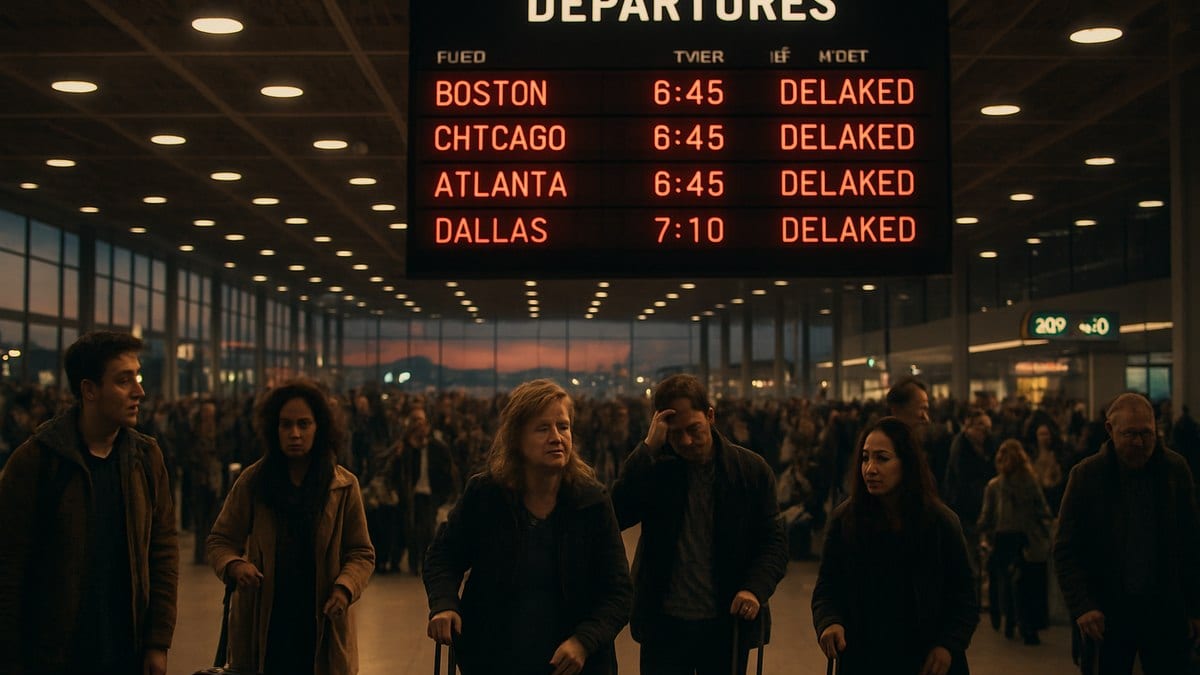
Heavy April disruption at key Las Vegas hub
Flight-tracking data and travel-industry reports indicate that Harry Reid International Airport experienced one of its most difficult days of the year in mid-April 2026, with more than 250 flights delayed and at least a small number canceled on a single day. The slowdown affected both departures and arrivals, creating a bottleneck at the desert hub just as weekend leisure and convention traffic began to build.
Travel-focused outlets tracking same-day operations at major U.S. hubs reported that more than 250 flights touching Las Vegas were delayed on April 11 alone, alongside a limited number of outright cancellations. Earlier in the month, a separate disruption pattern on April 6 had already produced dozens of delays and several cancellations at Harry Reid, signaling a period of heightened instability for passengers using the airport.
The resulting congestion left boarding areas crowded and departure boards filled with rolling time changes. With Las Vegas serving as both a destination for large-scale events and a connecting point for key western routes, the delays quickly rippled onto flights serving cities such as Los Angeles, Denver, Chicago, Toronto and New York.
Observers of airport operations noted that while individual flight problems are a daily feature of the aviation system, the April spike at Harry Reid stood out for the sheer number of affected services and the timing at the start of the busy spring travel period.
Part of a broader early April aviation squeeze
The issues at Harry Reid formed part of a wider pattern of disruption across the U.S. network in early April 2026. Passenger-rights organizations and travel-data firms highlighted April 9 as a particularly difficult day nationwide, with several thousand flights delayed and more than a hundred cancellations across multiple hubs including Las Vegas, Atlanta, Denver, Houston, Phoenix and Washington.
Published coverage has described an aviation system operating with little slack, where schedule changes, minor weather systems and congested airspace can combine to create significant knock-on effects. In that environment, a day of elevated delays at one major hub can quickly spill into the following weekend, especially when aircraft and crews are out of position.
Analysts also point to structural shifts affecting Las Vegas specifically. Recent reporting has noted that overall passenger volumes at Harry Reid have softened slightly compared with previous record-breaking years, leading some carriers to trim routes and frequencies. While fewer flights can reduce congestion on normal days, they can also leave fewer options for rebooking when things go wrong, intensifying the impact on travelers when disruption strikes.
For passengers caught in the April tangle, these broader dynamics translated into long waits in terminals, missed connections and extended hotel stays as they attempted to piece together new itineraries through already stretched hubs.
Airlines juggle schedules as passengers seek alternatives
According to publicly available airline information and airport departure boards, the April disruption in Las Vegas did not fall on a single carrier. Major U.S. airlines with strong presences at Harry Reid, along with several low-cost operators, all reported delayed services during the worst of the congestion, with some routes experiencing holds that stretched well beyond an hour.
In the days surrounding the most severe delays, separate schedule adjustments added to the sense of uncertainty for travelers. Earlier in the month, on April 7, selected services by carriers such as Air Canada Rouge and Delta Air Lines were suspended on routes touching Las Vegas, while other North American and transatlantic flights operated with delays. For travelers already concerned about spring disruptions, these changes further narrowed their options.
Airline websites and mobile apps urged passengers to monitor flight status closely and to make use of digital rebooking tools where possible. Airport display boards in Las Vegas reflected frequent updates as new departure times were posted and gate changes were processed. For many stranded travelers, however, available seats on alternative flights were limited, particularly on popular weekend departures to major U.S. cities.
Some travel-advisory services recommended leaning on same-day change policies, exploring nearby airports within driving distance, and considering overnight stays in Las Vegas to avoid tight connections through already stressed hubs. The advice underscored how even a modest number of cancellations, when combined with widespread delays, can leave entire planeloads of passengers competing for a small pool of remaining seats.
Ground experience: terminals under pressure but security holds steady
While aircraft movements faltered, the experience on the ground at Harry Reid presented a more mixed picture. In the days leading up to the worst of the April delays, monitoring services that track checkpoint performance reported relatively normal security wait times at the airport, with average screening lines remaining under ten minutes on at least one busy April day.
During the peak of the flight chaos itself, terminal congestion appeared to be driven less by security bottlenecks and more by delayed aircraft and passengers remaining airside for longer than planned. Crowded gate areas, fully occupied seating and long lines at concessions became defining features of the disruption, as travelers waited for fresh departure times and rebooking information.
Las Vegas residents posting on travel discussion forums in late March and early April described a contrast between mostly smooth security processing and unpredictable gate experiences, with some weekend departures departing on time while others faced lengthy holds. These firsthand accounts align with operational data suggesting that April’s problems at Harry Reid were primarily schedule-related rather than tied to a breakdown in passenger screening.
Airport communications and informational signage continued to direct passengers toward airline channels for real-time updates, while also promoting tools that display estimated wait times at security checkpoints. For travelers attempting to make tight connections, this data proved useful, even if it could not fully counterbalance the broader disruption in the skies.
What April’s chaos means for spring and summer travel
Travel analysts view the April chaos at Harry Reid as an early stress test for the upcoming peak season. With Las Vegas remaining one of the United States’ busiest leisure airports, even a modest uptick in delays can have an outsized effect on travelers heading to and from major events, conferences and weekend getaways.
Passenger-rights organizations and trip-planning services are already advising flyers to build in wider buffers for connecting itineraries through Las Vegas and other major hubs, especially on Friday and Sunday evenings. Recommendations include booking earlier departures where possible, allowing extra time when connecting to international flights, and having contingency plans for overnight stays if connections are missed.
Industry watchers also note that airlines are fine-tuning their Las Vegas schedules in response to evolving demand, trimming some routes while adding others on a seasonal basis. This shifting network can create new opportunities for travelers, but it can also make it harder to quickly re-accommodate large numbers of stranded passengers when a disruption like April’s takes hold.
For now, the episode at Harry Reid serves as a reminder that even on clear-weather days in the desert, the complex web of aircraft rotations, crew assignments and national airspace constraints can converge to create sudden, large-scale chaos for passengers. As spring turns to summer, many in the travel sector will be watching closely to see whether the turbulence that stranded hundreds in Las Vegas becomes an exception or an early sign of a bumpy season ahead.