

More news on this day
Vermont is confronting an unprecedented tourism shock, as publicly available border and spending data show a collapse in Canadian visitation so severe that the cumulative loss in trips since 2024 is approaching the state’s entire population.
Get the latest news straight to your inbox!
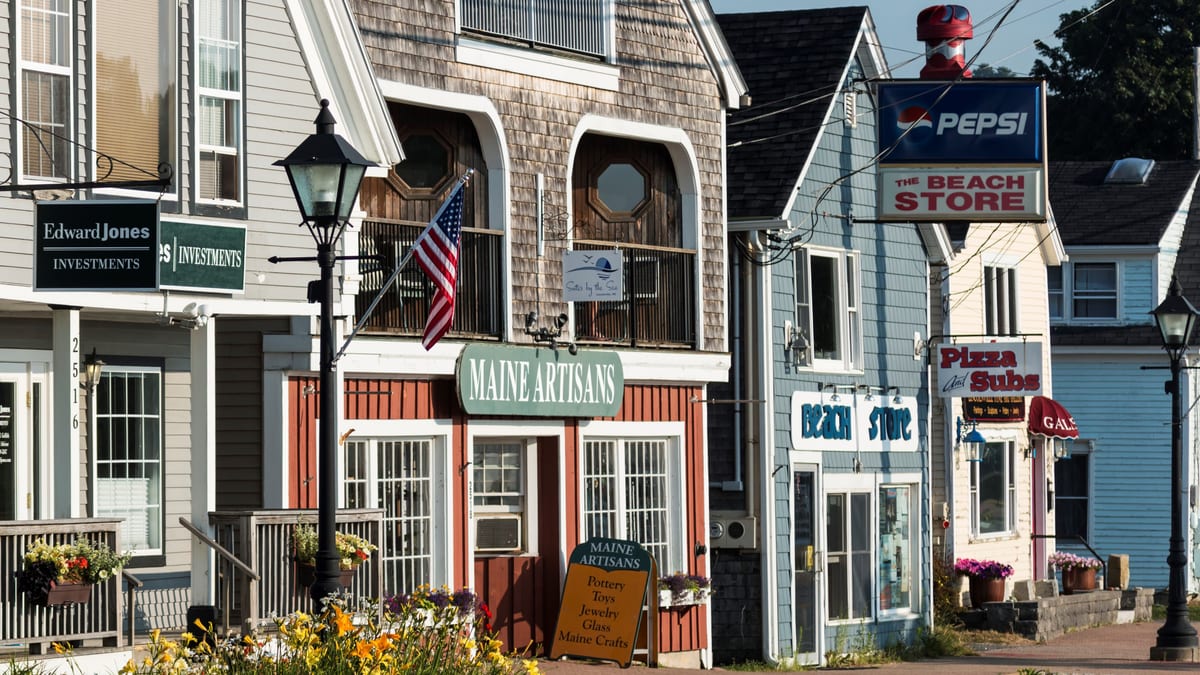
Image by TheTravel
A Border Relationship Under Strain
For decades, Vermont has relied on its northern neighbors for a steady stream of visitors drawn to ski slopes, outlet malls and foliage routes. Canada has consistently ranked as the state’s largest international market, and Canadian guests have played a disproportionately large role in off-season revenue, particularly in spring and late autumn.
Recent tracking by federal and state agencies shows that dynamic has shifted dramatically. Year over year declines in passenger-vehicle entries from Canada accelerated through 2024 and 2025, with state budget documents and tourism briefings indicating that Canadian car crossings into Vermont fell by nearly half between those two years alone. Over multiple seasons, the accumulated shortfall in visits, measured in individual border crossings, now runs into the hundreds of thousands.
When those missing trips are tallied across 2024 and 2025, the total approaches the size of Vermont’s own population of roughly 650,000 residents. Travel analysts note that while border-crossing counts do not equate directly to unique individuals, the symbolic comparison underlines the scale of the disruption facing one of the country’s most tourism-dependent states.
Reports indicate that this contraction has already erased tens of millions of dollars in anticipated spending, particularly in rural regions closest to the Canadian frontier, where cross-border day trips once formed the backbone of local retail and lodging revenue.
From Pandemic Recovery To Political Headwinds
Vermont entered the post-pandemic recovery period with cautious optimism, but the rebound in Canadian travel proved short-lived. Research cited in state tourism presentations traces the latest downturn to a mix of unfavorable exchange rates, high fuel costs, tighter household budgets and a broader Canadian boycott of United States destinations tied to the current trade and political climate.
National travel industry coverage describes Canadian visits to the United States falling sharply since early 2025, following new tariff measures and a series of comments from Washington that many Canadians interpreted as hostile, including repeated references to Canada as a hypothetical “51st state.” Analysts say these factors have amplified long-running concerns about border delays and security checks, pushing more Canadians to vacation domestically or in other international markets.
In Vermont, publicly available testimony to lawmakers notes that Canadian travel intent has dropped far more steeply than for other international markets. Surveys commissioned by the state’s tourism agency in Canada point to a combination of political discomfort, cost sensitivities and a perception that visiting the United States now feels less welcoming than in past decades.
Economic observers suggest that even if national-level tensions ease, rebuilding confidence among Canadian travelers may take years, given how quickly trip-planning habits have shifted during the boycott period and after successive years of volatility.
Numbers That Hit Close To Home
State budget documents for the current fiscal year estimate that visitor spending represents close to a tenth of Vermont’s total economic output, roughly three times the national average share for tourism. Within that total, Canadians have historically delivered an outsized contribution, particularly in northern counties lining Lake Champlain and the border.
Recent reports to the Vermont Legislature highlight that Canadian visitors alone once accounted for a significant share of room nights and retail receipts in these communities. In some towns, Canadian credit card transactions in lodging and dining venues have fallen by more than 40 percent compared with pre-boycott levels. A separate tracking report on summer 2025 visitation notes that only about 5 to 7 percent of all Vermont visitors now arrive from Canada, down from double-digit shares earlier in the decade.
When combined with federal border-crossing statistics, those percentages illustrate how unusual the present moment is. Analysts point out that Vermont has effectively lost the equivalent of a full year’s worth of Canadian trips in just a short span, and that the gap continues to widen. The comparison to the state’s own population has been widely cited in regional coverage to convey that what might appear as a modest shift in national tourism numbers feels far more dramatic in a small, rural state.
Local business groups warn that the longer Canadian travel remains depressed, the more likely it is that establishments will recalibrate around smaller, more volatile markets, risking closures in towns that once depended on a predictable rhythm of Quebec license plates each weekend.
Small Towns On The Front Line
The effects of the downturn are most visible in border communities and along key approach routes where Canadian traffic traditionally dominates. Visitor centers near the crossings have reported steep double-digit drops in guest counts, and seasonal motels, campgrounds and general stores in the Northeast Kingdom and islands region have described thinner shoulder seasons and quieter main streets than they have seen in many years.
Published local coverage documents a pattern of canceled group bookings, shorter stays and reduced discretionary spending by the Canadians who do still make the trip. Many businesses have responded with expanded discounts for customers paying in Canadian dollars, bilingual marketing materials and targeted promotions timed to Quebec holidays, in an effort to counteract negative national headlines and demonstrate that Vermont remains eager for cross-border tourism.
Community leaders in these areas have also emphasized the cultural dimension of the pullback. For many residents, regular visits from Canadian families have long been part of local identity, whether through shared trail networks, lakefront campgrounds or youth sports tournaments. The sharp decline in familiar visitors has therefore been felt not only in cash registers but in the day-to-day atmosphere of towns that see themselves as part of a larger northeastern cross-border region.
Despite the present challenges, some regional tourism organizations are cautiously preparing for the possibility of a rebound if economic and political conditions stabilize, arguing that Vermont’s proximity, francophone heritage and outdoor assets still position it as one of the most convenient international getaways for millions of Canadians.
Rethinking Vermont’s Visitor Mix
With Canadian visitation on a downward trajectory, Vermont is working to rebalance its visitor portfolio. Tourism reports over the past year note growing attention to nearby U.S. markets such as Massachusetts, New York and the mid-Atlantic, along with renewed efforts to attract higher-spending domestic travelers who can help buffer the loss of frequent short-haul Canadian trips.
Marketing materials have increasingly highlighted year-round experiences, from biking and craft beer in the warmer months to midweek ski and spa offers in winter, in an attempt to smooth seasonal peaks and valleys. Industry briefings suggest that while overall visitor numbers have not collapsed, per-trip spending patterns have changed, and businesses accustomed to volume from Canadian day trippers are now encouraged to capture more revenue from each guest.
At the same time, Vermont’s policymakers face difficult choices about how much to invest in specific recovery campaigns aimed at Canada during a period of ongoing political tension. Some tourism analysts argue that a visible, long-term commitment to cross-border ties will be essential to regaining trust when conditions improve. Others contend that limited promotional budgets may yield better returns if focused on markets less affected by national-level disputes.
For now, Vermont’s tourism economy sits at the intersection of those debates. The state remains heavily invested in travel and hospitality, yet the loss of Canadian visitors on a scale that mirrors its own population has underscored the risks of relying too heavily on a single foreign market, and the vulnerability of border states to forces far beyond their control.