

More news on this day
Australia’s southern states are racing to keep people moving as fuel prices surge toward record highs, with Victoria and Tasmania rolling out fare free public transport periods that are reshaping local commuting patterns and forcing overseas tourists to rethink how, when and even whether they travel to the country.
Get the latest news straight to your inbox!
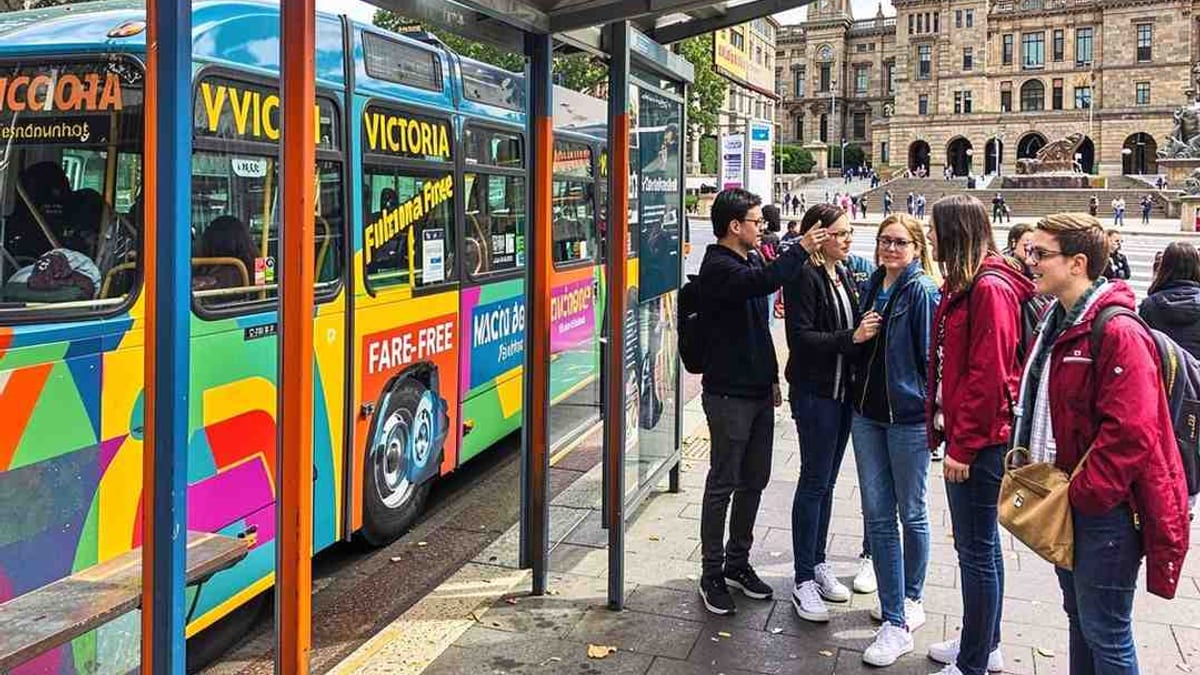
Image by Travel And Tour World
Fuel Shock Pushes Victoria to a Month of Free Travel
Victoria is set to make all public transport free for an entire month in April, responding to a rapid escalation in fuel prices that has left some petrol stations short on supply and pushed standard unleaded close to three dollars per litre in parts of the state. Publicly available information shows the move builds on earlier cost of living measures, including a new youth ticket that already gives free year round travel to under 18s across trains, trams and buses from the start of 2026.
Reports indicate the statewide initiative will cover metropolitan trains, trams, buses and V Line regional services, effectively suspending the usual daily fare caps for much of autumn. Commentary across local transport forums suggests the policy is aimed at easing pressure on households suddenly confronting far higher motoring costs while also reducing demand for fuel during a volatile period for global energy markets.
The decision coincides with broader transport policy shifts in Victoria, where recent planning documents outline a longer term ambition to increase the share of zero emission buses and cut transport sector emissions. Making public transport temporarily free in the middle of a fuel crunch is being interpreted by analysts as both a short term relief measure and a live test of how price sensitive drivers are when viable alternatives are readily available.
Early reactions from commuters highlight a mix of enthusiasm and concern. Some see a rare opportunity to bank hundreds of dollars in savings over the month, while others question whether the network has the capacity to absorb an influx of new users without service enhancements. The performance of Melbourne’s trains and trams during this period is expected to be closely watched by other states and by tourism operators who rely on reliable urban mobility for their guests.
Tasmania Joins With Targeted Fare Free Moves
Tasmania, a key destination for nature focused travel and cruise stopovers, is also pivoting toward cheaper and in some cases free public transport as fuel costs climb. Local announcements for 2026 outline a combination of capped and heavily discounted bus fares on core routes, while selected regional and school services are being made free in an effort to keep remote communities connected.
Publicly available information from Tasmanian transport and budget papers shows the state has been steadily increasing its subsidies for Metro buses and regional links, arguing that relatively small farebox returns can be outweighed by benefits such as lower congestion, improved air quality and social inclusion. With diesel prices rising sharply on the island, the government has positioned fare relief as a defensive strategy to protect both residents and the visitor economy.
For travelers, the shift is particularly significant around Hobart and Launceston, where hotel operators rely on seasonal peaks linked to events, cruise schedules and national holiday periods. Easier and cheaper access to airport shuttles, city buses and regional services could encourage tourists to spend longer in one place rather than hiring cars to race between attractions, potentially spreading visitor nights more evenly across smaller towns.
Industry commentary in Australian accommodation trade outlets notes that Tasmania’s relatively small size and compact urban centres make it a natural candidate for deeper fare subsidies. Analysts point out that if free or near free public transport successfully shifts more residents and visitors away from private cars, the island’s limited road network and historic precincts may see less traffic stress during peak seasons.
NZ, UK and US Travellers Weigh Costs and Routing
As fuel prices climb and internal transport policies shift, tourists from New Zealand, the United Kingdom and the United States are reassessing their Australian itineraries. Tourism research data published over recent months shows that New Zealand remains Australia’s largest single source of international arrivals, with visitor numbers from the UK also strong and US demand recovering, but cost of living pressures and currency movements are starting to alter trip planning.
Travel trade coverage indicates that tour wholesalers and retail agents in these markets are reworking packages to highlight cities and regions with robust and affordable public transport, including Melbourne, Hobart and other capitals with integrated ticketing systems. The emergence of fare free periods and youth concessions in Victoria is being marketed to families and younger travellers who can rely on trains and trams rather than rental cars and domestic flights.
At the same time, some long haul visitors are reconsidering stopover choices and trip length. Travel industry analysis notes that higher aviation fuel costs can feed into airfares, and when combined with more expensive car hire and regional flights, encourage travellers to consolidate their time in one or two hubs instead of multi city tours. In this context, Victoria’s month of free transport and Tasmania’s discounted buses may help these destinations hold onto price sensitive visitors who might otherwise shorten or defer their trips.
However, uncertainty around broader fuel markets and geopolitical developments has prompted a degree of caution. Consumer surveys cited in international travel media suggest a portion of UK and US holidaymakers are delaying bookings or opting for closer destinations in Europe or North America until price volatility settles, putting extra pressure on Australian tourism bodies to emphasise value and on the ground affordability.
Hotel Sector Braces for Softer Shoulder Seasons
Across Australia’s major cities and regional gateways, the hotel sector is entering 2026 off the back of a very strong 2025, yet with growing concern about what a prolonged fuel shock could mean for forward bookings. Recent research from global real estate and hospitality consultancies shows that revenue per available room and average daily rates climbed across many markets last year, with particularly strong results in Perth, Sydney, Brisbane, Hobart and Adelaide as international arrivals rebounded.
Industry outlook reports for 2026 describe a more two speed environment. While events and major city stays are expected to remain buoyant, some hotel operators are warning of softer shoulder seasons and midweek occupancy as both domestic and international guests grapple with higher transport costs. Analysts highlight that visitors from New Zealand and the UK have been central to recovery in several Australian cities, so any slowdown from those markets could quickly show up in booking data.
Accomodation sector briefings also point to a constrained pipeline of new hotel rooms, with rising construction costs and financing challenges limiting new supply in many CBDs. This has supported pricing power so far, but it leaves less flexibility if demand were to weaken in the face of rising travel expenses. A cluster of hotels dependent on coach tours, self drive itineraries and corporate travel is regarded as particularly exposed to fuel driven cost spikes.
Some operators are responding by bundling public transport options into their offers, promoting proximity to tram, train or bus hubs and emphasising the ability for guests to explore without a car during fare free windows. Travel trade publications note that inner city hotels in Melbourne and Hobart, already close to key transport interchanges, may be better positioned to capture budget conscious visitors who want to minimise both fuel and parking costs.
Opportunity for More Sustainable, Car Free Itineraries
Beneath the immediate concern about fuel prices and slowing segments of demand, the rapid expansion of fare free and heavily discounted public transport in Victoria and Tasmania is being framed by some analysts as an opening to push more sustainable tourism models. Policy papers on transport emissions in Victoria explicitly link fare policies with efforts to cut private car use and shift trips to lower carbon modes.
Destination marketers are beginning to experiment with messaging that promotes car free itineraries built around rail, tram and bus networks. Suggested routes connect airports, city centres and regional attractions via existing services, positioning free April travel in Victoria and low cost Tasmanian buses as part of the appeal rather than simply a temporary cost saving.
Environmental organisations and urban think tanks have long argued that international visitors are more likely to accept going without a car if wayfinding is simple, frequencies are reliable and ticketing is affordable. The current combination of fare relief, new infrastructure such as the recently opened Melbourne rail tunnel and ongoing bus electrification projects in both states offers a testbed for proving that point at scale.
For now, tourism businesses are watching fuel markets, airline schedules and booking patterns closely. If Victoria and Tasmania can demonstrate that generous public transport policies help stabilise visitor numbers even as fuel prices climb, other Australian states may face growing pressure to follow suit, potentially reshaping how global travellers experience the country in the years ahead.