

I have used both Victoria and Nanaimo as my home base for exploring Vancouver Island, and the experiences could not have felt more different. On paper they sit only about 110 kilometres apart on the same coast, yet the day-to-day reality of staying in each place shaped my trip in surprisingly strong ways.
Some things were easier and cheaper in Nanaimo, other things were smoother and more inspiring in Victoria, and a few details blindsided me entirely. If you are trying to decide where to base yourself, this is what actually mattered once I was on the ground.
First Impressions and Overall Vibe
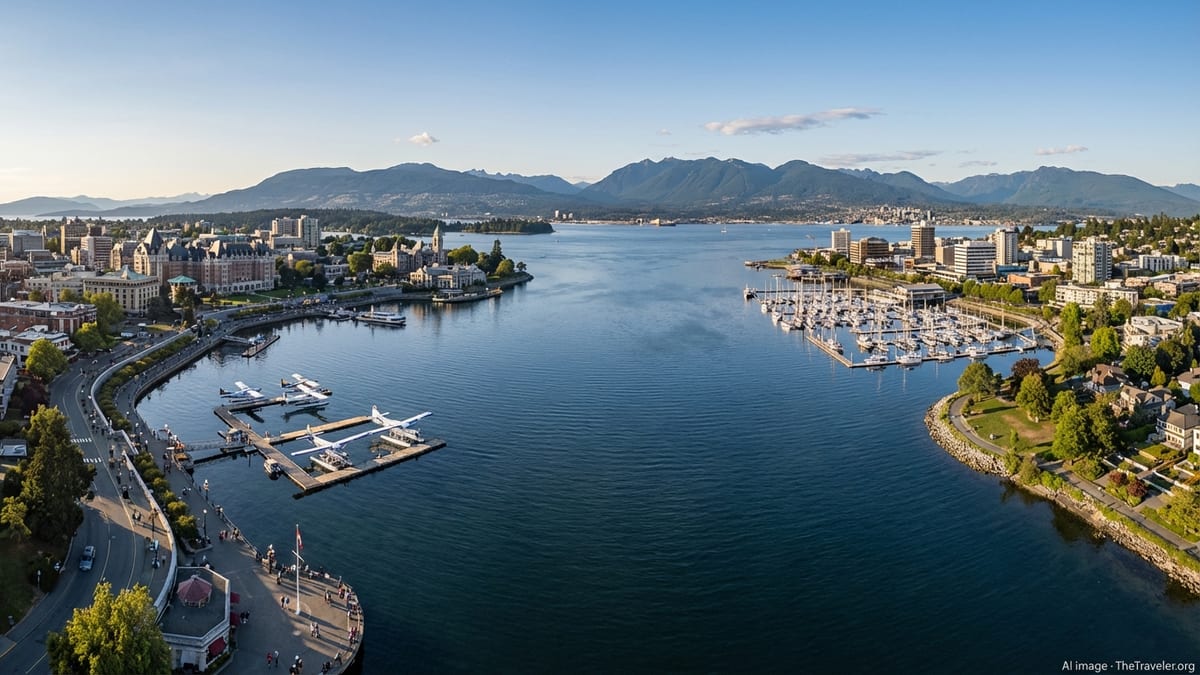
Landing in Victoria, the first thing that struck me was how much it felt like a small, self-contained city break. The Inner Harbour, the Parliament Buildings, and the Fairmont Empress all crowd into a walkable, photogenic core. It is undeniably pretty, almost curated. I could stroll from my hotel to the waterfront, grab a coffee, and be at a museum or on a whale watching boat within minutes. That compactness made my first days feel effortless, if a bit touristy in high season.
Nanaimo gave me a very different first impression. It felt more like a real working city that happens to be on the water, with pockets of charm rather than one polished stage set. Downtown has improved over the last few years, with the waterfront walkway, restaurants, and restored buildings, but it is still more low-key and spread out than Victoria. I noticed fewer tour buses and more locals doing everyday errands, which I liked, even if it meant I had to work a bit harder to find the best corners.
Emotionally, Victoria felt immediately rewarding. Nanaimo grew on me slowly. In Victoria, I had that “I am on vacation” hit from day one. In Nanaimo, my appreciation came from quieter wins: an uncrowded sunset at Neck Point Park, a conversation with a local barista, the ease of getting on the road in the morning without fighting downtown traffic. If you want instant postcard moments, Victoria delivers. If you value a softer, more local rhythm, Nanaimo is more your speed.
One expectation that did not match reality for me was nightlife. I assumed Victoria would feel lively after dark, but many places closed earlier than I expected outside peak summer and weekends. Nanaimo’s evenings were even sleepier. If late-night energy is important to you, neither city is exactly buzzing, but Victoria still wins by a wide margin.
Getting There and Getting Around
From the mainland, Victoria is tied directly to the Tsawwassen to Swartz Bay route. Sailings generally run at least every two hours and increase to hourly at peak times, with a crossing time of around 1 hour 35 minutes. Swartz Bay is about 32 kilometres north of downtown Victoria by highway, and the onward drive usually took me 35 to 45 minutes depending on traffic. With a car, this was painless. Without one, I had to pay attention to bus and shuttle schedules, which meant I could not always be as spontaneous as I wanted.
Nanaimo, by contrast, is plugged into the mainland by two vehicle ferry routes and several passenger-only services. From Horseshoe Bay to Departure Bay the crossing is roughly 95 to 100 minutes, with multiple sailings a day. There is also the Tsawwassen to Duke Point route, about two hours. What surprised me was how much the Horseshoe Bay departure now depends on reservations. As of mid-October 2025, vehicles on that route are required to reserve, and locals I spoke to were genuinely worried about the impact on last-minute travel. For me, it meant I had to lock in a specific sailing time well in advance instead of just driving up early and hoping for space.
On the flip side, Nanaimo has become increasingly convenient if you are on foot. The high-speed passenger ferry from downtown Vancouver to downtown Nanaimo clocks in at around 70 to 75 minutes, and seaplane operators connect Nanaimo’s harbour and airport with Vancouver and beyond. That mix of options gave me flexibility when I wanted to bounce back to the mainland without a car. The catch is that some of these services are not cheap, and crossing times and frequencies can change seasonally, so I had to double-check schedules rather than rely on memory.
Once actually based in each city, I found getting around Victoria without a car easier. Most of what I wanted as a visitor sat inside a walkable or bikeable core, and local buses filled in the gaps, especially to places like the University area or nearby suburbs. Nanaimo, while not impossible to navigate by transit, felt more car-dependent once I wanted to reach trailheads, parks, and the outskirts. For me, Victoria makes more sense if you aim to be mostly car-free, while Nanaimo is more appealing if you are comfortable driving most days.
Costs, Accommodation, and Overall Value
On accommodation, the difference between Victoria and Nanaimo was one of the clearest contrasts of my trip. Broadly speaking, I paid more per night in Victoria for comparable comfort. Hotels in and around the Inner Harbour, and even modest boutique properties a few blocks back, command a premium, especially from late spring through early fall and on long weekends. I found that prices climbed quickly for harbour views or on-site parking, and budget options closer in filled up fast. If you wait too long to book in peak season, you either pay through the nose or end up farther from the centre than you probably want.
Nanaimo, in comparison, consistently offered better value for space. I paid noticeably less for a larger room with parking included, and I could still reach the waterfront by car in 10 minutes or less. Short-term rentals also stretched my budget further in Nanaimo; I could justify staying longer without feeling like I was bleeding money on accommodation. That mattered when I started using the city as a base for road trips to the central and northern Island.
Day-to-day expenses followed a similar pattern. Meals in Victoria’s core tended to be slightly more expensive, and it was easy to drift into “tourist pricing” territory near the Inner Harbour. The quality was usually good, but I sometimes paid for ambience as much as for food. In Nanaimo I found more low-key, mid-range options, with fewer high-end splurges but also fewer price shocks. Coffee and casual lunches were often a few dollars cheaper, and street parking away from the waterfront was easier and less costly.
Value-wise, I felt Victoria delivered more if my priority was stacking up experiences in a short stay: museums, gardens, whale watching, food tours, and heritage buildings within walking distance. For a long stay focused on road trips, hikes, and simply having a comfortable place to crash between outings, Nanaimo gave me more return for each dollar. If I were planning a week or longer with a car, I would lean toward Nanaimo. For a three to four day city break without a car, I would accept Victoria’s higher prices.
Location on the Island and Day Trip Logistics
Geographically, Victoria sits at the southern tip of Vancouver Island, which looks romantic on a map but can be limiting in practice. When I tried to use Victoria as a launchpad to more distant parts of the Island, I spent a lot of time driving the same stretch of the Trans-Canada Highway. Tofino, for example, took me around four and a half to five hours each way from Victoria, depending on traffic and construction. Even getting up to Campbell River or beyond ate a full half-day. For a single ambitious road trip it was fine, but doing several long day trips from Victoria got tiring.
Nanaimo’s more central spot on the east coast changed that equation. From there, reaching Parksville, Qualicum Beach, or Cathedral Grove felt like short hops. Getting to the Comox Valley and Campbell River was significantly quicker than from Victoria, and even trips toward Port Alberni and the west coast shaved valuable time off each leg. For me it meant more time on trails and beaches and less time staring at the same highway mile markers. When I structured my itinerary around multiple regions, Nanaimo clearly worked better as a hub.
That said, Victoria is obviously better placed for exploring the southern tip of the Island. Day trips to Sooke, East Sooke, the Juan de Fuca coastline, and the Saanich Peninsula were straightforward, and I never felt rushed. If your interests cluster around those southern coastal hikes, wineries, and gardens, basing in Victoria makes sense and saves unnecessary driving. Nanaimo can reach them too, but the extra distance there and back makes it less efficient.
One of my key decision moments came when I had to choose where to base myself for a 10-day loop that included the Comox Valley, Port Alberni, and the west coast. I originally assumed Victoria would be “nicer” and therefore the default. After mapping driving times, I reluctantly admitted that starting and ending in Nanaimo would save me hours. In hindsight, that choice was crucial. I arrived at my hikes less exhausted, and I did not feel like I was constantly racing sunset back to the same distant base.
Atmosphere, Culture, and “Feel” of Each City
On atmosphere, Victoria wins on classic charm and curated experiences. The harbour is framed by historic buildings, there are well-developed museums and galleries, and the city has leaned into its British and coastal heritage. I enjoyed wandering through neighbourhoods like James Bay and Fernwood, where heritage homes and small independent cafes made it easy to slow down. There is also a steady calendar of events, especially in summer, which makes the city feel animated without being overwhelming.
Nanaimo’s atmosphere is more understated and more uneven. Parts of downtown have clearly benefited from investment, with upgraded public spaces along the waterfront and small businesses filling in side streets. But I also walked through blocks that felt a bit empty or in transition, especially away from the harbour. It is not unsafe in a dramatic way, but issues like visible homelessness are more noticeable than in postcard photos. That reality may or may not bother you, but I appreciated going in with realistic expectations rather than glossy marketing images.
Culturally, I was pleasantly surprised by Nanaimo. There is a growing food scene, a respectable arts community, and interesting local history if you take the time to look for it. It just is not as concentrated or as polished as in Victoria, and you may need a car or some planning to string experiences together. Victoria made it easy to feel like I was absorbing culture simply by walking out the hotel door. In Nanaimo, I felt more like I was discovering it piece by piece.
If you are the kind of traveler who wants your base to feel like part of the “destination” every time you step outside, Victoria is likely to fit better. If you mainly want a comfortable, practical place to return to between bigger excursions, and you do not need every street to be charming, Nanaimo’s more utilitarian feel will not bother you.
Crowds, Seasonality, and When to Go
I expected Victoria to be busy in summer, and it was. Cruise ship days in particular transformed the Inner Harbour, with sidewalks suddenly packed and popular attractions requiring more patience. Restaurant waits stretched, whale watching tours filled up, and hotel rates climbed. On the plus side, businesses were fully open and the city felt festive. On the downside, I lost the easy spontaneity of simply walking up to whatever I wanted whenever I felt like it.
Nanaimo’s crowd patterns were different. It did get busier in July and August, especially at beaches and popular parks, but the city centre never felt overwhelmed in the way Victoria sometimes did. Ferry terminals and highways were still pressured in peak season, and the newer reservation-only policies on certain routes made last-minute driving more stressful. Yet once I was back in town, I rarely waited long for a table or felt pressed in by tour groups. For me, that was a major plus.
Weather-wise, both cities share the generally mild coastal climate, with relatively dry summers and wet, cool winters. In shoulder seasons like May, June, and September, I found both bases comfortable, but there were practical differences. Some seasonal tours, especially marine wildlife excursions, run reduced schedules outside high season, and this was more noticeable in Nanaimo where operations are smaller. In Victoria there were still enough operators and visitors to keep most services ticking along.
Another key decision moment for me was choosing when to plan ferry crossings. In late summer and around holidays, certain sailings from Swartz Bay and the Nanaimo routes were effectively full well in advance. Real-time departure boards showed some afternoon and evening sailings at or near capacity, and local news occasionally flagged major delays. I learned to treat the ferry like a flight: book early, show up within the recommended window, and avoid assuming there would be room just because it was not a long weekend. This mattered more for Victoria’s main route and Nanaimo’s Horseshoe Bay link than I initially realized.
Day Trips, Nature Access, and What Each Base Does Best
Victoria excels at short, scenic outings that do not require heroic planning. I used it as a base for day trips to Sooke, East Sooke, and the Saanich Peninsula, each within roughly an hour’s drive or less. I could hike coastal trails, visit wineries, or wander through gardens and still be back in the city with time for dinner. The mix of wild coastlines and gently rural landscapes around Victoria is hard to beat for quick adventures.
Nanaimo, however, shone when it came to variety and reach. East of the city, I had easy access to island-dotted waters and marine parks. North and west, I could reach Parksville’s sandy beaches, Qualicum’s quieter shore, and old-growth stands like Cathedral Grove in comfortable day-trip windows. Pushing further to the Comox Valley or even toward the west coast still felt manageable from Nanaimo, whereas from Victoria those same trips turned into very long days behind the wheel.
One real decision moment came when I was planning a visit to the west coast. I debated keeping my hotel in Victoria and just doing a very long day run to Tofino and back. After sketching the timings, that plan looked miserable: pre-dawn departure, hours of twisting mountain highway, and a late-night return. Instead, I based in Nanaimo for a few nights, then did an overnight out on the west coast rather than forcing it into a single day. The central location made the staging far more reasonable.
If your trip is built around hiking, beaches, and covering a lot of ground, Nanaimo simply works better as a logistics hub. If your focus is more on gentle exploring around one corner of the Island and you would rather not move hotels, Victoria is easier and more rewarding. In my experience, trying to force Victoria into the role of “base for the whole Island” led to long drives and some frustration.
Practical Tips and What I Would Do Differently Next Time
Looking back, the most important practical lesson I learned is that ferry logistics can quietly dominate your plans. Vehicle reservations on the Horseshoe Bay to Departure Bay route became essential after the reservation-only policy came in, and even on the Tsawwassen to Swartz Bay run I found that popular midday and evening sailings could fill up or be heavily booked. I now treat booking a ferry as the first building block of the itinerary, not an afterthought. I arrive within the recommended 30 to 60 minute check-in window and avoid sailing times that routinely back up around long weekends or major events.
Another detail that mattered more than I expected was whether I needed a car. In Victoria, I could feasibly combine walking, local buses, and occasional tours or taxis and still have a rich trip, especially if I stayed close to the Inner Harbour. That saved me ferry and parking costs. In Nanaimo, the moment I wanted to visit beaches, parks, and small towns outside the core, a car became almost essential. There are ways to do it by transit and organized tours, but they are less frequent and less flexible than what Victoria offers. Next time, if I were doing a car-free trip, I would pick Victoria every time.
I also underestimated how early certain experiences book out in peak season. Whale watching from Victoria, for instance, had limited same-day availability on sunny summer weekends, and some garden visits and popular attractions encouraged advance booking to guarantee entry times. In Nanaimo, specific accommodations, especially the nicer waterfront options, sold out earlier than I expected on long weekends. Now I book key activities and my preferred hotel or rental before I start filling in the smaller details.
If I could redo one trip, I would split my time more deliberately: a few nights in Victoria at the start, focusing on the city, nearby coast, and ferries, then move up to Nanaimo for the more road-trip-heavy portion. On my first visit I stubbornly stayed put in Victoria for the entire trip and ended up resenting some of the long drives. Once I gave Nanaimo a chance as a base, the whole north and central Island opened up in a much more relaxed way.
The Takeaway
After using both Victoria and Nanaimo as my base on Vancouver Island, I stopped asking which one is “better” and started asking which one is better for a specific kind of trip. They solve different problems. Victoria is the polished, walkable, experience-dense city that makes a short or car-free stay simple and satisfying, even if you pay more and share it with more people. Nanaimo is the practical, central, slightly scruffier hub that quietly makes long road-trip itineraries easier and cheaper, even if it rarely feels as cinematic.
If you are planning a three to four day getaway, enjoy wandering a historic harbour, and maybe do not want to rent a car, I would base in Victoria. Accept the higher prices, book key ferries and activities in advance, and lean into the convenience of having so many things within a short distance of your hotel. You will spend more time exploring and less time driving.
If you are planning a week or more, especially with a focus on beaches, forests, and multiple regions of the Island, I would choose Nanaimo as my main base. Budget for a car, pre-book your ferry crossings, and embrace the fact that the city itself is more functional than glamorous. The payoff is shorter drives, better value accommodation, and a calmer, more local-feeling home base.
For many travelers, the ideal solution is not either-or but both: start in Victoria for a taste of the Island’s most famous city, then shift to Nanaimo to launch into the wider landscape. Having learned this the hard way, I would now design my own itineraries around that split. Each city is worth it, as long as you choose it for what it is actually good at, rather than what the brochures promise.
FAQ
Q1. Is Victoria or Nanaimo better if I will not have a car?
Victoria is generally better without a car. Many attractions, restaurants, and the harbour area are easily walkable, and public transit is more useful for visitors. In Nanaimo, you can enjoy the waterfront and downtown on foot, but reaching beaches, parks, and nearby towns is much easier with a vehicle.
Q2. Which city is more convenient for exploring the whole of Vancouver Island?
Nanaimo works better as a central hub if you plan to visit multiple regions such as Parksville, the Comox Valley, or even the west coast. Victoria is excellent for the southern tip, but distances to the central and northern Island start to feel long on repeat day trips.
Q3. How far are the ferry terminals from each city centre?
Swartz Bay is roughly a 30 to 45 minute drive from downtown Victoria, depending on traffic. Departure Bay and Duke Point are closer in practical terms to Nanaimo, with Departure Bay a short drive from downtown and Duke Point around 15 minutes south of the city.
Q4. Do I really need to reserve the ferry in advance?
For vehicle travel in peak season and on the Horseshoe Bay to Departure Bay route, advance reservations are now very important. Even on the Tsawwassen to Swartz Bay route, popular sailings can be heavily booked. I treat ferries like flights and secure key crossings early.
Q5. Which base is cheaper overall for a week-long stay?
In my experience, Nanaimo tends to be cheaper for accommodation and everyday costs, especially if you are staying a week or more. Victoria can be done on a budget, but central hotels and meals near the harbour usually cost more for similar levels of comfort.
Q6. Is Victoria worth it just for a short weekend?
Yes. Victoria works very well for a two or three night break. You can arrive by ferry, settle into the walkable core, hit major sights, and enjoy the harbour without needing a car or long drives. Nanaimo is better suited to longer, more exploration-heavy itineraries.
Q7. How do crowds compare between Victoria and Nanaimo in summer?
Victoria’s Inner Harbour and main attractions can feel very busy in July and August, especially on cruise ship days. Nanaimo gets busier too, but its downtown rarely feels as crowded, and it is generally easier to find parking and last-minute tables at restaurants.
Q8. Which city feels safer for solo travelers?
Both felt reasonably safe to me, with the usual big-picture urban issues like visible homelessness in some areas. Victoria’s core is more consistently busy and well-lit at night. In Nanaimo, I was a bit more selective about which streets I walked after dark but did not feel unsafe during normal daytime activities.
Q9. Can I realistically do Tofino as a day trip from either city?
It is technically possible but not enjoyable from either base. From Victoria it is an extremely long day. From Nanaimo it is shorter but still demanding. I recommend at least one overnight on the west coast rather than forcing it into a single day.
Q10. If I want both city experiences and nature, should I split my stay?
If time and budget allow, splitting makes sense. I now prefer two to three nights in Victoria for the harbour and nearby coast, then several nights in Nanaimo for easier access to central and northern Vancouver Island. That combination has given me the most balanced trips.