

I went to Victoria, Ottawa, and Québec City in the same 12-month stretch, with the same carry-on suitcase, mid-range budget, and a loose goal: figure out which Canadian capital is actually the most interesting to visit. On paper they all sound great.
In reality, they offer very different moods, costs, and frustrations. By the end of these trips, I had a clear sense of who each city is really for, and where I would happily return versus where once was enough.
How I Structured My Trips and Why These Three Capitals
I treated each city as a long weekend break, between three and four nights, and I tried to keep my spending style consistent. I booked mid-range hotels, used public transport when it made sense, splurged on one or two standout experiences in each city, and skipped rental cars unless absolutely necessary.
I went to Victoria in late spring when the cherry trees were still hanging on and cruise ships had started to appear again, Ottawa during Winterlude in February, and Québec City for a winter-into-early-spring shoulder period around the time of the Québec Winter Carnival. That gave me a good spread of shoulder and peak moments without going straight for the most expensive summer weeks.
I chose Victoria, Ottawa, and Québec City because they are three very different faces of “capital city” travel in Canada. Victoria is the provincial capital of British Columbia with a strong tourism economy built around its mild coastal climate and British charm, Ottawa is the national capital with formal institutions and big seasonal events like Winterlude and the Canadian Tulip Festival, and Québec City is the historic capital of Québec with a fortified old town and a strong francophone culture. I wanted to compare them not as a checklist of sights but as lived experiences: how it feels to arrive, to get around, to eat, and to fill a day without rushing.
From the start, I realized I needed to watch out for two biases. First, it is easy to be seduced by photos of Victoria’s Inner Harbour at sunset or Québec City under fresh snow and then feel disappointed by crowds or closed attractions. Second, as a visitor, I naturally gravitated toward historic cores and postcard views, which can distort how “interesting” a place feels if you never leave the prettiest neighborhoods. I forced myself to walk into less polished districts in all three cities to see what they were like when the tour buses moved on.
First Impressions and Overall Vibe
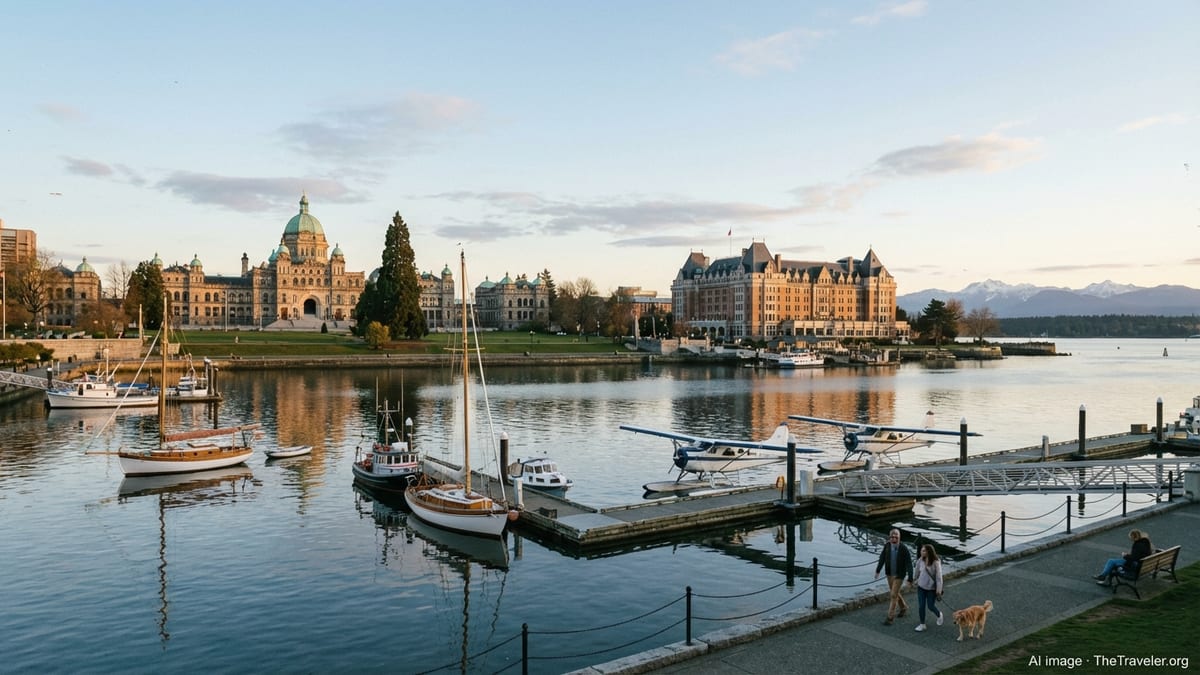
Landing in Victoria felt instantly relaxed. The airport is small and manageable, and even when I came in during a busy summer-leaning period, it never felt overwhelming. Ferries and flights have been handling record visitor numbers in recent seasons, but on the ground the city still reads as a compact seaside town rather than a big urban center. The Inner Harbour is pretty to the point of cliché, with the legislature building, the Empress Hotel, and floatplanes landing, but just behind that postcard façade the downtown core is quite small. After a day of walking, I found myself looping the same streets and wishing for a bit more variety, especially in the evenings when some blocks felt quiet once day trippers and cruise passengers left.
Ottawa made a very different first impression. In winter, it feels like a serious capital city that decided to embrace its climate rather than hide from it. During Winterlude, the energy was high around the Rideau Canal and the downtown festival sites, but a few blocks away it quickly shifted back to government-business normal. I liked that split personality. The city felt bigger than Victoria, with more distinct neighborhoods, but it was not so large that I felt lost. It did, however, feel more functional than charming in some areas, especially when I wandered around the office-heavy streets after 6 p.m. and found them oddly empty.
Québec City was the most instantly atmospheric of the three. Arriving in the upper town, with narrow streets, stone buildings, and the St. Lawrence River below, felt like dropping into a European storybook. It is beautiful, and it knows it. In peak winter carnival periods, that beauty comes with crowds and tour groups, and I occasionally felt like I was walking through a theme park version of a historic city. Once I stepped outside the walls into Saint-Jean-Baptiste or Saint-Roch, though, the mood changed. There, I found more local life, grittier corners, and bars and cafés where I did not hear English every minute. That contrast made Québec City feel layered and, for me, more interesting over several days than Victoria, which stays in one register.
Costs, Value, and the Pain of Booking Accommodation
On cost, none of these cities is truly cheap, but the way money disappears feels different. Victoria is surprisingly pricey for its size. Recent figures show average hotel rates in Greater Victoria comfortably above many Canadian cities, and my searches backed that up. In spring and early summer, I was looking at nightly rates that often pushed into the mid to high 200s Canadian dollars for a decent central hotel, especially near the Inner Harbour. My first decision moment came when I had to choose between a characterful heritage hotel right on the water and a generic but cheaper place a 15-minute walk away. I chose the cheaper option and did not regret it; the harbour is so compact that I spent most of my time outdoors anyway, and I was glad I kept the budget for food and activities rather than paying for a view I mostly saw from the promenade.
Ottawa, on the same travel dates offset to winter, felt more forgiving on price. Average hotel rates there tend to be lower than in Victoria, and I did see that reflected in the actual numbers when I booked. During Winterlude weekends, central hotels around the ByWard Market and Parliament did climb, but I could still find solid mid-range options that undercut the equivalent locations in Victoria by a noticeable margin. My second big decision moment was whether to stay directly in the Market, which is loud but convenient for nightlife and festival events, or on a quieter stretch near the canal. I picked the canal area and walked 10 to 15 minutes for dinners. That tradeoff gave me better sleep and easy access to the Skateway while still keeping costs down.
Québec City sat somewhere in the middle in my experience. Average hotel prices there are generally lower than Victoria but can jump quickly during major events like the Winter Carnival or popular summer weeks. When I visited near the carnival period, I was surprised by how fast rooms within the old city walls disappeared or shot up in price. My third major decision moment came when I had to decide between staying inside the walls and absorbing the premium or basing myself in the lower town. I chose a small hotel in Saint-Roch, a 15- to 20-minute uphill walk from the most photographed spots. It felt like the smartest move of the entire trip: I saved money, experienced a more local neighborhood, and still had easy access to the historic core.
In terms of daily spending beyond accommodation, Victoria again felt the most expensive overall. Typical travel budget estimates put daily costs for an average visitor in Victoria well above 200 Canadian dollars per person once hotels, meals, and transport are factored in, and it lined up uncomfortably well with my credit card bill. Ottawa and Québec City did not feel cheap, but my meal and transport costs were more moderate, especially when I leaned on public transit and walked as much as possible. If you are traveling on a tighter budget, Victoria will demand more discipline and earlier booking, whereas Ottawa and Québec City allow a bit more wiggle room.
Getting There, Getting Around, and Seasonal Quirks
The logistics of simply reaching each city shaped my perception of how “worth it” they felt. Victoria is not on the mainland, and that reality is easy to underestimate when you are planning from afar. You either fly into Victoria’s small airport or connect via Vancouver and then take a BC Ferries sailing across the Strait of Georgia. Ferry traffic has been hitting record passenger and vehicle numbers in recent peak seasons, and it shows when you travel on a busy weekend. On my trip, the sailing itself was gorgeous, with island views and a genuinely relaxing 90 minutes, but the check-in, loading, and disembarking process all added up. What looked like a simple transfer ended up taking most of an afternoon. I would still do it again, but next time I would avoid tight same-day connections and book a morning or early afternoon sailing instead of pushing it to the evening, when delays are more stressful.
Once in Victoria, I could largely walk everywhere I wanted to go in the central area. Buses covered the rest. I never felt the need for a rental car, though friends who wanted to explore more of Vancouver Island did find that a car opened up beaches and hiking trails that are otherwise awkward to reach. The flip side is that Victoria’s walkable core is small; by day three I was repeating routes. The waterfront pathways and neighborhoods like James Bay kept it pleasant, but it did not have the big-city variety of Ottawa or Québec City.
Getting to Ottawa is logistically simpler. Air connections are straightforward, and the city is also accessible by train or bus from larger hubs like Toronto and Montreal. In winter, I did have to factor in weather-related delays, but at least I was not trying to sync up with a ferry schedule. Once there, I found public transport usable but not inspiring. The newer light rail system helps with some routes, but I ended up walking a lot, especially between Parliament Hill, the ByWard Market, and museum districts. In deep winter, that can be both a blessing and a curse; the cold keeps crowds down, but walking along windy streets after dark is not pleasant. I never felt unsafe, just cold and a bit impatient to get indoors.
Québec City sits somewhere between the others in terms of logistics. Flights in are easy enough, and you can reach it by train from Montreal. Once there, the biggest challenge is physical rather than infrastructural. The old city is built on a hill, and I felt that in my calves every day. Walking from lower town neighborhoods up to the upper town viewpoints is beautiful, but if you have mobility issues or just hate steep climbs, it will wear you down. In winter, those hills get slick and icy, which made me slower and more cautious. On the other hand, the compact historic core means most major sights are within a 20-minute walk of each other. I needed public transit less than in Ottawa and not at all once I settled into my Saint-Roch base.
What There Is to Do: Museums, Nature, and Street Life
In Victoria, the main draws for me were the waterfront, gardens, and the general mild-coastal feel. The Inner Harbour is a genuinely pleasant place to wander, watch floatplanes, and listen to buskers. The Royal BC Museum, when fully open, is one of the strongest cultural stops in the city, though on my visit parts of it were in transition and did not live up to the hype. I enjoyed the exhibits but left wishing for more depth and less crowding in certain galleries. Outside the core, the coastal walks and parks, combined with easy access to whale-watching and day trips to nearby islands, made Victoria feel like a good base for gentle outdoor adventure more than dense urban exploration.
Ottawa’s strength lies in its national institutions and seasonal events. During Winterlude, the city turns its climate into the main attraction, with ice sculptures, outdoor events, and skating. In years when conditions cooperate, the Rideau Canal Skateway becomes the largest outdoor skating rink in the world, stretching several kilometers. On my trip, sections opened later than usual due to fluctuating weather, and I only got one perfect day on the ice before a warm spell forced partial closures. It was still magical to skate past the city, but I learned quickly that you cannot bank on the canal being open for your entire stay. Outside winter, events like the Canadian Tulip Festival in May draw large crowds to parks around Dow’s Lake with free garden displays and peak blooms, but those, too, depend on weather and timing. If you hit the right window, Ottawa feels genuinely festive and unique; if you miss it, the city can come across as another mid-sized North American capital with good museums and a slightly buttoned-up personality.
Québec City, by contrast, offers built-in atmosphere regardless of season. In winter, the Québec Winter Carnival turns the city into a playground of ice sculptures, slides, and outdoor parties concentrated around Parliament Hill and the Plains of Abraham. Even outside the exact carnival dates, the old town is packed with visual details: narrow lanes, viewpoints over the river, stone churches, and small squares. I had more fun here simply wandering than in either of the other cities. Museums like the Musée de la civilisation give you somewhere to duck into when the wind comes up, and neighborhoods beyond the walls offer more contemporary art, cafés, and nightlife. The tradeoff is that some of the most photogenic streets can feel overrun with visitors in peak periods, and in the depths of winter certain smaller businesses shut or keep reduced hours, which can be frustrating when you climb a steep lane only to find a closed door.
Street life also varies sharply. In Victoria, evenings in the core quieted down faster than I expected on weeknights, especially outside peak summer and when cruise ships were not in port. It is pleasant if you want calm, but if you are looking for nightlife in walking distance of a central hotel, Ottawa and Québec City are stronger. The ByWard Market in Ottawa can feel rowdy on weekends, but it gives you a cluster of bars and restaurants in one place. Québec City’s more interesting nightlife, I found, was actually outside the tourist-crammed old town, in Saint-Roch and other residential neighborhoods where live music venues and smaller bars serve a more local crowd.
Crowds, Cruise Ships, and When to Go
Crowd levels and timing mattered more to my enjoyment than I expected. In Victoria, high visitor numbers from ferries, flights, and especially cruises have been setting new records in recent years, with hundreds of ship calls and close to a million cruise passengers in a single season. I felt that impact on some afternoons when two or three ships were in port at once. The Inner Harbour and nearby attractions suddenly filled with groups, and lines formed at popular cafés and tour kiosks. Early mornings and later evenings were still calm, but midday could feel congested in a way that did not match the city’s small scale. If I went back, I would be more deliberate about checking cruise ship schedules before picking dates, and I would prioritize shoulder seasons like late April, May, or early October to get the milder weather without the heaviest cruise traffic.
In Ottawa, the crowds were more event-driven. Winterlude weekends can get busy, especially around the main festival sites and canal access points, but it felt like a manageable, family-oriented crowd rather than overwhelming cruise waves. What surprised me more was the spring and early summer visitor load around the Tulip Festival. Tens of thousands of people converge on the main displays during peak bloom, and I learned the hard way that going in the middle of a sunny holiday weekend means packed paths and full parking lots. When I returned early on a weekday morning, the same areas felt almost peaceful. If your main goal in Ottawa is to experience these festivals, plan your days around early starts and avoid assuming you can just drop in at midday and have space to yourself.
Québec City’s crowds felt more constant but also more predictable. The old town is a major year-round destination, and there is almost always a baseline of tour groups and day trippers, especially when cruise ships call in during the warmer months. During the Winter Carnival, the concentration of visitors around certain sites made lineups and busy streets unavoidable. I coped by building my days around less popular hours: exploring the upper town early before buses arrived, then dropping into quieter residential neighborhoods in the afternoon. Winter had one unexpected advantage. Bitter cold and snow cut down on casual day trippers, so the people who were out on the streets genuinely wanted to be there, and the city felt more shared than staged.
If I boil it down to timing advice, Victoria rewards careful avoidance of peak cruise days, Ottawa shines most when you sync up with Winterlude or the Tulip Festival while leaving buffer days for closures or weather disruptions, and Québec City is strongest either in the shoulder seasons or if you fully commit to winter and accept the cold as part of the experience.
Safety, Comfort, and Little Annoyances
In all three cities, I generally felt safe walking around central neighborhoods during the day and into the evening, with the usual big-city levels of awareness. That said, each place had its own comfort quirks and annoyances that affected how relaxed I felt as a visitor. Victoria’s main irritation was noise and crowding on days when cruise passengers flooded the core, along with occasional late-night street noise near the Inner Harbour when bars emptied. I also noticed a visible population of people struggling with homelessness and addiction, particularly in some downtown blocks. That is not unique to Victoria, but it contrasted with the manicured tourist image and made some streets feel a bit edgier after dark. I never felt directly threatened, but I did adjust my routes at night to stick to busier, better-lit areas.
Ottawa’s main comfort issue for me was not safety but climate. Winter in the national capital can be brutally cold and windy, especially along open areas near the river and Parliament. I underestimated how much that would limit my willingness to walk or linger outdoors, even during Winterlude. After one painfully cold hour on the canal, I realized I needed better gear and more planned warm-up stops. The other annoyance was that some downtown streets feel dead after business hours. Coming from more mixed-use neighborhoods in other cities, I found it slightly off-putting to walk through glassy office districts in the early evening with almost no street life, even though the area is safe.
Québec City’s biggest comfort tradeoff is physical exertion and winter conditions. The hills and cobbles that look so romantic in photos can be tiring and slippery in reality. On one evening, a light freezing rain turned the upper town into an obstacle course of black ice. Locals seemed to handle it with ease, but I picked my way down with caution and wished I had brought traction aids for my boots. Language can also be a small stressor if you do not speak French. I got by in English almost everywhere in tourist-facing contexts, but I felt more at ease and welcomed when I made the effort to use basic French phrases, especially in less touristy areas. That is not a reason to avoid the city, but it is a factor if you are looking for the easiest, most frictionless trip.
On the positive side, all three cities offered plenty of refuges when the weather or crowds became too much: cafés, museums, and parks where I could reset the day. I never had a moment where I thought, “I need to get out of here,” but I also never felt that any of the cities were completely effortless. Each one asked for some compromise, whether it was higher prices in Victoria, colder weather in Ottawa, or steeper streets and partial language barriers in Québec City.
The Takeaway
After visiting all three capitals, the city I would personally return to first is Québec City, but that does not mean it is the best choice for everyone. For me, its mix of historic atmosphere, walkable neighborhoods, and layered local life beyond the tourist core made it the most consistently interesting over several days. Even when the weather was rough or crowds thickened, I felt like I could duck into another district and find something genuinely local. I also appreciated that, while it is not cheap, it typically offered better value than Victoria for what I paid in accommodation and food, especially when I stayed outside the most touristy blocks.
Victoria, on the other hand, is ideal if you want a softer, milder trip with a strong coastal feel and easy day trips into nature. It is beautiful in a very postcard-forward way, and the combination of harbour views, gardens, and marine life watching can be exactly what some travelers crave. You just have to accept the logistical overhead of ferries or smaller-plane flights and the reality that prices, especially for central hotels, are high for such a compact city. If you go in peak cruise season and land on a heavy ship day, be prepared for crowded sidewalks and booked-out tour slots. I would still recommend Victoria, but mainly to travelers who prioritize scenery and gentle exploration over nightlife and dense cultural programming.
Ottawa comes into its own if you love festivals, national museums, and the idea of seeing Canada’s political heart. When events like Winterlude and the Tulip Festival line up with your dates and the weather cooperates, the city feels like it is performing at its best, and skating on the canal or wandering through tulip beds really does feel special. Outside those highlight windows, Ottawa can feel less distinct compared to the other two, with more of its energy tucked away inside institutions and government offices. I would still say it is worth a trip, but I would time it carefully and go in knowing that its strengths are seasonal and somewhat weather-dependent.
In the end, if you want the highest concentration of atmospheric streets and historic character, I would steer you toward Québec City. If you want mild weather, sea air, and gardens with a laid-back small-city pace, Victoria is likely your best bet, provided your budget can handle it. If you want festivals, national museums, and a capital that showcases Canada’s institutions, pick Ottawa and plan around its marquee events. None of these cities is perfect, and each gave me at least one frustrating day, but all three delivered enough standout moments that I would still recommend them, as long as you pick the one whose tradeoffs match what you value most in a trip.
FAQ
Q1: Is Victoria more expensive than Ottawa and Québec City for a long weekend?
In my experience, yes. Nightly hotel rates in central Victoria were consistently higher than comparable mid-range options in Ottawa and slightly higher than Québec City, especially in late spring and summer. Daily spending on food and activities also added up faster in Victoria, so my long weekend there ended up being the priciest of the three.
Q2: Which city is easiest to reach without a car?
Ottawa and Québec City are easier to reach without a car because you can arrive directly by plane or train from larger hubs and then rely on public transit and walking. Victoria often requires pairing a flight with a ferry or connecting through Vancouver, which adds time and logistics. Once in each city, I was comfortable without a car, but getting to Victoria was the most complicated.
Q3: If I only have three days, which capital feels most “different” from other North American cities?
For me, Québec City felt the most distinct, mainly because of its walled old town, steep streets, and strong francophone culture. Even short walks there felt unlike other North American destinations I have visited. Victoria and Ottawa both have unique elements, but their downtowns felt more familiar in layout and vibe compared with Québec City’s historic core.
Q4: How bad are the crowds in Victoria during cruise season?
On heavy cruise days, the Inner Harbour and nearby streets can feel very crowded for a city of Victoria’s size, with noticeable surges of tour groups and lineups at popular spots. Mornings and evenings are calmer, but midday can be congested. If you are sensitive to crowds, I would avoid peak cruise months or at least check the ship schedule and plan key activities for times when fewer ships are in port.
Q5: Is visiting Ottawa in winter worth it if the Rideau Canal might be closed?
It can still be worth it, but expectations matter. When the canal is open, skating there is a highlight. In recent years, variable weather has meant shorter or more unpredictable skating seasons, and I experienced a partial closure mid-trip. I still enjoyed Winterlude events, museums, and winter walking, but if canal skating is your main reason to go, you should be prepared for possible disappointment.
Q6: Which city is best for food and nightlife?
Among the three, I found the most interesting mix of food and nightlife in Québec City, especially in neighborhoods outside the strict tourist core like Saint-Roch. Ottawa’s ByWard Market has a good concentration of bars and restaurants but can feel a bit party-heavy on weekends. Victoria has some excellent individual restaurants and pubs, yet the overall evening energy in the core felt lower, particularly on weeknights outside peak summer.
Q7: Do I need to speak French to enjoy Québec City?
No, but it helps to know a few basics. I got by comfortably in English in hotels, major attractions, and many restaurants. However, I felt more at ease and got warmer responses when I made simple efforts in French, especially in more local neighborhoods. Not speaking French is not a reason to skip the city, but being willing to try a few phrases improves the experience.
Q8: Which city offers the best access to nature and outdoor activities?
Victoria wins on quick access to gentle outdoor activities. Coastal walks, nearby beaches, whale-watching trips, and day hikes on Vancouver Island are all within easy reach. Ottawa has great urban outdoor experiences like the canal and nearby Gatineau Park, while Québec City offers access to river views and parks, but Victoria felt the most naturally integrated with its surrounding landscape.
Q9: When is the best time to visit each city to balance weather and crowds?
For Victoria, I would target late April, May, or early October to get mild weather with fewer cruise crowds and slightly better prices. For Ottawa, early February for Winterlude or early May for the Tulip Festival works well, with weekday visits helping avoid peak crowds. For Québec City, late spring and early fall balance more manageable temperatures with thinner crowds, while deep winter is ideal if you want the full snowy, carnival-influenced atmosphere and are ready for the cold.
Q10: If I am choosing one city for a first Canada trip, which would I pick?
For a first-time Canada trip focused on a single capital, I would lean toward Québec City because it delivers a strong sense of place, history, and culture in a compact, walkable package. If you are more interested in a relaxed coastal break with gardens and marine scenery, Victoria might suit you better, while Ottawa is the right choice if national museums and big seasonal events are your top priorities.