

I visited Victoria and Vancouver back-to-back on the same trip specifically to answer a question I get all the time: if you only have a few days on Canada’s West Coast, which coastal city actually feels better to be in?
I walked the seawalls, stayed downtown in both places, ferried between them, and tested the tourist favorites alongside quieter, everyday corners.
What follows is my honest comparison of Victoria versus Vancouver, focused on real-world atmosphere and travel experience rather than brochure promises.
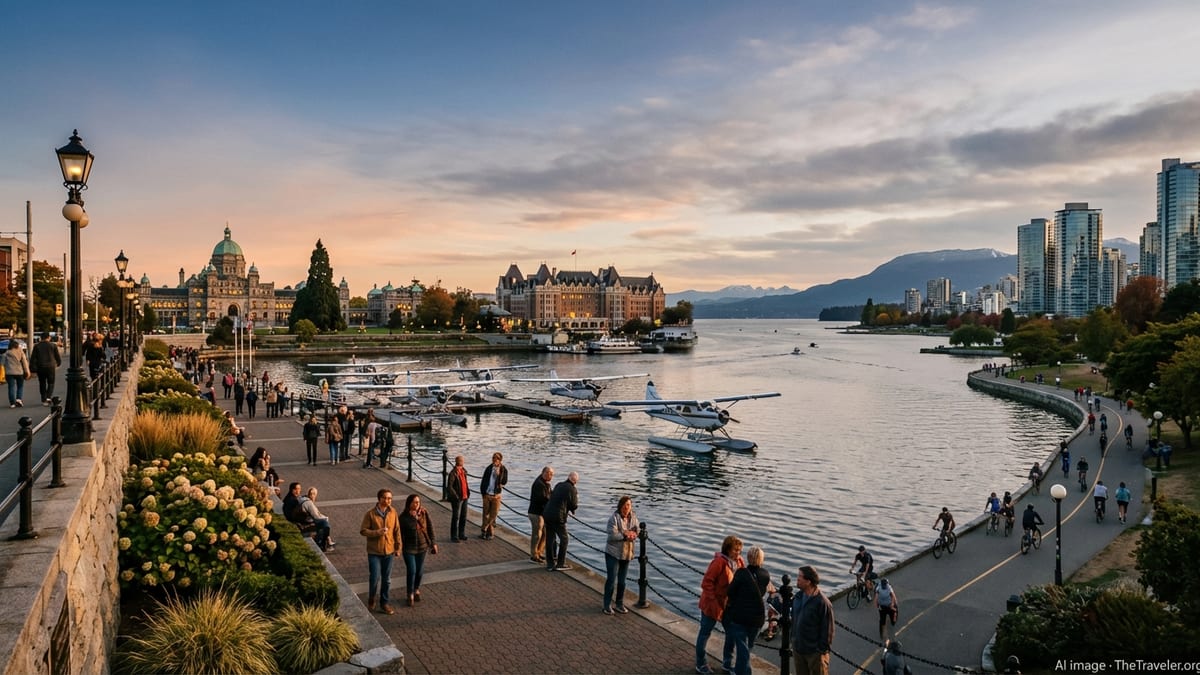
First Impressions: Small-Harbour Charm vs Big-City Waterfront
Arriving in Victoria, my first impression was how compact and human the Inner Harbour feels. The water, the Parliament Buildings, and the Empress Hotel all sit within a few minutes’ walk, and the harbour is busy without being overwhelming: floatplanes landing, small ferries shuttling around, and buskers and markets around Ship Point in peak season. It felt like a place built for lingering instead of rushing, and I found myself slowing down almost immediately.
Vancouver’s waterfront hit me very differently. Stepping onto the seawall around Coal Harbour and Canada Place, the views were bigger and bolder: tall glass towers, cruise ships, container ports in the distance, snowcapped mountains framing the skyline. It is impressive, but it also felt more anonymous. I was one of many people power-walking, cycling, or commuting. The city energy is exciting if that is what you want, but it is not inherently relaxing.
One surprise was how “finished” Victoria’s harbour feels compared with some parts of Vancouver’s waterfront. In Victoria, most of what you want as a visitor is already built in: the visitor centre, museums, tour operators, and cafes are directly around the Inner Harbour. In Vancouver, the waterfront is beautiful, but many of the things I wanted to do were a few blocks inland or scattered across multiple neighborhoods. I found myself planning my days more carefully in Vancouver; in Victoria I could just walk out of my hotel and see what looked interesting.
If you are craving a gentle coastal atmosphere where you can quickly understand the layout and settle in, Victoria wins on first impressions. If you want a skyline-and-mountains punch with a denser, urban waterfront vibe, Vancouver will probably feel more thrilling on day one.
Getting There and Getting Around: Ferries, Transit, and Frustrations
Between the two cities, I relied on BC Ferries for the core connection, sailing between Tsawwassen and Swartz Bay. The crossing itself was lovely: about an hour and 35 minutes through the Gulf Islands, with a mix of open ocean and sheltered passages. Check-in rules were strict though. I learned the hard way that with a vehicle reservation you really do need to arrive 30 to 60 minutes early, or the system stops honoring your booking. On one return leg, a mechanical issue at the Tsawwassen berth caused more than an hour’s delay, and another time I hit a day where peak sailings were effectively sold out well in advance. The romance of the ferry is real, but so are the queues and occasional disruptions, especially in bad weather or holiday periods.
Once in Victoria, getting around was simple. Downtown and the Inner Harbour are compact enough that I rarely needed transit. I walked from my hotel to the harbour, the Royal BC Museum, restaurants, and neighborhood streets in a matter of minutes. When I did need to go further, local buses were straightforward, and rideshare coverage was sufficient though not instant late at night. I never felt stranded, and not having to think much about logistics contributed to the relaxed coastal mood.
Vancouver was a different animal. The transit system is extensive, and the SkyTrain in particular is fast and efficient from the airport and across much of the city. But day to day, I was constantly planning transfers between SkyTrain, buses, and walking stretches, especially when I ventured from downtown to Kitsilano, Commercial Drive, or the North Shore. The payoff was variety: I could hit beaches, dense downtown blocks, and forested parkland in a single day. The downside was cognitive load. On days when I just wanted an easy coastal stroll, I felt a bit tired of navigating.
From a pure travel-experience standpoint, Victoria is easier and more forgiving in terms of movement once you are there. Vancouver is more powerful but also more work, and if you dislike transit planning or managing connections, that will affect how the city feels.
Atmosphere on the Ground: Pace, Crowds, and Coastal Feel
Victoria’s core, especially around the Inner Harbour and Government Street, has the pace of a mid-sized European port town. In high season the lower causeway is busy with buskers, artists, and tour hawkers, but the energy is still fairly gentle. I never felt pushed along by a crowd. Walking out toward the residential streets around James Bay, the coastal atmosphere turns distinctly residential: tree-lined roads, heritage houses, and quiet paths leading to the water. The overall effect is of a place you could live in, not just pass through.
Vancouver, by comparison, is more intense. The seawall around Stanley Park and False Creek is wonderful, but even on a weekday afternoon it can be busy with cyclists, e-bikes, joggers, and tourists on rental bikes. I had to stay alert, which slightly undermined the idea of a lazy coastal stroll. In neighborhoods like Yaletown and Downtown, the streets are busy and sometimes feel cramped by tall towers and traffic noise. When I reached English Bay or Kitsilano Beach, the atmosphere shifted to something more beach-town relaxed, but those quieter pockets require a bit of intentional seeking.
One thing I did not anticipate was how differently the two cities feel at night near the water. In Victoria, the Parliament Buildings and Empress Hotel lit up over the Inner Harbour created a cozy, almost theatrical evening scene. People strolled, couples took photos, and I felt completely comfortable walking alone back to my hotel. In Vancouver, the downtown waterfront felt more businesslike and, south and east of certain blocks, occasionally edgy. The scenic seawall was gorgeous at sunset, but as the night went on I was more selective about which routes I took back, particularly around some of the busier downtown corridors.
If your ideal coastal city is calm, walkable, and intimate, Victoria’s atmosphere aligns closely with that vision. If you want a blend of city hustle with big-water vistas and can tolerate more crowd pressure, Vancouver delivers a more dynamic but less purely relaxing coastal feel.
Cost, Value, and Accommodation Choices
On this trip I intentionally booked mid-range, central hotels in both cities to compare costs. Nightly rates in Vancouver were consistently higher for a comparable level of comfort and location. I paid noticeably more for a standard downtown room there than I did for a similarly rated place a short walk from Victoria’s Inner Harbour. Dining followed the same pattern: in Vancouver, casual meals, coffees, and drinks added up quickly, especially in downtown and trendy areas, while Victoria’s prices felt more moderate for equivalent quality.
However, Vancouver did give me more choice at both ends of the budget spectrum. I saw everything from basic hostels and older motels to luxury high-rises with harbor views and rooftop amenities. In Victoria, the range was narrower. You can splurge at the big waterfront hotels or find smaller inns and chain options, but overall it felt like there were fewer truly low-budget central stays. It is still possible to visit Victoria on a tighter budget, but you may end up a bit farther from the Inner Harbour or in simpler accommodation than you might like.
One real decision moment for me was where to spend my “treat yourself” portion of the budget. I chose to splurge on a harbour-view room in Victoria rather than in Vancouver, and I do not regret it. In Victoria, that upgrade changed the whole vibe of the stay: I could watch the floatplanes and ferries from my window and step outside into the heart of the waterfront within minutes. In Vancouver, a fancy view would have been nice, but I felt like the city was better experienced by being out on the seawall and in the parks rather than staring at the skyline from above.
From a value perspective, Victoria gave me more coastal atmosphere per dollar spent, while Vancouver demanded a higher budget to fully enjoy the better restaurants, diverse neighborhoods, and waterfront locations. If you are cost sensitive and primarily care about a pleasant seaside feel, Victoria pulls ahead. If you have more to spend and want big-city variety, Vancouver can justify the higher prices.
Activities, Nature, and Seasonality
In Victoria, I could fill two or three days without ever straying far from the waterfront. The Royal BC Museum, harbour-front walking paths, whale-watching tours, and harbour ferries were all an easy stroll from my hotel. In summer, events like the Victoria Symphony’s Splash concert on the Inner Harbour, plus markets and live music at spots like Ship Point, added a festive layer to the already scenic setting. Even just sitting with a coffee and watching the mix of ferries, kayaks, and floatplanes was satisfying. The trade-off is that after a few days, the downtown activity menu starts to feel familiar.
Vancouver, on the other hand, is a buffet. I walked and biked the Stanley Park seawall, took transit out to Kitsilano and Jericho beaches, and still barely skimmed the surface of what was available. The city offers more museums, more galleries, more diverse food, and more neighborhoods with distinct character. For nature, the combination of beaches, forested parks, and easy day trips to the North Shore mountains or nearby regional parks makes Vancouver a better base if outdoor variety is your priority. The downside is that you spend more time in motion between those experiences.
Seasonality plays into the coastal atmosphere too. In summer, both cities shine, but Victoria’s compact harbour and outdoor patios make good weather feel more fully integrated into daily life. Mild winter days were also pleasant there, and the smaller scale made gray, rainy spells feel less punishing. In Vancouver’s winter, the coastal drama increased, with low clouds hanging over the mountains and rain on the seawall, but so did the urban gloom. I appreciated the dramatic views but also noticed how easily I retreated indoors after a couple of wet, windy hours.
If you plan to visit in the shoulder seasons, I would lean toward Victoria for a classic harbour-town feel without needing perfect weather. For summer trips of a week or more, Vancouver’s breadth of coastal and near-coastal options starts to outweigh Victoria’s focus.
Safety, Social Issues, and Nighttime Feel
Neither city felt unsafe in the sense of constant threat, but they did feel different once I paid attention to social issues and late-night atmosphere. In Vancouver, there has been a lot of discussion about crime trends and public safety, and while official police data suggests that many categories of crime have been stable or even declining, the visible street disorder in some downtown-adjacent neighborhoods creates a different emotional reality. When I walked near areas with more open drug use and visible homelessness, I felt mostly fine during the day but more cautious at night, choosing better-lit routes and staying closer to busy streets.
Victoria had its own share of visible homelessness and social challenges, particularly in some downtown blocks, but the scale felt smaller and less concentrated. Around the Inner Harbour, I mostly encountered tourists and locals out for a stroll, and my evening walks back to my hotel felt straightforward. I still took the usual big-city precautions, but I did not find myself recalibrating my routes as often as I did in Vancouver.
One decision moment here was where to base myself. In Vancouver, I paid more to stay in a central but calmer area that gave me easy access to the seawall without walking through the edgiest late-night stretches. In Victoria, I felt comfortable booking directly in the heart of the waterfront activity. If you are a traveler who is particularly sensitive to street-level disorder or traveling with kids, that distinction will likely matter.
Overall, both cities are manageable with normal urban common sense, but Victoria delivered a more consistently relaxed sense of safety around its coastal core. Vancouver offers far more to do, but you need to pair that with a bit of research on neighborhoods and nighttime routes.
Real Travel Decisions: What I Would Do Differently Next Time
Before this trip, I assumed Vancouver would be my clear favorite simply because of its scale and global profile. Instead, what happened is that I started to treat the two as complementary rather than competitive. When I only had three nights to spare, Victoria gave me a self-contained coastal escape: a walkable harbour, manageable transit, and enough food and culture to feel complete. Vancouver, by contrast, revealed itself as a place I would want at least five or six nights to experience without rushing.
One major decision point was how to split my limited days. Initially, I booked more nights in Vancouver and fewer in Victoria. After experiencing both, I would invert that plan if I only had four nights total: two or three in Victoria and one or two in Vancouver, treating the larger city as a quick dose of urban energy rather than the centerpiece. If I had a full week or longer, I would allocate a solid five or more nights to Vancouver and then tag on two or three nights in Victoria as a decompression stop at the end.
I would also approach the ferry differently. On this trip, I booked a vehicle and cut the timing too close more than once, which added stress. Next time, for a city-focused visit, I would seriously consider leaving the car behind, using foot-passenger reservations, and relying on transit and rideshare on both sides. The crossing itself is the same, but stepping off as a walk-on passenger instead of worrying about vehicle queues would fit better with the relaxed coastal mood that initially drew me here.
Finally, I underestimated how quickly Vancouver’s costs would add up. In the future, I would probably base in a neighborhood with good transit but slightly away from the absolute downtown core, then earmark a clear budget for one or two big-ticket experiences (like a longer bike rental on the seawall or a special waterfront dinner) instead of casually overspending every day. In Victoria, I would happily spend a bit more on a harbour-facing room again, because in that smaller city the view and location changed how I felt every hour I was there.
The Takeaway
After back-to-back stays, my honest verdict is that neither Victoria nor Vancouver is “better” in any absolute sense. They are coastal twins with very different personalities. Victoria is the slower, smaller sibling: charming, easy to navigate, and ideal if your focus is on feeling the water and the harbour in your daily rhythm rather than ticking off a long list of attractions. Vancouver is the ambitious one: larger, more diverse, more complicated, and capable of keeping you busy for a week or more if you have the energy and the budget.
If you care most about a walkable harbour, manageable logistics, and a gentler nighttime atmosphere, Victoria is the stronger choice, especially for short trips, first-time visitors to the region, or travelers who simply want to relax. If you want big views, multiple beach and park options, an international food scene, and an urban buzz that just happens to be framed by mountains and ocean, Vancouver is worth the extra expense and planning.
On my next West Coast trip, I will not try to choose one forever. I will use Victoria when I need a compact, harbour-front base that feels like a true coastal escape and turn to Vancouver when I am ready to juggle neighborhoods, transit lines, and a bigger, louder, more complex urban waterfront. Knowing what each place does best made my experience far better, and it can do the same for yours.
FAQ
Q1. Is Victoria or Vancouver better for a short 2 to 3 day coastal getaway?
For 2 to 3 days, I found Victoria better. The harbour, main sights, and restaurants are all close together, so you spend more time enjoying the water and less time commuting across the city.
Q2. Which city feels safer and more comfortable to walk around at night?
Both require normal city awareness, but around the Inner Harbour I consistently felt more relaxed walking at night in Victoria. In Vancouver I was more selective about my routes, especially in some downtown-adjacent areas.
Q3. How long is the ferry between Vancouver and Victoria, and do I really need a reservation?
The main BC Ferries crossing between Tsawwassen and Swartz Bay takes about 1 hour and 35 minutes. In my experience, reservations are highly recommended in summer, on holidays, and on busy weekend sailings to avoid long waits or sold-out sailings.
Q4. Which city is more expensive for accommodation and dining?
I consistently paid more for central accommodation and restaurant meals in Vancouver than in Victoria. Vancouver offers more budget extremes, but for similar comfort and location it usually costs more than Victoria.
Q5. Is it worth renting a car, or can I rely on transit and walking?
For city-focused trips, I would skip the car next time. Both downtown Victoria and central Vancouver are walkable, and Vancouver’s transit is extensive. A car helps for regional day trips, but it adds parking costs and ferry complications.
Q6. Which destination has the better coastal scenery?
They are different. Victoria offers an intimate harbour-town feel where the water is always close. Vancouver delivers dramatic skyline, mountain, and ocean views along the seawall. I preferred Victoria for calm atmosphere and Vancouver for sheer scale.
Q7. How many days should I spend in each city on a combined trip?
If you have a week, I would now plan about 4 to 5 nights in Vancouver for variety and 2 to 3 nights in Victoria for a slower coastal finale. With only 3 or 4 nights total, I would lean toward basing primarily in Victoria.
Q8. Is either city better for families with kids?
Both can work, but I found Victoria easier with kids in mind. Distances are shorter, the harbour area is compact, and it is simpler to move around without constant transit changes. Vancouver offers more attractions overall but requires more planning.
Q9. What is the best season to visit for a coastal-focused trip?
Late spring through early fall gives you the best mix of mild temperatures and outdoor life in both cities. I liked Victoria slightly more in the shoulder seasons because the compact harbour made gray days feel cozier, while Vancouver shines in full summer when you can fully use beaches and parks.
Q10. If I have to choose just one, which would I personally return to first?
For a quick personal escape, I would return to Victoria first. The balance of harbour views, walkability, and calmer pace fits how I actually like to spend a short coastal break, even though I appreciate everything Vancouver offers.