

More news on this day
In Victoria, British Columbia, a new generation of Songhees-led canoe and walking tours is reshaping how travelers move through the Inner Harbour, bringing Indigenous history, language, and protocol to the forefront of one of Canada’s most visited waterfronts.
Get the latest news straight to your inbox!
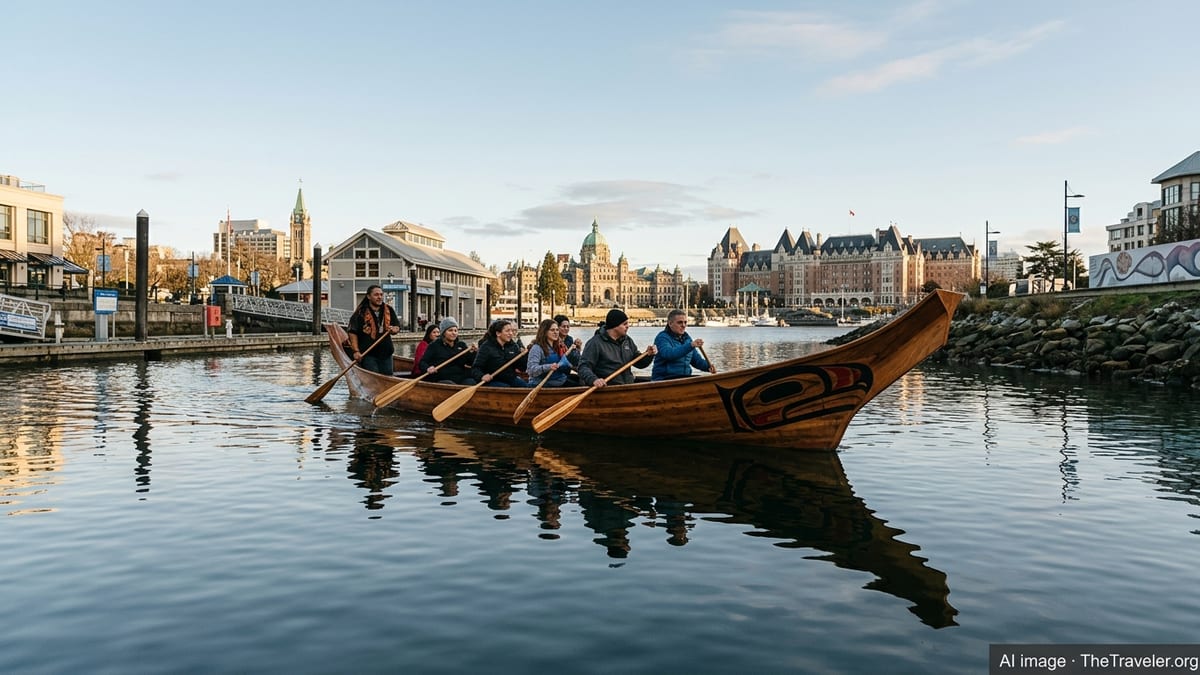
Indigenous-Led Experiences Redefine a Landmark Waterfront
Songhees Tours, owned by Songhees Nation, is now a prominent Indigenous-led presence in Victoria’s Inner Harbour, offering guided canoe and walking experiences where visitors once encountered mostly conventional sightseeing products. Publicly available information from the company and regional tourism bodies indicates that these tours are currently the only Indigenous-owned and operated tourism experiences based directly in the Inner Harbour, giving them a distinct role in how the city’s signature waterfront is interpreted.
The tours are guided by Lək̓ʷəŋən hosts who present the harbour not simply as a scenic postcard, but as part of a living homeland. Narratives focus on the deep relationship between the Songhees people and the waterways and shorelines that long predate the provincial parliament buildings, hotels, and cruise arrivals that now define many visitor impressions of Victoria. This shift reflects a wider trend across British Columbia toward Indigenous stewardship of storytelling and visitor engagement.
Regional travel reports describe the offerings as immersive, placing emphasis on oral history, traditional knowledge, and the responsibilities that come with traveling through these lands and waters. Rather than adding a brief heritage segment to a standard tour, the Indigenous perspective forms the core of the experience, anchoring each route and activity in cultural context.
The Inner Harbour’s popularity as a cruise gateway and a hub for festivals and events means these tours are positioned at a high-visibility crossroads of local life and global tourism. For travelers planning 2026 itineraries, the presence of Songhees-led experiences signals that visiting Victoria increasingly involves engaging with Indigenous voices on their own terms.
Canoe Journeys on Ancestral Waterways
Central to the new program is a series of guided canoe tours that carry guests along routes described by Songhees hosts as the highways of their ancestors. Public descriptions of the product highlight replica traditional canoes and a larger vessel known as the Salish Sea Wolf, which together create options for small groups and organized parties to paddle across the sheltered harbour waters.
These excursions combine practical instruction in paddling techniques and water protocols with stories and songs passed down through generations. Travelers receive guidance on how to enter and move across the water respectfully, aligning recreational activity with cultural teachings about responsibility, reciprocity, and awareness of the surrounding environment.
The canoe tours also reframe familiar views of Victoria’s skyline. As participants cross between downtown docks, Songhees shoreline, and nearby cultural landmarks, guides point out former village sites, place names, and the historical significance of locations that may not be marked on standard maps. For many visitors, this reorientation transforms the Inner Harbour from a backdrop for photographs into a layered cultural landscape.
Seasonal schedules align with the peak visitor months on southern Vancouver Island, with departures typically concentrated in the milder, drier period when sea conditions are favourable. For 2026 planning, travelers are being encouraged through tourism channels to secure advance bookings, particularly for group outings or for travelers looking to pair the canoe experience with other cultural activities.
Walking Tours Connect Inner Harbour to Lekwungen Landmarks
Complementing the water-based excursions, Songhees-led walking tours trace a network of cultural sites around the Inner Harbour and adjoining neighbourhoods. Public tourism materials describe routes that follow interpretive trails and artwork installations, including the well-known Signs of Lekwungen spindle whorl markers created by Songhees artist Clarence “Butch” Dick.
On these walks, guides share stories associated with traditional village locations and important harvesting and gathering areas, using contemporary streets and promenades as entry points into deeper historical narratives. Visitors encounter Indigenous perspectives in spaces that otherwise function as government precincts, hotel districts, and urban parkland, underscoring how densely overlaid the city is on older patterns of occupation and use.
Recent destination updates for Victoria identify Indigenous cultural experiences as a growing focus for the region’s visitor strategy, and walking tours are highlighted as an accessible way for guests of all ages and mobility levels to engage with this shift. Unlike excursions that require extended travel beyond the city, these itineraries begin directly at the harbour’s edge, making them easy to integrate into short stays or cruise stopovers.
Publicly available descriptions of the walking products also emphasize that they are grounded in community guidance and cultural protocol. This framing positions the tours not only as educational opportunities for visitors, but also as part of broader efforts to ensure that Indigenous histories and place names are visible in the daily life of the city.
Tourism Trends: Authenticity, Reconciliation and Demand in 2026
Destination Victoria and local hospitality operators have been signaling growing traveler interest in Indigenous-led experiences across Vancouver Island, and Songhees Tours is emerging as a key response within the urban core. Industry reports describe rising demand for activities that go beyond sightseeing to include opportunities for dialogue, learning, and respectful engagement with host Nations.
The positioning of Songhees Tours within the Inner Harbour aligns with national and provincial calls for reconciliation that include economic participation and cultural self-representation. By operating as a community-owned business, the tours route visitor spending toward Songhees Nation while giving the Nation control over how its stories are shared in one of the province’s most visible tourism stages.
For travelers assembling 2026 itineraries, these trends translate into more options to embed Indigenous perspectives into classic Victoria experiences such as harbourfront strolls, museum visits, and coastal excursions. Tourism messaging increasingly pairs the Inner Harbour’s long-established attractions with references to canoe journeys, guided walks, and Indigenous art installations, suggesting a more integrated cultural landscape than in previous decades.
Travel planners also note that these experiences may resonate with visitors seeking to understand the impacts of colonization and contemporary Indigenous leadership in coastal cities. Rather than treating cultural interpretation as a separate product, Songhees-led tours position it within the everyday urban environment, where office towers, ferries, and legislative buildings share space with longstanding Indigenous territories.
Practical Insight for Travelers Booking Songhees Tours
While specific schedules and pricing may change from season to season, publicly available booking guidance suggests that travelers should plan ahead, particularly for peak summer departures and for days when large cruise ships or major waterfront events increase demand. Prospective guests are directed to check current offerings for details on tour length, meeting locations, and any age or mobility considerations.
Most experiences begin in or near the central Inner Harbour, within walking distance of downtown accommodations and transit connections. This centrality allows visitors to build half-day or full-day plans that combine a canoe or walking tour with nearby attractions such as museums, galleries, harbourfront dining, and public art trails, without requiring a vehicle.
Travel advisories for Victoria generally recommend layered clothing and weather-ready footwear, as coastal conditions can shift quickly even in summer. For canoe outings, guidance typically highlights the importance of following safety instructions from guides, dressing for potential spray or wind, and being prepared for light physical activity.
As 2026 approaches, destination planners are promoting Songhees Tours as part of a broader move toward experiences that are led by local Nations and firmly rooted in place. For visitors, that means that a journey through Victoria’s Inner Harbour can now involve more than a scenic postcard, offering a chance to move across water and land in ways that reflect the stories and stewardship of the people who have always called this coastline home.