

More news on this day
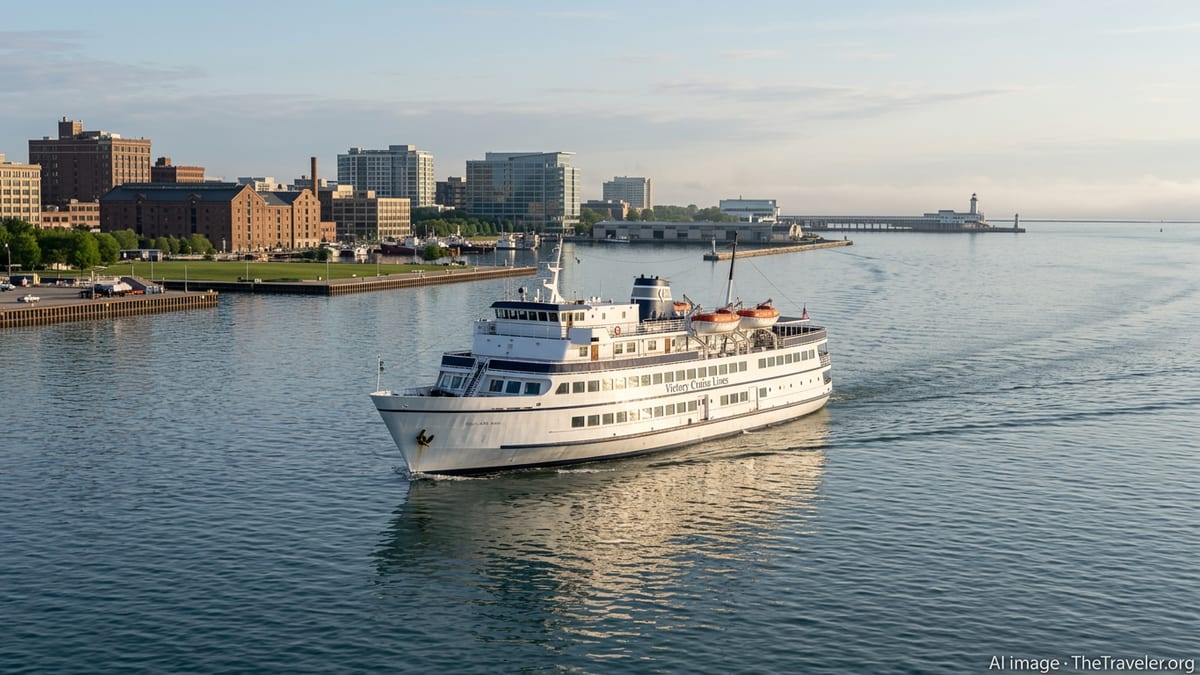
Victory Cruise Lines is making an unexpected, multi-million dollar play on the United States’ Great Lakes, quietly refitting its boutique ships and signaling a new phase in the increasingly competitive freshwater cruising market.
Get the latest news straight to your inbox!
A Legacy Brand Stages a High-Stakes Comeback
Publicly available information shows that Victory Cruise Lines, a small-ship operator focused on Great Lakes and Canadian coastal itineraries, has been rebuilt around two 190-passenger vessels, Victory I and Victory II. The ships were once part of American Queen Voyages’ lakes and ocean division before that brand exited the Great Lakes in 2023 and sold its coastal fleet. Their return under the revived Victory name in 2025 marked a notable reversal, bringing the vessels back to the waters they were originally designed to navigate.
Reports from industry outlets indicate that Victory’s leadership has committed to a substantial, multi-million dollar capital program to refresh and reposition the ships for a more demanding audience. Much of the work is occurring in winter layups and shipyard stays away from public view, covering everything from passenger spaces to technical systems. While full financial figures have not been disclosed, descriptions of the project from trade coverage and port presentations point to a comprehensive overhaul rather than a light cosmetic update.
The renewed investment comes as Great Lakes cruising has shifted from niche curiosity to high-value segment. Travel trade reporting notes that seven or more lines plan to operate a combined ten ships on the lakes in the 2026 season, a sharp increase over a decade ago. In that environment, Victory’s decision to commit fresh capital to its compact vessels is shaping up as a critical test of whether boutique, all-inclusive lake cruising can hold its ground against newer tonnage arriving from larger brands.
For travelers, the most visible result of this behind-the-scenes activity will be a pair of older ships presented as virtually new products. Industry analysts suggest that Victory is using the overhaul to reposition its experience as an upscale, destination-immersive alternative to both river cruising in the Midwest and big-ship ocean itineraries on the coasts.
What the Multi-Million Dollar Overhaul Actually Covers
Detailed technical specifications have not been widely released, but cruise industry coverage and ship-tracking reports outline the broad contours of Victory’s investment. The work includes interior refurbishments of cabins and suites, upgrades to public lounges and dining venues, and enhancements to outdoor viewing areas, including expanded deck seating and improved weather protection. The goal, according to published commentary from executives, is to align the shipboard environment with guests’ expectations of modern boutique hotels rather than traditional coastal cruisers.
Behind the passenger-facing changes, Victory is also using the yard time to address propulsion, hotel engineering, and safety systems. Trade press coverage of similar projects on comparable vessels suggests that upgrades are likely to involve more efficient engines or engine controls, redesigned ventilation and air-conditioning systems, and digital integration for navigation and hotel operations. These refits can be costly, but they also extend vessel life and help operators comply with evolving environmental and safety standards on both sides of the U.S.–Canada border.
Interior design is another focal point. Reports on the relaunch describe a move toward lighter, more contemporary finishes, with attention to regional character through artwork and materials that reference Great Lakes history and landscapes. The intention is to make cabins feel more spacious and to turn observation lounges into all-day social hubs, an important factor on itineraries that emphasize scenery and port calls over on-board spectacle.
From a guest standpoint, the quiet modernization program is expected to translate into better soundproofing, more reliable climate control, upgraded bathrooms, and improved connectivity. While ultra-high-speed internet remains a challenge on inland waterways, Victory’s overhaul is understood to include refined onboard networks and communications hardware, bringing the ships closer to what travelers now consider baseline for premium cruising.
Racing to Keep Pace in a Booming Great Lakes Market
The timing of Victory’s overhaul coincides with a broader surge in Great Lakes cruising. Reports compiled by regional organizations and port authorities describe record seasons in cities such as Cleveland, Green Bay, Muskegon, and Sault Ste. Marie in 2024 and 2025, with ship calls and passenger numbers climbing steadily. New cruise terminals, upgraded docks, and shore-side visitor amenities are being developed from Buffalo to Duluth to accommodate this growth.
At the same time, national operators such as American Cruise Lines are preparing to deploy new vessels and all-U.S. itineraries on the Great Lakes from 2026 onward, adding modern tonnage with expansive balcony cabins and contemporary amenities. Travel industry coverage portrays this as a turning point for the region, shifting it from a seasonal sideline on older ships to a fully contested premium cruise arena.
In that context, Victory’s decision to channel millions into its comparatively small fleet looks less like a surprise and more like a necessary escalation. By investing heavily in comfort, service, and immersive routing rather than raw ship size, the company appears to be betting that travelers will favor intimate vessels that can access smaller ports and dock closer to downtown districts such as Chicago’s Navy Pier, Toronto’s waterfront, and historic mid-size cities along the St. Lawrence Seaway.
The strategy carries risks. As more operators enter the market, price-sensitive travelers may gravitate toward introductory fares on brand-new ships, and ports may prioritize larger vessels that deliver higher passenger volumes per call. The scope of Victory’s refit suggests, however, that the company expects sustained demand for slower, highly curated itineraries that highlight regional culture, history, and nature over entertainment-focused cruising.
Itineraries, Ports, and the Promise of a New Guest Experience
Schedules published for 2025 and 2026 show Victory I and Victory II operating extended voyages that touch all five Great Lakes across a single itinerary, linking hubs such as Chicago, Toronto, Milwaukee, and Montreal with smaller communities on Lake Superior, Lake Huron, and Lake Erie. These sailings typically run from spring through early autumn and lean heavily on overnight or full-day calls that allow guests to explore beyond the pier.
Local and trade reporting highlights stops at destinations like Mackinac Island, Green Bay, Muskegon, Detroit, Cleveland, and ports in Ontario and Quebec, many of which have upgraded facilities in anticipation of more frequent cruise traffic. By pairing upgraded hardware on board with evolving infrastructure ashore, Victory is positioning its overhauled ships as moving bases for slow exploration, rather than simple transportation between marquee cities.
For passengers, the overhaul is expected to mean more flexible dining, improved observation spaces for wildlife and shoreline viewing, and programming that emphasizes regional experts and local partnerships. Public descriptions of the onboard product emphasize inclusive pricing, smaller passenger counts, and a casual, country-club atmosphere, elements that have proven popular with travelers who might otherwise look to European river cruises or coastal expeditions.
The coming seasons will test whether this formula resonates at scale. With more ships, more itineraries, and heightened expectations for comfort and sustainability, the Great Lakes are entering a new era of cruise tourism. Victory Cruise Lines’ quiet but significant fleet overhaul suggests that the company intends not just to participate in that shift, but to help shape what Great Lakes cruising looks like for the rest of the decade.