

More news on this day
Thousands of passengers were left stranded in Austria on Friday as Vienna International Airport struggled to recover from a severe winter storm, with 238 flight delays and 80 cancellations rippling across airline networks and stranding travelers as far afield as Barcelona, Istanbul, Brussels, Krakow and Manchester.
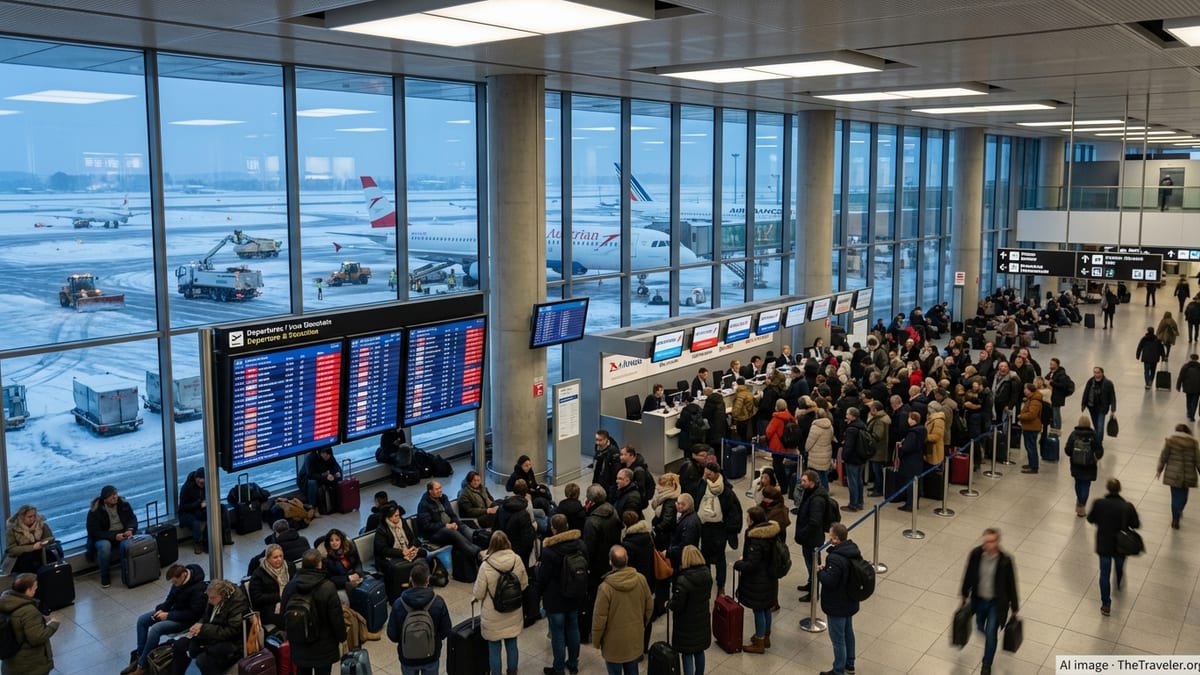
Snowstorm Turns Vienna Into a Bottleneck for Europe
The disruption followed a fierce snowstorm that swept across eastern Austria on 20 February 2026, dumping around 20 centimeters of heavy, wet snow on Vienna and forcing one of Central Europe’s busiest hubs to suspend operations for several hours. Airport officials temporarily halted all departures and arrivals in the morning as runways and taxiways became unsafe, warning passengers not to travel to the airport unless absolutely necessary.
Although limited operations gradually resumed around midday, the damage to the day’s schedule was already done. With aircraft and crews out of position and ground handling slowed by continued deicing and snow clearing, delays quickly cascaded through the afternoon and into the evening. By late day, operational data showed 238 delayed flights and 80 outright cancellations linked to Vienna, an extraordinary figure even in Europe’s storm-prone winter season.
The shutdown turned Vienna from a key connector between Western and Eastern Europe into a chokepoint. Transfer passengers heading toward the Balkans, the eastern Mediterranean and Nordic cities found themselves stuck in limbo, while point-to-point travellers faced long queues at service counters and crowded terminal halls as they waited for rebooking options.
Major Airlines Hit: Air France, easyJet, Finnair, Austrian and Ryanair
The latest figures highlight how broadly the disruption spread across airline groups and business models. Flag carriers such as Air France and Finnair were among those forced to cancel or significantly delay services, particularly on routes linking Vienna with hubs including Paris Charles de Gaulle and Helsinki. For network carriers, Vienna’s temporary shutdown created knock-on effects across connecting banks, with missed onward connections compounding the total number of affected passengers.
Austrian Airlines, which uses Vienna as its primary hub, faced some of the most acute operational challenges. The carrier had already canceled around 100 flights on Friday as snow intensified and runway capacity was sharply reduced, and the subsequent wave of delays and cancellations further strained its tight short- and medium-haul schedule. Widebody services to long-haul destinations also suffered diversions and extended ground times as captains awaited safe landing windows and deicing clearance.
Low-cost operators easyJet and Ryanair were hit in a different way, with dense point-to-point schedules leaving limited slack to absorb disruption. Aircraft that would normally fly multiple rotations per day between Vienna and cities such as Barcelona, Manchester and Brussels were held on the ground or diverted, leading to rolling delays on subsequent sectors. For passengers, that meant last-minute gate changes, abruptly altered departure times and, in some cases, overnight stays far from their intended destination.
Disruption Spreads From Vienna to Barcelona, Istanbul, Brussels and Beyond
What began as a localized weather shutdown quickly metastasized into a broader European network problem. With Vienna acting as both origin and transfer point for a web of routes, cancellations and delays there reverberated across multiple countries by late Friday. Flights to and from Barcelona experienced significant hold-ups as aircraft scheduled to depart Austria arrived hours late, while some rotations were removed from the timetable entirely to reset operating patterns.
In Istanbul, a growing number of passengers originating in or connecting through Vienna found themselves delayed as inbound aircraft and crews struggled to reach Turkish airports on time. Airlines faced the difficult task of juggling slot restrictions at these busy hubs while recovering from the earlier standstill in Austria. Brussels, Krakow and Manchester saw similar ripple effects, with late-arriving aircraft triggering a chain reaction of missed connections and compressed turnaround times.
Other cities, from Central Europe to the western Mediterranean, were also pulled into the disruption map as airlines adjusted rosters and repositioned aircraft. Even where flights continued to operate, their departure boards often told the story of the day: multiple services “delayed,” “rescheduled” or “awaiting crew,” all pointing back to the hours-long paralysis in Vienna earlier in the morning.
Inside Vienna Airport: Crowded Halls, Cots and Constant Announcements
Inside Vienna International Airport itself, the human impact of the disruption was immediately visible. Terminals that had briefly emptied during the initial suspension filled rapidly as stranded passengers from diverted and canceled flights filtered back into the building. Long lines formed at airline customer service desks, with travelers seeking rebooking options, meal vouchers or information on overnight accommodation.
Announcements reminding people to check their flight status online or via airline apps sounded at regular intervals, as the airport urged travelers to avoid crowding departure halls unless they had confirmed departure times. Ground staff reported intense pressure as they tried to manage expectations, triage urgent cases such as families with small children or elderly passengers, and coordinate with airline operations teams contending with continually shifting schedules.
In several areas of the terminal, makeshift rest zones appeared as passengers laid out jackets and carry-on bags to fashion temporary beds. Some airlines arranged hotel rooms and transportation for those facing overnight delays, in line with European passenger rights rules, but the sheer number of affected customers meant not everyone could be accommodated immediately. For many, the hours between missed departure slots and rebooked flights became a long test of patience.
Austria’s Transport Network Under Winter Pressure
The aviation chaos unfolded against a backdrop of broader winter disruptions across Austria. The same snowstorm that hammered Vienna Airport also caused extensive traffic problems on highways and local roads, with authorities reporting accidents and road closures as drivers struggled with slick surfaces and poor visibility. In parts of Styria and other regions, tens of thousands of households briefly lost power as heavy, wet snow weighed down power lines.
Rail operators ran reduced or delayed services on some routes as they contended with snow-covered tracks and signal issues. That limited the ability of stranded air passengers to quickly switch to trains or buses as an alternative, particularly for cross-border journeys toward neighboring countries such as Hungary, Slovakia and the Czech Republic. The combined impact underscored how a single intense storm system can strain multiple layers of a country’s transport infrastructure at once.
Austrian authorities and airport managers stressed that safety remained the overriding priority. Runways and taxiways required repeated clearing, and the pace of flight resumptions was dictated by visibility, braking performance and the availability of deicing equipment. While some frustrated passengers questioned the slow return to normal operations, aviation experts emphasized that conservative decisions in such conditions significantly reduce the risk of runway excursions and other winter-weather incidents.
Passenger Rights and What Travelers Can Expect
For many of those affected, the immediate question was what compensation or support they might be entitled to. Under European Union air passenger protection rules, travelers whose flights are canceled or experience very long delays can, in some circumstances, claim financial compensation and assistance from their airline. However, the regulations make a distinction between disruptions caused by extraordinary circumstances, such as severe weather, and those resulting from technical or staffing problems within an airline’s control.
In the case of Vienna’s snowstorm-related shutdown, the heavy snowfall and resulting runway closures are likely to be treated as extraordinary, meaning direct cash compensation may not apply in many instances. Even so, airlines are still generally required to provide care and assistance, including meals and refreshments during long waits, hotel accommodation where an overnight stay becomes necessary, and rebooking on the next available service.
Consumer advocates urged passengers to keep boarding passes, booking confirmations and receipts for out-of-pocket expenses, noting that some travelers may still have valid claims for compensation if they can show that issues unrelated to the weather, such as crew shortages or poor contingency planning, contributed to excessive delays. Travelers were also reminded to check their travel insurance policies, as some include specific provisions for weather-related disruption.
Operational Recovery: Clearing Backlogs and Rebalancing Schedules
By late Friday, Vienna Airport and its partner airlines had turned their focus to recovery. Winter maintenance crews continued working around the clock to remove accumulated snow, with reports of tens of thousands of tons already cleared from key surfaces. Deicing teams rotated through aircraft lineups to minimize further cold-weather delays, while operations planners labored over revised schedules designed to restore predictability over the weekend.
Airlines sought to prioritize flights with high numbers of connecting passengers or those serving destinations with limited alternative options. In some cases, carriers combined services, upgauging aircraft where possible to accommodate more rebooked passengers on a single flight. Others operated positioning legs without passengers to return aircraft to Vienna or move them onward to outstations that had lost capacity earlier in the day.
Industry analysts said it could take at least 24 to 48 hours before schedules fully stabilize, particularly on busy city pairs where aircraft and crews must be carefully rotated back into their normal patterns. With winter weather still in the forecast across parts of Central and Eastern Europe, they cautioned that further localized disruptions remain possible even after Vienna’s immediate backlog is cleared.
What This Means for Travelers Planning Trips Through Vienna
For prospective travelers with upcoming journeys involving Vienna, the storm served as a timely reminder of the importance of flexibility in winter travel plans. Airlines and airports urged passengers to monitor their reservations closely in the days ahead, using official apps and flight status tools rather than relying solely on third-party booking engines or generic search results. They also recommended allowing extra connection time where feasible, particularly for itineraries involving transfers onward to destinations in Eastern or Southeastern Europe.
Travel agents and tour operators reported a spike in inquiries from clients seeking to adjust itineraries or add protection such as flexible tickets and more comprehensive insurance. Some suggested that passengers consider early-morning departures, which can be less affected by rolling delays from the previous day, and to pack essential items, including medication and chargers, in carry-on bags in case checked luggage becomes temporarily inaccessible during an unexpected layover.
Despite the turmoil, aviation experts emphasized that Europe’s major airports and airlines have long experience managing winter weather events. While the scale of Vienna’s snowstorm and the resulting 238 delays and 80 cancellations were striking, they argued that the system’s ability to gradually restart operations, rebook thousands of passengers and clear backlogs over subsequent days demonstrates both the vulnerabilities and resilience of modern air travel.