

More news on this day
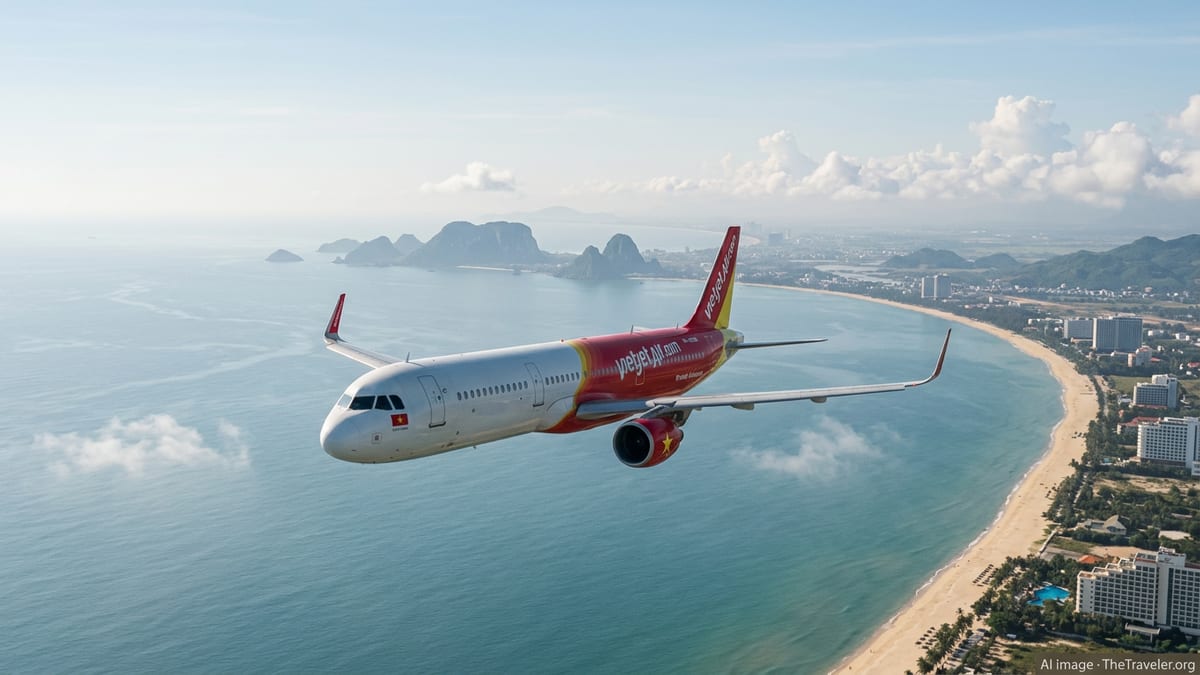
Vietnamese low cost carrier Vietjet is expanding its regional footprint with the planned launch of two new international routes, connecting Da Nang with Jakarta and linking the beach destination of Nha Trang with Singapore on competitively priced fares.
Get the latest news straight to your inbox!
New Links Strengthen Vietnam’s Regional Connectivity
Publicly available route development updates indicate that Vietjet has been steadily adding international services from secondary Vietnamese cities, positioning Da Nang and Nha Trang as gateways rather than mere feeder destinations. The forthcoming Da Nang–Jakarta and Nha Trang–Singapore routes follow a broader pattern in which the airline has introduced flights such as Da Nang–Ahmedabad and Nha Trang–Daegu to tap growing demand from regional tourism and diaspora markets.
Industry summaries of Vietjet’s network strategy show that the carrier now treats coastal cities like Da Nang and Nha Trang as strategic hubs for both inbound leisure travelers and Vietnamese passengers looking for short breaks around Asia. By targeting Jakarta, Southeast Asia’s largest metropolitan area, and Singapore, one of the region’s biggest aviation hubs, the new services are designed to slot into existing flows of budget-conscious travelers.
Regional aviation coverage also points to intensifying competition on Vietnam–Indonesia and Vietnam–Singapore corridors, as full service and low cost airlines alike add capacity. Vietjet’s low fare model is expected to keep downward pressure on ticket prices, while offering additional point to point options that reduce the need for passengers to route through Ho Chi Minh City or Hanoi for international connections.
The new links are likely to be marketed heavily toward tourists interested in multi stop itineraries that combine Vietnam’s central coast with urban and island experiences elsewhere in ASEAN. Jakarta based travelers will gain easier access to Da Nang’s beaches and nearby UNESCO listed Hoi An, while Singapore based visitors and transit passengers will have a direct line to Nha Trang’s resort coastline.
Tourism Hubs Seek Wider Reach in ASEAN
Da Nang has spent recent years positioning itself as a regional aviation gateway, courting airlines and expanding international services to diversify beyond traditional markets. Local tourism reports highlight partnerships with carriers ranging from Middle Eastern full service airlines to regional low cost operators, reflecting a strategy to attract both long haul and short haul visitors.
For Da Nang, a direct connection to Jakarta complements existing links to other major Asian cities and strengthens access to Indonesia’s large outbound travel market. Jakarta’s status as a financial and cultural center, alongside its growing middle class, aligns with Da Nang’s ambitions to attract higher spending visitors for beach stays, conferences, and events such as festivals and sports tournaments.
Nha Trang, served by Cam Ranh International Airport, has followed a similar trajectory as it evolves from a domestic holiday spot into an internationally recognized resort destination. Recent route announcements by multiple carriers into Cam Ranh underscore the area’s rising profile, particularly among beach focused travelers from Northeast and Southeast Asia.
A low cost Nha Trang–Singapore service is poised to deepen that trend. Singapore acts as a powerful distribution point for regional tourism, with many passengers connecting through Changi Airport from Europe, Australia, and the wider Asia Pacific. A direct link provides a straightforward way for international travelers to bundle Nha Trang into broader itineraries without transiting through Vietnam’s biggest cities.
Affordable Fares Aim to Capture Price Sensitive Travelers
Vietjet has built much of its brand around highly competitive base fares, frequent promotional campaigns, and a dense network of short haul routes. Investor updates and business presentations emphasize the airline’s focus on stimulating new demand in markets where price remains a key barrier to international travel.
The Da Nang–Jakarta and Nha Trang–Singapore routes are expected to follow this template, with entry level fares pitched to compete strongly against existing one stop options and rival low cost carriers. While ancillary fees for baggage, seat selection, and onboard services remain part of the business model, the all in cost for many travelers is likely to undercut comparable itineraries involving transfers.
Travel industry observers note that lower fares can significantly broaden the pool of potential passengers, particularly students, young professionals, and small business owners who might otherwise limit trips to domestic destinations. These demographic groups have driven much of the growth in low cost air travel across Asia and have shown a strong appetite for city breaks, beach holidays, and short notice trips tied to events or sales.
In addition, competitive pricing on the new routes could serve as a catalyst for more tour packages linking Vietnam with Indonesia and Singapore. Travel agencies and online platforms are likely to promote bundled products that combine flights with hotel stays along Da Nang’s and Nha Trang’s coastlines, further embedding the new services into the regional tourism ecosystem.
Implications for Regional Airline Competition
The move into Da Nang–Jakarta and Nha Trang–Singapore aligns with a broader reshaping of Southeast Asia’s aviation map, as low cost carriers look beyond capital to capital routes and target under served city pairs. Other airlines have recently unveiled their own Vietnam related launches, including services connecting Da Nang with destinations in Indonesia and new flights between Vietnamese resorts and Singapore, reflecting intensifying competition across the region.
Market analysts suggest that Vietjet’s growing international footprint could pressure rivals to match capacity or adjust pricing on overlapping sectors. Full service players may respond by emphasizing premium cabins and loyalty benefits, while competing low cost airlines focus on frequency and schedule convenience. For passengers, the near term effect is more choice and a wider range of price points.
The expansion also highlights how secondary Vietnamese airports are becoming increasingly important to airline network planners. Rather than treating Da Nang and Nha Trang purely as spokes off Hanoi or Ho Chi Minh City, Vietjet and its competitors are carving out direct international routes that bypass traditional hubs. This approach reduces travel time and can improve aircraft utilization by spreading demand more evenly across a network.
As more carriers pursue similar strategies, industry observers expect to see further diversification of Vietnam’s international links, with routes tailored to specific tourism, diaspora, and business niches. Vietjet’s latest additions between Da Nang, Jakarta, Nha Trang, and Singapore fit squarely within that trend.
What Travelers Can Expect on the New Routes
While full operational details are typically finalized closer to launch, Vietjet’s existing international services provide an indication of what passengers can expect. The airline predominantly uses narrow body aircraft configured for all economy seating on regional routes, with a focus on quick turnarounds and high utilization.
Flight schedules on comparable sectors often target convenient morning or evening departures to appeal to both leisure and business travelers, with timings adjusted to connect with domestic Vietnamese services. For the Da Nang–Jakarta route, that could mean same day onward links to other Vietnamese cities, while the Nha Trang–Singapore connection may be timed to feed into or out of long haul arrivals at Changi via separate tickets.
As with many low cost carriers, travelers are encouraged to factor in potential extras such as checked baggage, onboard meals, and seat selection when comparing fares. Publicly available feedback on Vietjet indicates a mix of experiences, with passengers frequently citing attractive prices alongside a need to plan carefully around possible schedule changes or delays typical of busy regional networks.
Even so, the additional non stop options are likely to be welcomed by travelers who prioritize direct routes and lower costs over full service amenities. For Da Nang, Jakarta, Nha Trang, and Singapore, the new links stand to deepen tourism exchanges, broaden weekend getaway possibilities, and strengthen Vietnam’s role in the rapidly evolving Southeast Asian air travel landscape.