

More news on this day
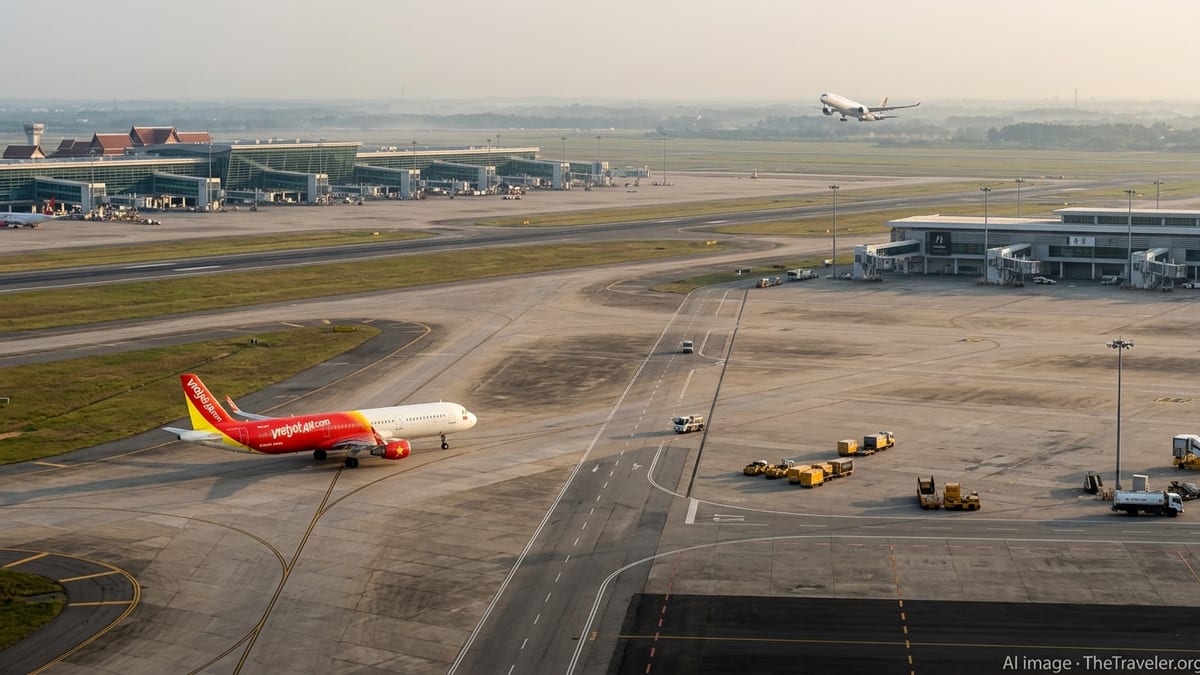
Vietnamese low cost carrier Vietjet is extending its regional and long haul ambitions into 2026, with Japan emerging as a key pillar alongside planned links to the Czech Republic, Indonesia and expanded operations in Thailand.
Get the latest news straight to your inbox!
Japan Becomes a Focus Market in 2026 Network Strategy
Publicly available information on Vietjet and Thai Vietjet schedules indicates that Japan is moving to the heart of the group’s growth strategy in 2026. New and recently launched services connect Bangkok with Osaka Kansai and Tokyo Narita, adding to earlier Vietnam to Japan routes such as Ho Chi Minh City to Nagoya and Fukuoka, and Hanoi to Hiroshima. The pattern points to a coordinated push to capture both outbound Japanese demand and growing Southeast Asian leisure travel into the country.
Reports on route filings and airport announcements show that Thai Vietjet’s Bangkok Suvarnabhumi to Osaka Kansai service entered operation in early February 2026, closely followed by daily Bangkok to Tokyo Narita flights. These additions supplement existing links from Bangkok to Fukuoka and from Chiang Mai to Osaka, broadening the network of secondary Japanese cities served by the group.
The emphasis on Japan aligns with Vietjet’s broader shift into higher yielding medium haul markets. Industry analysis notes that wide body aircraft are being deployed on selected routes to Japan as Vietjet gradually increases capacity for flights of five to seven hours, putting core Japanese gateways within range from both Vietnam and Thailand. This development supports the airline’s objective of securing a larger share of traffic between Japan and emerging destinations in mainland Southeast Asia.
For travelers, the growing collection of Japan routes translates into more direct options from both Vietnam and Thailand at low cost carrier price points. It also positions Vietjet to compete more directly with full service regional rivals on key city pairs, particularly during peak holiday seasons when seat demand to Japan typically spikes.
Czech Republic Links Signal Long Haul European Ambitions
Alongside its focus on Japan, Vietjet is preparing to extend its network deep into Europe, with the Czech Republic highlighted in company focused analysis as one of the first prospective destinations. Travel and aviation trade outlets covering the airline’s aircraft orders report that newly ordered Airbus A330neo wide body jets, due to enter service through 2025 and 2026, are being earmarked for nonstop flights between Vietnam and major European cities including Prague.
The prospective Prague connection forms part of a wider long haul plan that also considers routes to France, Germany and the United Kingdom. These services are expected to be supported by a dense regional network feeding long haul departures through hubs such as Ho Chi Minh City and Hanoi, using Vietjet’s large fleet of A321neo aircraft to funnel passengers onto the new intercontinental flights.
Industry commentary suggests that opening a Vietnam to Czech Republic route would carry both tourism and diaspora significance. Prague is home to a longstanding Vietnamese community, and direct flights could stimulate two way traffic by simplifying travel for visiting friends and relatives while attracting European tourists to Vietnam’s coastal and cultural destinations.
The choice of A330neo aircraft, with their extended range and lower fuel burn, is seen as central to making long haul operations viable for a low cost carrier. Analysts point out that the combination of new generation wide bodies and a maturing regional network gives Vietjet more flexibility to add point to point routes in Europe beyond the traditional hubs served by other Asian airlines.
Indonesia and Thailand Strengthen Vietjet’s ASEAN Footprint
Within Southeast Asia, Indonesia and Thailand are emerging as key pillars of Vietjet’s 2026 growth plan. Earlier expansions have already brought new connections between Vietnam and major Indonesian gateways, and regional travel media have highlighted plans for additional capacity and new city pairs as aircraft deliveries continue. The aim is to tap into rising intra ASEAN tourism, particularly among price sensitive younger travelers.
In Thailand, the group’s affiliate Thai Vietjet is playing a central role. Public schedules show that Bangkok Suvarnabhumi has evolved into a secondary hub for services radiating across North Asia and the wider region, including China, Japan, Vietnam, Cambodia and India. New direct flights from Bangkok to Osaka and Tokyo in 2026 add further weight to Thailand’s role as a bridge between Northeast Asia and other parts of Southeast Asia.
For Indonesia, Vietjet’s growth is expected to build on existing demand flows between Vietnam’s major cities and destinations such as Jakarta and Bali. Travel industry reporting indicates that Vietnamese leisure and business traffic to Indonesia has been rising in parallel with the growing popularity of Vietnam among Indonesian tourists, creating opportunities for low cost carriers to add capacity.
The broader regional strategy positions Vietjet as a connector of secondary cities across ASEAN rather than relying solely on trunk routes between capital hubs. This approach is consistent with the group’s strategy in other markets, where new routes often link emerging tourism centers directly instead of routing passengers through legacy gateways.
Fleet Growth and Infrastructure Support 2026 Expansion
Underlying Vietjet’s network ambitions is a rapid build up of fleet capacity. Investor presentations and airline announcements show that the carrier has committed to substantial single aisle and wide body aircraft orders, including additional A321neo jets for high density regional flying and A330 wide bodies dedicated to longer haul sectors to Australia, Japan, India and Europe.
By late 2025, coverage in Vietnamese business media reported that Vietjet’s fleet, including aircraft operated by its Thai affiliate, had surpassed 120 units, with more deliveries scheduled through 2026. The airline has also been inducting new generation A321neo aircraft around the New Year 2026 peak, specifically to accommodate higher travel demand and support future route launches.
Infrastructure developments in Vietnam are expected to further enable this growth. Tan Son Nhat International Airport in Ho Chi Minh City opened an expanded domestic terminal in 2025, easing congestion and improving turnaround times. Construction of Long Thanh International Airport near Ho Chi Minh City, planned to begin operations in the second half of 2026, is widely viewed as a potential long term base for continued expansion by Vietnamese carriers, including Vietjet.
Aviation analysts point out that the combination of more efficient aircraft and improved airport capacity gives Vietjet additional room to increase frequencies on established routes while launching new services such as those to Japan, the Czech Republic, Indonesia and Thailand. This balance of consolidation and expansion is expected to be a defining feature of the airline’s 2026 strategy.
Implications for Travelers and Competitive Dynamics
The addition of Japan, the Czech Republic, Indonesia and expanded Thailand services to Vietjet’s route map carries significant implications for travelers across Asia and Europe. Low cost, nonstop or one stop itineraries from cities such as Ho Chi Minh City, Hanoi and Bangkok to a wider selection of Japanese and European destinations provide more choice in both price and schedule.
Regional tourism boards are likely to see benefits from the increased connectivity, particularly for second tier cities that gain direct flights. As Vietjet links more points in Japan and Southeast Asia, travelers may be able to plan multi country itineraries without relying solely on traditional full service network carriers, potentially lowering overall trip costs.
At the same time, the competitive landscape is set to become more intense. Established airlines serving routes between Japan, Europe and Southeast Asia may respond with pricing adjustments or added capacity of their own. Industry observers note that Vietjet’s model relies on high aircraft utilization and ancillary revenue, enabling aggressive introductory fares that can stimulate new demand but also pressure rivals.
For passengers considering Vietjet’s new services in 2026, the expanding network means a wider range of route combinations, often with convenient connections in Ho Chi Minh City, Hanoi or Bangkok. As schedules firm up and additional aircraft enter the fleet, the airline’s role in shaping travel flows between Japan, Europe and Southeast Asia is expected to grow, with Japan now clearly positioned alongside the Czech Republic, Indonesia and Thailand as a cornerstone of its latest phase of expansion.