

More news on this day
Vietjet is preparing to tighten air links between Indonesia, Vietnam and Singapore, with industry reports pointing to a new Jakarta–Da Nang connection that would plug directly into the airline’s fast-expanding Da Nang–Singapore network and give Southeast Asia travelers a smoother path to Vietnam’s central coast beaches.
Get the latest news straight to your inbox!
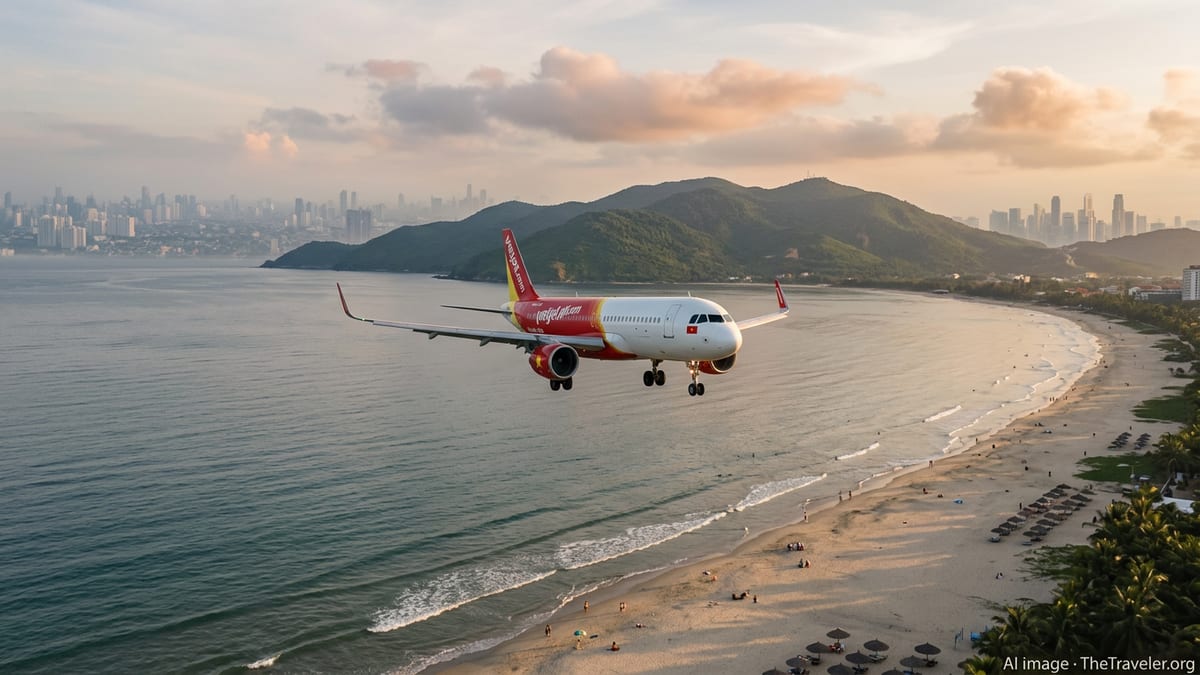
A New Shortcut From Jakarta to Vietnam’s Central Coast
Publicly available airline planning documents and regional aviation coverage indicate that Vietjet is working on a direct Jakarta–Da Nang route that would mark one of the first low-cost, non-stop links between Indonesia’s capital and Vietnam’s central coast. While the carrier has not yet opened sales, the move aligns closely with its broader push to add capacity into Da Nang and other Vietnamese beach destinations as demand for intra-ASEAN leisure travel accelerates.
The prospective Jakarta–Da Nang connection would significantly shorten journey times for Indonesian travelers who currently rely on multi-stop routings via Ho Chi Minh City, Hanoi, or other regional hubs. By flying straight into Da Nang International Airport, visitors could reach popular coastal areas such as My Khe Beach, Hoi An, and the Hai Van Pass region in a single hop, positioning central Vietnam as a more convenient alternative to long-haul beach holidays.
For Vietjet, Jakarta represents an important gateway to the Southeast Asian archipelago and a large outbound market that is increasingly looking beyond traditional destinations. New direct services from Jakarta into Vietnam’s resort cities would complement existing capacity from other Indonesian gateways and build on the recent trend of airlines adding more beach-focused routes across the region.
Da Nang–Singapore Frequencies Climb Ahead of Regional Demand
While Jakarta–Da Nang plans take shape, Vietjet is already in the midst of a tangible ramp-up on the Da Nang–Singapore sector. Travel industry reports show that the airline has scheduled a doubling of its Singapore–Da Nang service from one to two daily return flights from late November 2025, responding to sustained growth in leisure and short-break traffic between the Lion City and Vietnam’s central coast.
Industry coverage indicates that, together with routes from Singapore to Ho Chi Minh City, Hanoi and Phu Quoc, the expanded Da Nang service will lift Vietjet’s total weekly flights between Vietnam and Singapore into the dozens, consolidating the carrier’s position as one of the most active low-cost operators on this corridor. Additional frequencies are timed to capture both weekend leisure traffic and weekday business and meetings demand.
The strengthened Da Nang–Singapore schedule is especially significant for travelers originating in Indonesia. Jakarta-based passengers using Singapore as a transfer point gain more same-day connection options onward to Da Nang, reducing layover times and making three-country itineraries that combine Indonesia, Singapore and Vietnam more practical within a single week of travel.
Jakarta, Da Nang and Singapore Form a New Triangular Travel Corridor
The combination of a planned Jakarta–Da Nang route and boosted Da Nang–Singapore frequencies effectively sketches a new triangular travel corridor across Southeast Asia. At one corner sits Jakarta, a megacity with a rapidly expanding middle class and a growing appetite for regional getaways. At another is Da Nang, increasingly marketed as a gateway to heritage-rich Hoi An and Hue as well as a standalone beach destination. Completing the triangle is Singapore, a major aviation hub and short-break favorite.
This emerging triangle supports several travel patterns. Indonesian travelers can use a direct flight to Da Nang for beach escapes, then route home via Singapore for shopping and dining stops. Singapore residents, in turn, can reach Da Nang on Vietjet’s enhanced schedule and later continue to Indonesia using the dense Jakarta–Singapore network operated by multiple carriers. The result is a flexible web of options that encourages multi-stop holidays instead of simple point-to-point trips.
Tourism boards in Vietnam and across ASEAN have been actively promoting multi-country itineraries, and the availability of affordable non-stop and one-stop combinations is a critical enabler. As connectivity improves, travel planners can craft packages that link cultural experiences in central Vietnam with urban stays in Singapore and island retreats in Indonesia, all reachable within short-haul flying times.
Boost for Da Nang’s Beach Tourism and Regional Competitiveness
Expanded air links are expected to provide a direct lift to Da Nang’s tourism economy, which has been positioning itself as a year-round coastal destination with a mix of beach resorts, golf courses and cultural excursions. Local tourism statistics in recent years have pointed to rising international arrivals from both Singapore and broader Southeast Asia, with improved connectivity cited as a key driver.
More non-stop and one-stop options from Jakarta and Singapore should support higher hotel occupancies, longer stays and greater spending on tours and attractions. Travel trade observers note that connectivity is particularly important for mid-range and budget travelers, who are highly sensitive to travel time and the complexity of transits. A low-cost carrier like Vietjet adding capacity into Da Nang can therefore tilt demand away from competing regional destinations that require longer routings.
At the same time, Vietjet’s strategy fits into a broader pattern of airlines fortifying their presence in central Vietnam. Other carriers have added or resumed services into Da Nang from regional hubs, and investment in airport infrastructure and coastal developments is aimed at ensuring the city can absorb higher passenger volumes as new routes come online.
Strengthening ASEAN Connectivity and Future Outlook
The Jakarta–Da Nang initiative and the ramp-up on Da Nang–Singapore flights underscore the continuing integration of Southeast Asia’s aviation market. Regional policy frameworks promoting open skies, along with rising disposable incomes and a robust low-cost carrier sector, are all contributing to more point-to-point routes that bypass traditional long-haul gateways.
For Indonesia, Vietnam and Singapore, additional air links support broader economic and diplomatic goals by facilitating business travel, educational exchanges and tourism flows. Publicly available government and industry statements in recent years have emphasized the importance of aviation connectivity in deepening partnerships within ASEAN, and Vietjet’s network moves sit squarely within that context.
Looking ahead, analysts expect further adjustments to schedules and capacity as airlines respond to seasonal demand and competitive dynamics. If the Jakarta–Da Nang route proceeds to commercial launch and the Da Nang–Singapore expansion performs as projected, travelers across the region can anticipate even more flexible routing options to Vietnam’s central coast, reinforcing Da Nang’s status as one of Southeast Asia’s most accessible beach destinations.