

More news on this day
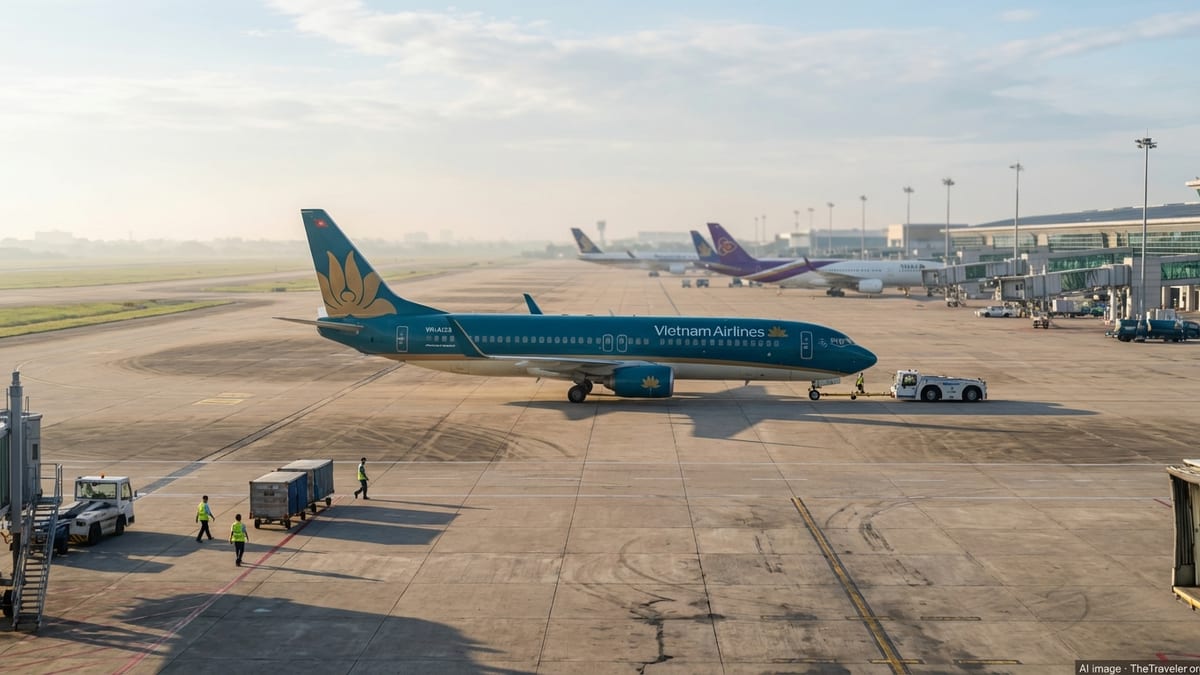
Vietnam Airlines has finalized a landmark order for 50 Boeing 737-8 MAX jets, a multibillion-dollar bet that is set to reshape air travel within Vietnam and across Southeast Asia over the next decade.
A Strategic Milestone for Vietnam’s Flag Carrier
The agreement, announced on February 18, 2026, formalizes a commitment first unveiled during high-level talks between Vietnamese and United States leaders in 2023. For Vietnam Airlines, it is the first-ever purchase of Boeing single-aisle aircraft, a notable shift for a carrier historically aligned more closely with Airbus narrowbodies and Boeing widebodies.
Valued at more than 8 billion US dollars at catalog prices, the deal is central to the airline’s long-term fleet modernization plan. Executives describe the order as a pillar of Vietnam Airlines’ strategy to reinforce financial resilience, improve operational efficiency and elevate service quality as it seeks five-star international airline status by 2030.
The jets, all 737-8 variants within the 737 MAX family, will join an existing widebody fleet built around the Boeing 787 Dreamliner. Together, the new narrowbodies and current long-haul aircraft will form the backbone of a network designed to connect Vietnam’s fast-growing domestic market with key regional and intercontinental destinations more efficiently than before.
Delivery Timeline and Fleet Transformation
Deliveries of the 50 Boeing 737-8 MAX aircraft are scheduled between 2030 and 2032, a window that reflects both the manufacturer’s busy production line and the airline’s phased expansion plans. By the end of that period, Vietnam Airlines expects its overall fleet to grow to around 150 aircraft, significantly boosting capacity while maintaining a relatively young average fleet age.
The long lead time gives the carrier room to prepare for the arrival of the new jets, including securing financing, training flight and cabin crews, and upgrading maintenance and ground-handling capabilities at key airports. According to company statements, funding will be provided through a mix of domestic Vietnamese banks and major US-based financial institutions, including export credit and commercial lenders.
For passengers, the gradual introduction of the 737-8 from 2030 onward is likely to be felt first on Vietnam’s busiest domestic corridors, such as Hanoi to Ho Chi Minh City and popular leisure routes to Da Nang, Nha Trang and Phu Quoc. As more aircraft enter service, the jets are expected to flow onto regional routes linking Vietnam with Thailand, Singapore, Malaysia, Indonesia and other Southeast Asian markets.
What the 737-8 MAX Brings for Travelers
The 737-8 MAX is designed for short and medium-haul routes of up to around 3,500 nautical miles, placing almost all of Southeast Asia, much of Northeast Asia and parts of South Asia within nonstop reach from Vietnam’s major hubs. This range, combined with seating for up to about 200 passengers depending on configuration, makes the aircraft suited to both dense domestic routes and thinner regional city pairs.
From a passenger-experience standpoint, travelers can expect a cabin built around larger overhead bins, sculpted sidewalls and modern LED lighting. While Vietnam Airlines has not yet disclosed a final cabin layout, the airline is likely to configure the jets with a two-class arrangement featuring an upgraded regional business cabin and an economy section tailored to high-density, short-haul flying.
For frequent flyers, the new aircraft should translate into more frequencies on key routes, better schedule choices and potentially new nonstop links that bypass traditional regional hubs. As Vietnam Airlines seeks to strengthen its position within the SkyTeam alliance, the 737-8 fleet will help feed long-haul services operated by its Boeing 787s and by alliance partners, creating smoother one-stop connections between secondary Southeast Asian cities and long-haul destinations in Europe, North Asia and North America.
Implications for Vietnam’s Aviation Market
Vietnam has been one of the world’s fastest-growing aviation markets over the past decade, driven by rising incomes, tourism and a young population that travels frequently for work and leisure. Forecasts cited by industry and government sources suggest the country’s air traffic could double to more than 75 million annual passengers over the coming ten years, with domestic routes and short-haul regional services absorbing much of that growth.
In this context, Vietnam Airlines’ 50-jet order is as much a defensive move as an offensive one. Low-cost rivals such as Vietjet and Bamboo Airways have rapidly expanded fleets and networks, often using aggressive fares to capture price-sensitive travelers on trunk and holiday routes. By investing heavily in a fuel-efficient narrowbody fleet, the flag carrier is positioning itself to compete more effectively on both cost and schedule.
The order also carries national significance. It underscores Vietnam’s ambition to build a competitive aviation hub that can rival long-established centers in Singapore, Bangkok and Kuala Lumpur. With more modern aircraft, the country’s main airports in Hanoi and Ho Chi Minh City will be able to handle greater throughput while limiting noise and emissions, a key consideration as authorities work to manage congestion and environmental impacts.
Regional Competition and Network Effects in Southeast Asia
Across Southeast Asia, airlines are rebuilding and expanding fleets after the shocks of the pandemic, and competition on cross-border routes is intensifying. Carriers in Thailand, Indonesia, Singapore and Malaysia have placed substantial orders with both Boeing and Airbus, betting on continued growth in tourism, migrant labor flows and regional business travel.
Vietnam Airlines’ move to secure 50 Boeing 737-8 MAX jets slots neatly into this regional arms race. The new aircraft will give the airline greater flexibility to adjust capacity across markets such as Bangkok, Singapore, Kuala Lumpur and Manila, where demand can be highly seasonal and sensitive to political or economic news. Increased frequency and more point-to-point connections could draw travelers who might otherwise route through established megahubs.
For Southeast Asian travelers, the effect is likely to be more choice and, over time, more competitive fares on intra-regional routes. As Vietnam Airlines adds capacity and new city pairs, other carriers may respond with additional flights or promotional pricing to defend market share, particularly on popular leisure corridors such as Vietnam to Thailand and Vietnam to Indonesia’s resort destinations.
Safety, Sustainability and the MAX Factor
The inclusion of the 737 MAX in Vietnam Airlines’ fleet is significant given the aircraft type’s global grounding earlier in the decade following two fatal accidents. Since then, aviation regulators have approved extensive design and software modifications, and the jet has gradually returned to service around the world. Several Southeast Asian carriers, including Vietjet through its Thai subsidiary, have already begun operating the MAX in commercial service.
Vietnam Airlines’ decision signals confidence in both the aircraft’s safety enhancements and its economic benefits. The 737-8 MAX is marketed as offering approximately 20 to 25 percent better fuel efficiency and lower carbon emissions compared with older-generation narrowbodies, a meaningful reduction for an airline planning double-digit annual growth across key performance metrics.
Environmental performance is becoming a more prominent concern in Southeast Asia’s aviation debate, with governments and airlines under pressure to reduce emissions and noise even as they expand capacity. The combination of new, more efficient jets and potential future use of sustainable aviation fuel is likely to form a central plank of Vietnam Airlines’ sustainability strategy, helping the carrier meet tightening regulatory and corporate emissions targets.
Financing, Industrial Ties and Geopolitical Signals
Beyond the airline industry, the order has clear economic and geopolitical dimensions. It reinforces the growing trade and investment relationship between Vietnam and the United States, particularly in high-technology and advanced manufacturing sectors. The involvement of American financial institutions and export credit agencies in financing the deal highlights the broader economic stakes attached to the agreement.
For Boeing, the transaction deepens its footprint in a country where it already maintains offices and collaborates with local suppliers, training centers and universities. As Vietnam continues to position itself as an alternative manufacturing base within global supply chains, closer ties with large US industrial groups support the government’s wider economic development agenda.
Within Vietnam, the procurement is expected to stimulate activity across related industries, from maintenance, repair and overhaul to airport infrastructure, ground services and aviation training. As the 737-8 fleet comes online, new jobs in engineering, flight operations, cabin crew and support services will be needed to sustain expanded operations at home and abroad.
What Travelers Can Expect in the Next Decade
For most travelers, the impact of this order will not be immediate, given that the first aircraft are not due for delivery until 2030. However, the deal provides a clear roadmap for how air travel to, from and within Vietnam is likely to evolve over the next ten years.
Domestic passengers can anticipate more frequent flights on core business and leisure routes, as well as improved connectivity from secondary cities that today may have limited nonstop service. Regional travelers will see Vietnam Airlines compete more vigorously on routes to and from major Southeast Asian capitals, potentially opening new nonstop links between mid-sized cities without requiring a transfer in larger hubs.
Onboard, the combination of newer cabins, quieter engines and improved environmental performance should translate into a more comfortable, reliable and sustainable flying experience. As Vietnam Airlines fine-tunes its product to woo higher-yield travelers and frequent flyers, the 737-8 MAX fleet will become a key platform for new seating concepts, inflight connectivity upgrades and refreshed inflight service tailored to short and medium-haul journeys.
Taken together, the order for 50 Boeing 737-8 MAX jets marks a turning point not just for Vietnam Airlines, but for the wider Southeast Asian aviation landscape. It signals confidence in the region’s long-term travel demand and sets the stage for a new phase of competition, connectivity and capacity that will shape how millions of passengers move around one of the world’s most dynamic regions.