

More news on this day
Vietnam Airlines has sealed a multibillion-dollar deal for 50 Boeing 737 MAX 8 jets, a fleet expansion that will reshape how travelers move within Vietnam and across Southeast Asia over the next decade.
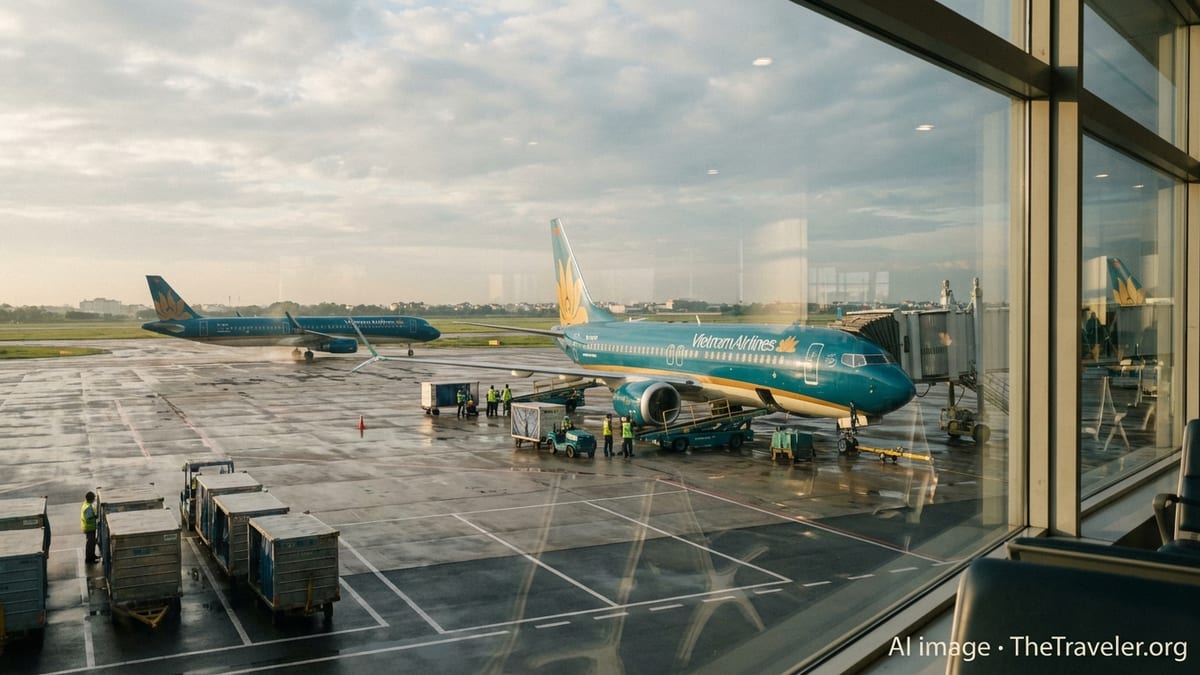
A Landmark Fleet Deal With Big Regional Ambitions
Vietnam Airlines has finalized a firm order for 50 Boeing 737 MAX 8 aircraft, its first-ever purchase of Boeing single-aisle jets and one of the most ambitious fleet renewals in the region in recent years. Announced in Washington, D.C. on February 18, 2026 and witnessed by Vietnamese General Secretary To Lam alongside senior United States officials, the agreement is valued at up to 8.1 billion US dollars at list prices and positions the national flag carrier to tap surging demand in one of the world’s fastest-growing aviation markets.
For Vietnam Airlines, the move is central to a long-term plan to modernize its fleet, sharpen its cost base and compete more aggressively with low-cost and full-service rivals across Southeast Asia. The new aircraft will sit alongside the airline’s existing Boeing 787 Dreamliner widebody jets and Airbus narrowbody fleet, creating a more flexible mix of aircraft sizes and ranges. Executives describe the order as a foundational step toward their goal of becoming a five-star international carrier by 2030.
The timing is strategic. Air travel across Vietnam and its neighbors has rebounded rapidly, with passenger numbers projected to double to more than 75 million annually in the country over the next decade. As airports in Hanoi, Ho Chi Minh City and Da Nang expand, Vietnam Airlines is preparing to capture a larger share of both domestic and regional flows, particularly on short- and medium-haul routes where the 737 MAX 8 excels.
For travelers, this is not just an airline finance story. It is a signal that the map of convenient, competitively priced routes across Southeast Asia is about to change, with Vietnam positioned as an increasingly important connecting hub.
How the 737 MAX 8 Will Change Routes You Can Fly
The Boeing 737 MAX 8 is a workhorse narrowbody jet optimized for short- and medium-haul services, and Vietnam Airlines plans to deploy the type primarily on domestic and regional Asian routes. With a range of up to about 3,500 nautical miles, the aircraft can comfortably link Vietnamese cities to most major destinations in Southeast and parts of Northeast Asia, including key markets such as Bangkok, Singapore, Kuala Lumpur, Manila, Hong Kong and Taipei.
On the domestic front, travelers can expect more frequent services on core trunk routes such as Hanoi to Ho Chi Minh City, as well as better connectivity to secondary cities including Nha Trang, Hue, Phu Quoc and Vinh. The additional capacity allows the airline to increase flight banks at peak times, giving passengers more choice of departure times and smoother same-day connections.
Regionally, the new aircraft unlock opportunities for Vietnam Airlines to move beyond a traditional point-to-point model and build Vietnam into a connecting hub for Southeast Asia. More flights and higher frequencies between Vietnam and neighboring countries will make one-stop itineraries via Hanoi or Ho Chi Minh City more attractive, especially for travelers flying between secondary cities that currently require awkward or lengthy connections.
Over time, this could mean more nonstop routes from Vietnam to mid-sized cities in countries such as Thailand, Indonesia or the Philippines, and potentially additional services linking Vietnam with emerging tourism and business destinations in Laos, Cambodia and Myanmar. For leisure travelers, that translates to fewer layovers and more direct access to beach resorts, cultural hubs and nature destinations across the region.
What Passengers Can Expect Onboard: Comfort, Experience and Cabin Layouts
While Vietnam Airlines has not yet announced final cabin configurations for its 737 MAX 8 fleet, the aircraft type is typically configured to seat up to around 200 passengers, usually in a two-class layout with business and economy cabins. This gives the airline scope to tailor cabins to different route profiles, balancing high-density seating on busy domestic routes with more spacious layouts on premium-focused regional services.
The 737 MAX 8 features a modern, quieter cabin, large sculpted overhead bins and improved LED lighting compared with older-generation narrowbody jets common across Southeast Asia. For passengers, that should translate into a fresher onboard environment, more personal space in the aisles and the practical benefit of easier cabin baggage storage, particularly on full flights.
Vietnam Airlines has been explicit about using fleet modernization to elevate service standards to international benchmarks. Travelers can reasonably expect updated seating, new in-flight entertainment or streaming options, and expanded connectivity services on at least part of the MAX fleet over time, especially as the airline competes against regional carriers investing heavily in onboard technology.
For frequent flyers, the move also opens the door to more consistent product quality across the network. As older, less efficient aircraft are replaced or redeployed, the odds of encountering outdated cabins on key routes should gradually shrink, making it easier to predict the experience when booking a Vietnam Airlines flight, whether for a short hop to Da Nang or a regional trip to Singapore.
Fares, Competition and Why This Could Be Good for Your Wallet
A central selling point of the Boeing 737 MAX 8 is its fuel efficiency. Together with Vietnam Airlines’ existing 787 Dreamliners, the new narrowbody fleet promises fuel-burn reductions of around 20 to 25 percent compared with the aircraft they are replacing. In a region where jet fuel is one of the largest cost drivers, that efficiency gain is pivotal to the airline’s long-term competitiveness.
Lower operating costs give Vietnam Airlines more flexibility in pricing, particularly on routes where it faces intense competition from low-cost carriers based in Vietnam, Thailand, Malaysia and Indonesia. While airfares are influenced by many factors, history suggests that when an airline adds significant capacity and reduces unit costs on key routes, passengers tend to benefit over time through sharper pricing, more promotional fares and a wider spread of fare classes.
In Southeast Asia’s crowded skies, the additional 50 aircraft also raise the competitive stakes. Vietnam Airlines will be better positioned to defend its market share on heavily trafficked domestic routes and to challenge rivals on cross-border sectors that it previously served with limited frequencies. For travelers, stronger competition can mean better value, more choice of schedule and a greater likelihood of last-minute seat availability during peak holiday periods.
At the same time, the airline’s commitment to double-digit annual growth in key performance indicators over the next five years suggests that capacity is being added with an eye to sustained demand rather than short-term spikes. That should help reduce the volatility in fares that passengers experienced during the uneven recovery period after the pandemic, particularly on popular leisure routes.
Timeline: When Will Travelers See These Jets in the Sky?
Although the order has now been finalized, travelers should not expect the new 737 MAX 8s to appear in Vietnam Airlines’ schedules immediately. Deliveries are planned between 2030 and 2032, reflecting both production lead times and the airline’s phased fleet strategy. By 2030, Vietnam Airlines expects its total fleet to grow to approximately 151 aircraft, with the 737 MAX 8 forming the backbone of its narrowbody operations.
In practical terms, this means that over the next few years, most improvements in Vietnam Airlines’ network will continue to come from optimized use of its current fleet, incremental aircraft additions from existing orders and potential wet-lease or short-term arrangements. The real step change in capacity and network breadth will begin once the first batch of MAX jets is delivered at the start of the next decade.
For travelers planning ahead, it is worth noting that the long delivery window also gives the airline time to refine route strategies, airport partnerships and schedules in line with infrastructure developments in Vietnam and neighboring countries. Major projects, such as the construction of Long Thanh International Airport near Ho Chi Minh City, are expected to be well underway by the time the new aircraft arrive, potentially enabling a more seamless rollout of additional routes and frequencies.
Between now and then, passengers may see incremental network expansions and seasonal increases in service, but the full benefits of this order will be most visible in the early 2030s as Vietnam Airlines deploys the MAX fleet at scale.
Safety, Sustainability and the MAX Question
The Boeing 737 MAX family has been one of the most scrutinized aircraft programs in modern aviation history, following two fatal accidents in 2018 and 2019 and a prolonged global grounding. For many travelers, any mention of the MAX label still raises questions about safety and confidence, even as regulators around the world have since cleared the jet to fly after extensive design changes and testing.
Vietnam Airlines and Vietnam’s aviation authorities will be keenly aware of those perceptions. Industry observers expect the airline to engage in transparent communication about safety oversight, certification and pilot training as the delivery date nears, emphasizing its adherence to international regulatory standards. Passengers can expect the MAX 8s delivered in the next decade to incorporate all mandated design updates, along with any additional enhancements introduced in the intervening years.
On the sustainability front, the 737 MAX 8’s improved fuel efficiency is a core part of Vietnam Airlines’ strategy to reduce emissions per passenger and meet tightening environmental targets. While aviation will remain a carbon-intensive industry for the foreseeable future, more efficient aircraft can meaningfully lower fuel burn and associated emissions compared with the previous generation of jets they replace.
For eco-conscious travelers, that means flying on routes operated by the new MAX fleet will generally carry a lower emissions footprint per seat than on older narrowbody aircraft. Some airlines in the region are already beginning to disclose route-level emissions data and offer carbon calculators at booking, and Vietnam Airlines’ fleet renewal gives it a stronger platform to participate credibly in that trend.
Vietnam’s Wider Aviation Push and What It Means for the Region
Vietnam Airlines’ 737 MAX 8 order is not occurring in isolation. It is part of a broader push by Vietnam to expand its role in global aviation, encompassing airport upgrades, air traffic modernization and the growth of both full-service and low-cost carriers. With a young population, rising incomes and surging tourism, Vietnam is rapidly emerging as a key aviation hub for mainland Southeast Asia.
The decision to deepen its partnership with Boeing also reflects a strategic alignment with international manufacturers and financial institutions. Funding support from domestic banks and major United States lenders, including export credit agencies and global banks, underscores the scale and long-term nature of the commitment. For travelers, this under-the-radar financial architecture matters because it provides the stability needed to sustain a multi-year expansion of routes and capacity.
At a regional level, the increased connectivity that Vietnam Airlines envisions will have spillover effects for neighboring tourism and business markets. More direct flights linking Vietnam with secondary cities in Thailand, Malaysia, Indonesia or the Philippines can stimulate two-way traffic, opening new city pairs to short-break tourism and facilitating trade and investment flows.
For Southeast Asia’s frequent travelers, whether they are digital nomads moving between hubs, executives shuttling to regional meetings or holidaymakers plotting multi-country itineraries, Vietnam’s ascendancy as an aviation player translates into more routing options, competitive pricing and the possibility of stringing together diverse destinations with shorter, more efficient journeys.