

More news on this day
Vietnam Airlines has finalized a headline-grabbing order for 50 Boeing 737 MAX 8 jets worth up to 8.1 billion dollars, a move that will accelerate Southeast Asia’s post-pandemic air travel boom and intensify competition on some of the region’s busiest short and medium haul routes.
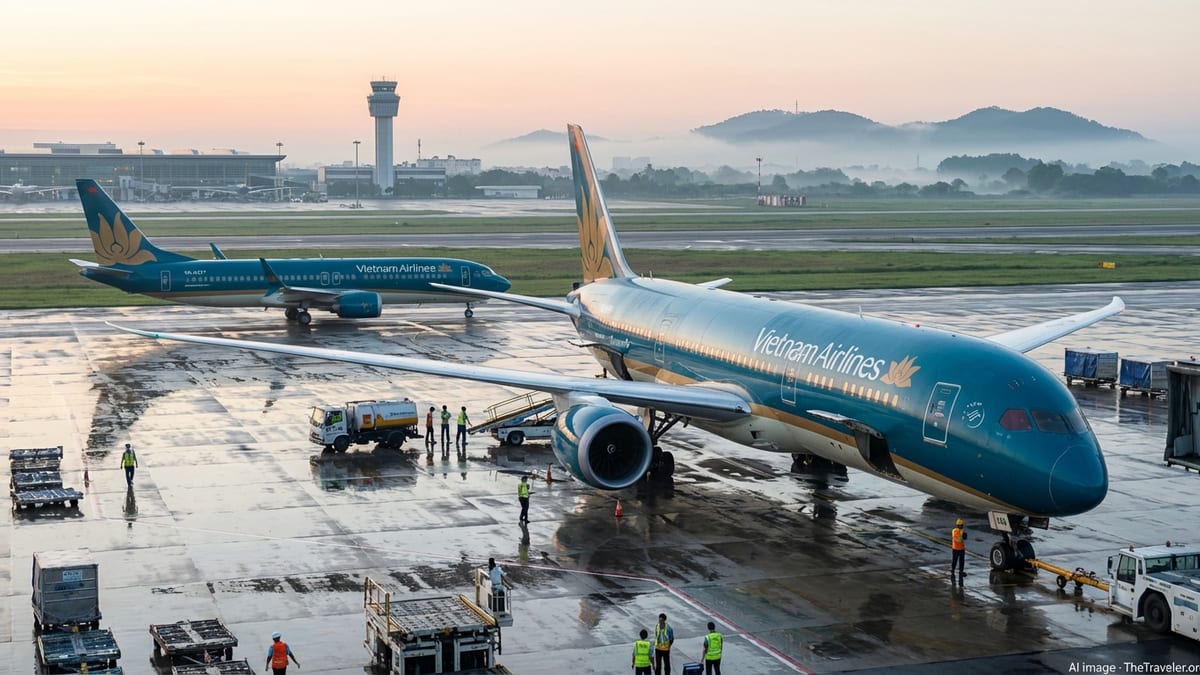
A Breakthrough Deal Years in the Making
The agreement, signed in Washington in mid February 2026 in the presence of Vietnamese General Secretary To Lam and senior United States officials, converts a previously undisclosed commitment into a firm order that places Vietnam’s flag carrier at the center of Boeing’s growth strategy in Asia. The narrow body purchase is Vietnam Airlines’ first ever order for Boeing single aisle aircraft, marking a notable shift for a company long associated with Airbus jets on regional routes.
According to statements from Vietnam Airlines and Boeing, the deal covers 50 Boeing 737 8 aircraft, a member of the 737 MAX family, and is listed at a combined value of roughly 8.1 billion dollars at catalog prices. Actual transaction values are understood to be lower after customary discounts, but the scale of the order still represents one of the most significant fleet investments in the airline’s history.
The signing caps a multi year courtship that began with a memorandum of understanding announced during a visit to Hanoi by then United States President Joe Biden in 2023. Since then, Vietnam’s aviation authorities have cleared the airline to proceed with a 50 aircraft narrow body purchase, and domestic and international financiers have been lining up to support the transaction.
For Boeing, the order is an important commercial and political win in a country where Airbus currently dominates the single aisle market. For Vietnam, it is a symbolically charged purchase that underscores the deepening trade and investment ties with Washington while responding to surging demand for air travel at home and across Southeast Asia.
Deliveries Timed for a New Phase of Growth
While the order has been finalized now, the jets will not enter service immediately. Vietnam Airlines and Boeing have indicated that deliveries are scheduled between 2030 and 2032, a timeframe that speaks volumes about the scale of fleet planning under way and expectations for the region’s aviation recovery and beyond.
By spacing deliveries over three years, Vietnam Airlines aims to match incoming capacity with projected traffic growth, which Vietnamese and international forecasts suggest could see the country’s air passenger numbers more than double to exceed 75 million annual travelers over the next decade. The 737 MAX aircraft will allow the carrier to retire older narrow body jets, reduce maintenance and fuel costs, and increase seat capacity where demand is strongest.
The timing also aligns with Vietnam Airlines’ stated ambition to operate a fleet of more than 150 aircraft by 2030, up from just under 100 today. The 737 8s are expected to make up a significant portion of the narrow body fleet by then, complementing the airline’s existing Airbus A321 family aircraft and freeing up wide body Boeing 787 and Airbus A350 jets for long haul growth.
Financing for the deliveries is being structured well in advance. Vietnam Airlines has been working with domestic banks and major United States financial institutions, including export credit agencies and global lenders, to secure funding across the order period. This multi layered approach spreads risk and reflects growing confidence in Vietnam’s aviation market fundamentals.
What the 737 MAX Brings to Vietnam’s Skies
The Boeing 737 8 is at the heart of the deal and will be the type transforming the carrier’s domestic and regional operations. Typically configured to seat up to around 200 passengers, the aircraft offers a range of approximately 3,500 nautical miles, sufficient to cover dense trunk routes within Vietnam and most short and medium haul destinations across Southeast Asia, North Asia and parts of South Asia.
Boeing highlights that the 737 MAX family delivers a 20 to 25 percent improvement in fuel burn and carbon emissions compared with the older generation aircraft it is designed to replace. For Vietnam Airlines, which is under pressure from regulators, investors and passengers to improve environmental performance, that efficiency translates into lower unit costs and a smaller carbon footprint per seat.
The aircraft will be powered by CFM International LEAP 1B engines, a powerplant that has been adopted widely by carriers across Asia for its fuel savings and quieter noise profile. Combined with modern cabin interiors, larger overhead bins and improved pressurization and humidity systems, the jets are expected to offer a perceptibly more comfortable passenger experience on some of Vietnam’s busiest routes.
Equally important is reliability. Vietnam Airlines will be banking on the maturity of the 737 MAX platform, which has steadily returned to service around the world after a prolonged grounding earlier in the decade. With Boeing keen to demonstrate the type’s dependability in a high growth market, the carrier is likely to benefit from intense manufacturer support, training and after sales service packages tailored to its new fleet.
Regional Routes, Regional Rivalries
In operational terms, the 50 jets are destined first and foremost for domestic and short haul international routes. Vietnam Airlines has indicated it will deploy them on trunk services linking Hanoi, Ho Chi Minh City and Da Nang, as well as increasingly popular secondary cities such as Nha Trang, Hue and Phu Quoc, where tourism and business travel are expanding rapidly.
Beyond Vietnam’s borders, the 737 MAX fleet is expected to bolster Vietnam Airlines’ presence in key Southeast Asian markets including Thailand, Singapore, Malaysia, Indonesia and the Philippines, while also reinforcing connections to China, South Korea and other Northeast Asian destinations. These are markets where demand is strong but margins are often thin, making the economics of new generation jets especially attractive.
The influx of capacity will sharpen competition with regional rivals such as Singapore Airlines’ low cost arm Scoot, Malaysia Airlines and AirAsia Group, Thai Airways and Bangkok Airways, as well as Vietnam’s own private carriers like Vietjet and Bamboo Airways. Many of these competitors operate comparable new generation single aisle fleets, mainly from Airbus, and have been aggressively building frequencies across the same city pairs.
For passengers, the result is likely to be more choice of departure times, denser networks and, at least periodically, sharper fares as airlines vie for market share. For airports in Vietnam and neighboring countries, the increased traffic will test terminal and runway capacity, aircraft parking stands and air traffic management systems, highlighting the need for parallel investment in infrastructure to keep pace with fleet growth.
Supercharging Southeast Asia’s Connectivity
The Vietnam Airlines order is part of a broader wave of fleet renewal and expansion sweeping across Southeast Asia as airlines respond to resurgent demand and reposition themselves in global networks. The region has one of the world’s fastest growing middle classes, structurally favoring air travel as incomes rise and consumers shift from long distance buses and trains to low cost and full service flights.
By committing to 50 Boeing 737 8s, Vietnam’s flag carrier is effectively betting that Southeast Asia’s intra regional travel will remain one of the most dynamic segments of global aviation. The aircraft will act as workhorses on sectors of between one and five hours, connecting manufacturing hubs, resort islands, emerging tech centers and political capitals across the Association of Southeast Asian Nations.
This expansion is set to deepen Vietnam’s role as both a destination and a transfer point. With a growing network of international services on Boeing 787s and Airbus A350s, Vietnam Airlines is pursuing a strategy of funnelling traffic from Europe, North Asia and potentially North America into its Hanoi and Ho Chi Minh City hubs, and then redistributing passengers on narrow body jets around the region.
If executed successfully, the 737 MAX order will strengthen those hub ambitions, allowing smoother banked connections and higher frequencies on spokes. That could elevate Vietnam’s airports in regional rankings and encourage tourism boards and foreign carriers to forge new partnerships and codeshares tied into the expanded schedule.
Implications for Boeing and Airbus in the Region
Commercially, the deal signals that Boeing is regaining ground in what has traditionally been Airbus territory. Many of Southeast Asia’s leading low cost carriers, including AirAsia, Lion Air Group and Vietjet, have built their networks around large orders for Airbus A320neo family aircraft, while full service airlines have often split their wide body purchases between the two manufacturers.
For Vietnam Airlines, introducing the Boeing 737 MAX 8 creates a more diversified fleet mix. The airline already deploys 17 Boeing 787 Dreamliners and a sizable Airbus wide body and narrow body fleet. Adding Boeing narrow bodies may give the carrier more leverage in future negotiations with both manufacturers, while also ensuring access to multiple technology and supply chains.
For Boeing, the win has strategic resonance beyond Vietnam. Demonstrating that the 737 MAX can anchor a national carrier’s growth plan in a key emerging market sends a message to other airlines weighing their own fleet decisions. The company has been working to rebuild trust after earlier safety crises, and high profile orders in Asia contribute materially to that effort.
Airbus, for its part, will remain deeply entrenched across Southeast Asia, but it now faces a more balanced competitive landscape in Vietnam itself. Future tenders for narrow body and wide body jets by Vietnamese airlines, including potential follow on orders from Vietnam Airlines and growing private carriers, are likely to attract even sharper bidding as both planemakers seek to secure their positions.
Financing, Risk and the Long View
Underlying the fanfare around the announcement are complex financial calculations. Vietnam Airlines has endured several challenging years marked by pandemic losses and restructuring efforts. Committing to dozens of new aircraft requires confidence not only in traffic forecasts but also in the airline’s ability to sustain a stronger balance sheet.
To mitigate risk, the carrier is expected to employ a mix of direct purchases, export credit backed loans, commercial bank financing and possibly sale and leaseback arrangements once individual aircraft are delivered. Such structures can smooth cash flows and shift some residual value risk to lessors, at the cost of long term lease payments.
The timing of deliveries beginning around 2030 provides a buffer during which Vietnam Airlines can continue to repair its finances, grow revenues and refine its network. It also allows for adjustments to the delivery schedule if market conditions shift, subject to negotiations with Boeing and financiers.
From a macroeconomic perspective, the order is also a bet on Vietnam’s continued economic expansion, export growth and rising tourism receipts. If those trends hold, the country’s airports and airlines could emerge as some of the biggest beneficiaries of shifting supply chains and travel patterns in the Asia Pacific region.
A Catalyst for an Air Travel “Revolution”
Combined with parallel expansion plans at other Vietnamese carriers, the Vietnam Airlines 737 MAX order has the potential to usher in what industry observers describe as an air travel revolution in Southeast Asia. Not in the sense of completely new technology, but through the cumulative impact of hundreds of new generation aircraft, denser route maps and more competitive pricing.
For travelers, this revolution will be felt in more nonstop connections between secondary cities that previously required time consuming connections, more consistent onboard products across regional fleets, and the gradual normalization of air travel as the preferred mode of intercity transport for wide swathes of the population.
For Vietnam Airlines, the 50 Boeing 737 8s are both a symbol and a tool. They symbolize a deepening partnership with the United States and Boeing, and a commitment to modernize operations to international standards. They are also the practical enablers of a more ambitious network plan that, if realized, could see Vietnam’s blue and gold lotus logo become a more familiar sight across Southeast Asia’s skies over the next decade.
Ultimately, the success of this bet will be measured route by route, flight by flight, as the first of the jets begin arriving early in the next decade. For now, the order signals that Vietnam’s flag carrier intends not just to participate in Southeast Asia’s air travel boom, but to help shape its next chapter.