

More news on this day
Vietnam’s fast-rising aviation sector has seized global attention in Washington, D.C., where Vietnam Airlines, Sun PhuQuoc Airways and Vietjet announced deals linked to nearly 100 Boeing aircraft worth more than US$30 billion during a high-level visit by Party General Secretary To Lam.
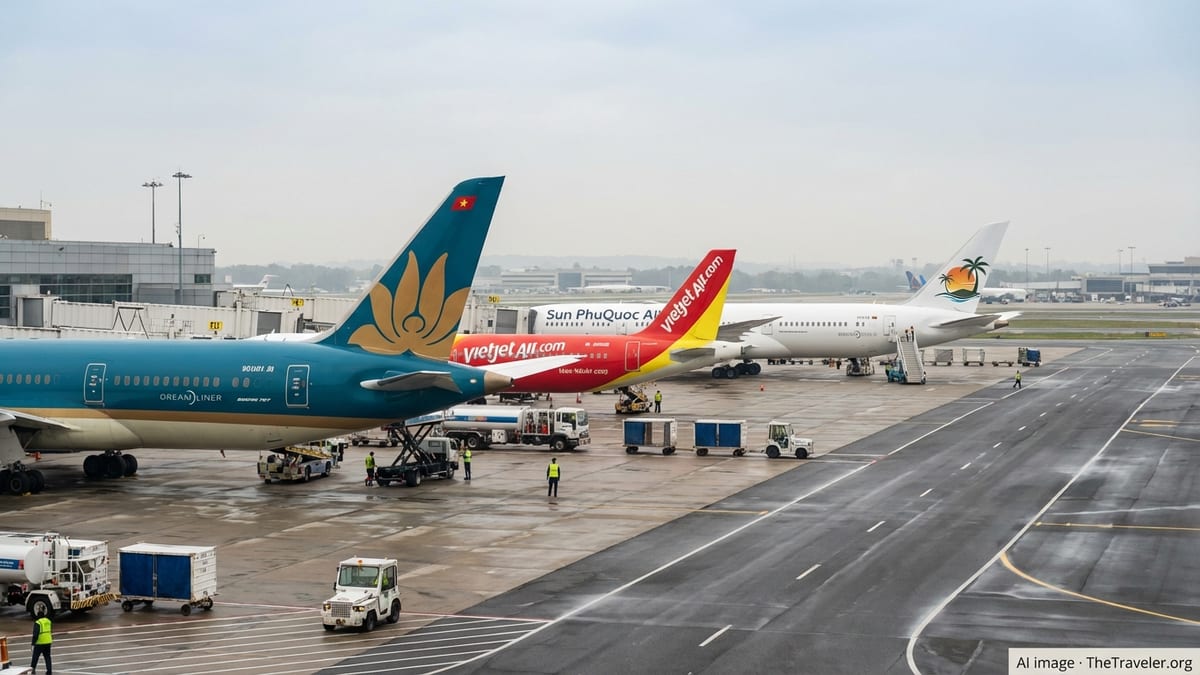
High-Level Washington Visit Turns Into Aircraft Order Showcase
The signing ceremonies took place in the US capital on February 18 and 19, 2026, on the sidelines of To Lam’s working trip for the inaugural meeting of the Gaza Board of Peace. The events brought together senior US officials, Boeing executives and top leaders of Vietnam’s airlines and conglomerates, underlining how commercial aviation has become a central pillar of the growing Vietnam US partnership.
For Boeing, the announcements marked a powerful reaffirmation of its relationship with Vietnamese carriers at a time when the manufacturer is working to restore confidence in its product line and secure new long-term orders. For Vietnam, the deals underscored an ambition to position the country as Southeast Asia’s fastest-growing aviation market and a major tourism and transit hub.
The agreements build on an upgraded comprehensive strategic partnership between Hanoi and Washington, translating political goodwill into concrete fleet expansion and financing packages. Officials on both sides highlighted the potential for tens of thousands of high-quality jobs, increased trade in services and technology transfer in support of Vietnam’s long-term modernization plans.
Vietnam Airlines Locks In 50 Boeing 737 8s to Renew Narrowbody Fleet
Flag carrier Vietnam Airlines used the Washington visit to finalize an agreement to purchase 50 Boeing 737 8 single aisle aircraft, valued at up to US$8.1 billion at list prices. The deal, signed on February 18 local time, will see deliveries scheduled between 2030 and 2032, giving the airline a long runway to phase in a new generation of fuel efficient jets.
Vietnam Airlines plans to deploy the 737 8 primarily on domestic services and regional routes across Asia, including high frequency trunk routes linking Hanoi, Ho Chi Minh City and Da Nang, as well as popular leisure destinations. The aircraft, with capacity for up to around 200 passengers and a range of more than 6,000 kilometers, is expected to help the carrier cut unit costs and reduce emissions per seat while adding capacity ahead of anticipated demand growth.
The order is a crucial step in Vietnam Airlines’ fleet renewal strategy, complementing its existing widebody operations that include Boeing 787 Dreamliners and Airbus A350s. By committing to a sizable narrowbody order from Boeing, the airline further diversifies a fleet that has historically leaned heavily on Airbus single aisle aircraft, while signaling confidence in a strong recovery of domestic and regional travel through the next decade.
Executives have framed the purchase as not only a commercial decision but also a contribution to national connectivity, enabling more frequent services to secondary cities and supporting tourism development across less-visited provinces. The additional capacity is also expected to strengthen Vietnam’s competitiveness against regional rivals in Southeast Asia’s busy skies.
Sun PhuQuoc Airways Bets Big on Boeing 787 9 Dreamliners
Stealing the spotlight in Washington was startup Sun PhuQuoc Airways, which signed an agreement with Boeing for up to 40 787 9 Dreamliner widebody aircraft. Valued at approximately US$22.5 billion at list prices, the order is the largest Boeing widebody commitment ever placed by a Vietnamese airline and a bold statement of intent from an operator that only began flying commercially in late 2025.
Backed by tourism and real estate conglomerate Sun Group, Sun PhuQuoc Airways is developed under a “resort aviation” model centered on Phu Quoc Island, Vietnam’s rapidly emerging beach and resort destination in the Gulf of Thailand. The new 787 9 fleet will serve as the backbone of the carrier’s long haul network, enabling nonstop flights from Phu Quoc to key cities in Europe, North America, Northeast Asia, the Middle East and Australia.
With a range of roughly 14,000 kilometers and seating planned at close to 300 passengers, the 787 9 offers the airline the flexibility to open thin long haul routes that would be challenging with older, less efficient aircraft. Sun Group and Boeing executives at the ceremony emphasized that the widebody order aims to “bring Phu Quoc to the world and the world to Phu Quoc,” tightly integrating air services with the island’s expanding portfolio of resorts, attractions and real estate developments.
The order was announced in the presence of To Lam and senior US government representatives, confirming earlier market speculation around a substantial, previously undisclosed Boeing purchase by a Vietnamese startup. Sun PhuQuoc Airways has laid out plans to operate a fleet of around 100 aircraft by 2030, with the Dreamliners forming the premium long haul core while Airbus narrowbodies serve domestic and regional spokes.
Vietjet Deepens US Ties With 737 Max Financing and Engine Deals
Low cost carrier Vietjet, already one of Boeing’s largest customers in Southeast Asia, also used the Washington visit to advance its own fleet strategy and funding base. The airline signed an aircraft financing agreement with US based Griffin Global Asset Management for six Boeing 737 Max 8 jets, in a transaction valued at about US$965 million at list prices.
The deal will support the delivery of additional 737 Max aircraft that will initially bolster the fleet of Thai Vietjet, the group’s Thailand based affiliate, before being deployed across the wider network. Vietjet described the agreement as a significant milestone in diversifying its international funding sources and leveraging the depth of US capital markets to support fleet expansion.
Alongside the Boeing related financing, Vietjet also finalized a separate agreement with Pratt & Whitney for PW1100G engines and long term maintenance services to power 44 Airbus A321neo family aircraft. That package is valued at around US$5.4 billion and was announced on the sidelines of the same high level visit, bringing the total value of the carrier’s new US linked agreements to approximately US$6.3 billion.
Together, the transactions highlight Vietjet’s dual strategy of maintaining a large Airbus narrowbody fleet while also committing to the 737 Max family, giving the airline flexibility in aircraft sourcing, financing and route planning. They also reflect the carrier’s broader ambition to anchor itself more deeply in global supply chains and financial ecosystems as it continues to grow beyond its home market.
Strategic Context: Aviation at the Heart of Vietnam US Relations
The flurry of announcements in Washington did more than add up to a large number of future aircraft deliveries. For officials and executives on both sides, the deals serve as a showcase of the upgraded Vietnam US comprehensive strategic partnership, translating diplomatic language into high profile industrial cooperation.
Vietnam’s leadership has repeatedly identified aviation as a priority sector for modernization, job creation and technology transfer. Long term jet purchases lock in relationships with manufacturers, financiers and service providers that go far beyond simple aircraft sales, touching everything from pilot and engineer training to digital operations, safety systems and sustainability initiatives.
For the United States, the commitments underscore the continued global pull of its aerospace industry and the role of major equipment exports in balancing bilateral trade flows. American officials have framed Vietnam’s orders as evidence of deepening economic trust, noting that large aircraft programs typically extend over decades and create extensive networks of small and medium sized suppliers across multiple states.
The Washington announcements also follow earlier headline grabbing deals, including Vietjet’s historic 200 aircraft 737 Max order in 2019, reinforcing a pattern in which high level visits between the two countries are increasingly accompanied by aviation and high technology signings. Observers say this trend is likely to continue as Vietnam’s growth story and its appetite for aircraft converge with US interests in stable, rules based trade and investment ties in the Indo Pacific.
Tourism, Connectivity and the Push to Make Phu Quoc a Global Hub
Beyond the balance sheets of airlines and manufacturers, the Boeing deals reflect a broader bet on Vietnam’s tourism and connectivity potential. Authorities and investors expect the country to rank among the world’s fastest growing aviation markets through 2030, with annual passenger growth in the high single digits driven by a rising middle class, urbanization and increasing international appeal.
Phu Quoc Island, once a relatively quiet fishing and pepper farming community, has become a focal point of this strategy. Sun Group has poured capital into integrated resorts, theme parks, cable cars and hospitality infrastructure, while the local airport is undergoing a major expansion with new terminals and extended runways to handle widebody traffic. The 787 order by Sun PhuQuoc Airways is designed to capitalize on this build out by offering seamless, point to point long haul access from key source markets.
For Vietnam Airlines and Vietjet, the new narrowbody jets will reinforce domestic and regional connectivity that feeds international services and disperses visitors more widely across the country. More frequent and reliable flights to secondary tourism spots, industrial zones and emerging urban centers are expected to support both leisure and business travel, spreading the economic benefits of increased air traffic.
Industry analysts note that Vietnam sits within a three to six hour flight time of many of Asia’s largest population centers, giving its airports the chance to serve as competitive connecting hubs. A critical question will be whether infrastructure, air traffic management and service quality can keep pace with the rapid expansion of airline fleets now being planned.
Economic Impact, Jobs and Supply Chain Opportunities
The combined value of the newly announced Vietnamese aviation deals with US partners runs well above US$30 billion when aircraft, engines, services and financing are all included. While list prices are often discounted in practice, the scale of the orders and associated contracts is expected to generate substantial economic ripple effects in both countries.
In the United States, the Boeing and engine orders help sustain high skilled manufacturing and engineering jobs across a vast supplier network spread through multiple states. Additional work will flow to US based lessors, banks, insurers and legal and consulting firms involved in structuring and servicing the transactions over their full life cycles.
In Vietnam, the cascade of agreements is set to support thousands of positions in airline operations, maintenance, ground handling, training and tourism services, alongside new roles in airport construction and management. Carriers and policymakers hope that long term partnerships with US aerospace firms will accelerate the development of a more capable domestic aviation workforce and potentially stimulate local participation in global supply chains for components and maintenance services.
Executives from Vietnam Airlines, Sun PhuQuoc Airways and Vietjet have all emphasized that each new aircraft represents not just additional seats, but also new opportunities for trade, employment and regional development. The investments are being framed as a down payment on decades of growth in air connectivity and tourism income.
Risks, Timelines and the Road Ahead for Vietnam’s Carriers
Despite the upbeat tone in Washington, the ambitious Boeing related plans come with clear challenges. Vietnam’s carriers will have to manage complex delivery schedules stretching into the next decade, navigate potential production issues at manufacturers and ensure they have the capital, human resources and infrastructure required to absorb such a large wave of new aircraft.
Vietnam Airlines continues to work through the financial aftershocks of the pandemic and must balance fleet renewal with balance sheet repair. Sun PhuQuoc Airways, as a young airline, faces the daunting task of scaling from regional services to intercontinental operations while building brand recognition and premium service standards in intensely competitive long haul markets.
Vietjet, for its part, will need to maintain careful cost discipline as it introduces a mix of Airbus and Boeing narrowbodies and executes complex financing structures. All three airlines will also need to keep a close eye on shifting fuel prices, exchange rates and geopolitical risks that could affect travel demand on the very long routes they aspire to serve.
Still, industry observers say the deals announced during To Lam’s US visit mark a pivotal moment in Vietnam’s aviation narrative. If the carriers can successfully execute their growth plans, the aircraft orders secured in Washington in February 2026 may come to be seen as the point at which Vietnam firmly staked its claim as a regional aviation powerhouse and a key long haul gateway linking Asia, Europe and the Americas.