

More news on this day
Vietnam’s popular island of Phu Quoc and secondary hubs such as Can Tho, Buon Ma Thuot, Van Don and Rach Gia are confronting an abrupt wave of flight cancellations and schedule cuts, as Vietnam Airlines pares back 23 domestic routes in response to a sharp spike in jet fuel costs and mounting concerns over supply from April 2026.
Get the latest news straight to your inbox!
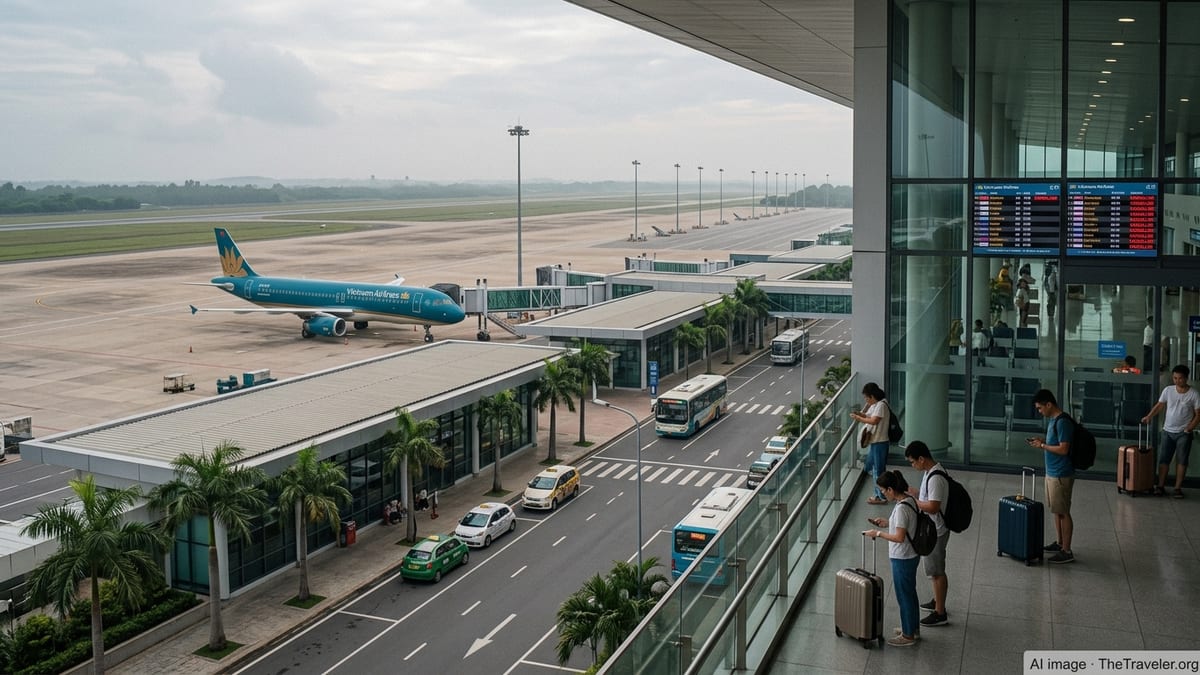
Fuel Shock Pushes Vietnam’s Flag Carrier to the Brink
Publicly available information from Vietnam’s aviation regulator and recent business disclosures indicate that national carrier Vietnam Airlines is facing one of its most serious cost shocks in years. Jet A1 prices have roughly tripled since late February 2026, when conflict in the Middle East disrupted crude and refined product flows through key Gulf producers and transit hubs. Analysts tracking the carrier estimate that overall operating costs have jumped by 60 to 70 percent in a matter of weeks, with fuel now the dominant driver.
Vietnam’s airlines rely heavily on imported jet fuel, with local suppliers sourcing the majority of volumes from refineries in Singapore, Thailand and China. Those contracts are reported to be locked in only through the end of March 2026, raising the prospect of both higher prices and intermittent shortages from April. In this environment, unprofitable or marginal routes are among the first to be cut, as airlines seek to preserve fuel for their densest trunk and international services.
For Vietnam Airlines, the move to suspend 23 domestic routes is being framed as a temporary but necessary step to stem mounting losses. Public statements and financial commentary suggest that, at current price levels near 200 dollars per barrel for Jet A1, the carrier would lose money on many domestic flights, particularly those serving thinner regional markets with smaller aircraft and lower average fares.
Industry observers note that the fuel shock comes on top of structural pressures that were already weighing on Vietnamese carriers, including earlier engine recall issues on narrowbody fleets and softening domestic demand in 2024. The latest cuts therefore mark an escalation from capacity fine-tuning to what resembles a network-wide retrenchment focused on fuel conservation.
Tourism Hotspot Phu Quoc Feels the Immediate Impact
Phu Quoc, a flagship beach destination in southern Vietnam, is among the first centers to feel the full impact of the route suspensions. The island’s connectivity is dominated by domestic flights from Ho Chi Minh City and Hanoi, along with seasonal services from Can Tho and other Mekong Delta cities. With Vietnam Airlines scaling back frequencies and cutting some secondary links, tour operators report rising concerns about seat availability for the coming weeks and months.
According to published coverage tracking booking patterns, packages to Phu Quoc had been recovering strongly through late 2025 on the back of pent-up leisure demand and new resort openings. The jet fuel shock has quickly reversed that momentum. Travel agencies are now working to reroute clients via alternative carriers or adjust dates, while some visitors are postponing trips in anticipation of further cancellations or higher airfares.
On the island, hotel managers are monitoring the situation closely as they weigh staffing and inventory decisions for the late spring and early summer. Phu Quoc’s heavy reliance on air access makes it particularly exposed: there are no ferries suitable for mass international arrivals, and overland alternatives are impractical for most travelers. Any sustained reduction in airlift could depress occupancy rates and pressure room prices, even if local attractions and beaches remain fully operational.
For independent travelers, the new reality is forcing greater flexibility. Recent travel discussion threads highlight cases of visitors rebooking onto early morning or late-night flights where seats remain, or shifting itineraries to other coastal destinations on Vietnam’s main north–south corridor that still enjoy higher flight frequencies.
Regional Hubs Scramble as Can Tho, Buon Ma Thuot, Van Don and Rach Gia Lose Links
Beyond Phu Quoc, the decision to suspend 23 domestic routes is reshaping connectivity for a series of emerging regional hubs. Can Tho in the Mekong Delta, Buon Ma Thuot in the Central Highlands, Van Don in the northeast and Rach Gia on the southwest coast are all cited in local reports as airports facing notable reductions in Vietnam Airlines services.
These cities had been targeted in recent years as strategic gateways, supporting dispersal of tourist flows away from congested big-city airports and promoting regional development. Can Tho’s airport, for example, connects fertile delta provinces with Ho Chi Minh City and northern Vietnam, while Buon Ma Thuot serves as a jumping-off point for highland coffee regions and national parks. Van Don, developed as a modern gateway for Ha Long Bay and nearby economic zones, has relied on a mix of domestic and selective international traffic.
With fewer Vietnam Airlines flights, travelers may have to rely more heavily on competing carriers where available, or revert to longer overland journeys by bus and car. Transport experts point out that not all suspended routes will have immediate substitutes, either because competing airlines operate limited capacity or because demand has historically been too thin to support multiple operators. As a result, some communities risk partial isolation from the country’s fastest and most convenient mode of transport just as domestic tourism was gaining depth beyond the main coastal strip.
Local businesses that had invested in hospitality, logistics and convention facilities around these airports now face heightened uncertainty. While published information suggests the carrier intends the suspensions as a short-term response to the fuel shock, there is no firm timeline for restoration, and future decisions will depend on whether prices ease and supply stabilizes into the second half of 2026.
Travelers Confront Cancellations, Rising Fares and Itinerary Overhauls
For passengers, the most visible consequence of the jet fuel crisis is a wave of schedule changes, cancellations and higher fares. Across Asia and beyond, travel industry coverage has already documented rising surcharges and ticket prices, and Vietnam is now being drawn more deeply into this broader trend. Domestic travelers who had booked promotional fares on vulnerable routes are learning that their flights have been dropped or consolidated.
Current airline practice in such scenarios typically involves offering alternative itineraries, refunds or credit vouchers, but these solutions are not always convenient. Travelers headed to Phu Quoc, Rach Gia or smaller highland cities may discover that the only remaining options involve connecting through major hubs at less desirable times of day, or flying with different carriers at higher last-minute prices. For some, that means truncating trips, swapping destinations or cancelling holidays altogether.
Secondary effects are also appearing in the form of crowded flights on still-operating routes and reduced flexibility for business travelers. As airlines prioritize fuel for core city pairs such as Hanoi–Ho Chi Minh City and popular coastal destinations, inventory on those services can tighten quickly. Reports from booking platforms and travel agents point to shorter booking windows and more volatile fares, suggesting that consumers are scrambling to secure what capacity remains.
Industry analysts caution that if fuel prices remain elevated into the peak summer season, additional capacity cuts or fare hikes cannot be ruled out. That prospect is prompting some travelers to lock in near-term plans, while others adopt a wait-and-see approach in the hope that geopolitical tensions and energy markets will stabilize before the end of 2026.
Government and Industry Explore Emergency Measures and Long-Term Resilience
Vietnam’s aviation authorities and fuel suppliers have sought to reassure the public that physical supplies of jet fuel are secured through at least the end of March 2026, even as prices surge. Public communications emphasize efforts to diversify import sources, coordinate deliveries from domestic refineries and explore financial support tools such as extended credit lines for airlines and fuel traders.
At the policy level, industry commentary indicates that carriers, including Vietnam Airlines, are advocating tax and fee relief to offset part of the cost shock. Proposals under discussion in recent weeks reportedly include adjustments to environmental taxes on jet fuel, reductions in landing and navigation fees on domestic routes and extended reductions in import duties on aviation fuel. Any such measures would be designed to buy time while markets seek a new equilibrium.
Longer term, the crisis is reviving debates about how Vietnam can build a more resilient aviation sector. Earlier experiments with sustainable aviation fuel on select Vietnam Airlines and Vietjet flights demonstrated technical feasibility but highlighted much higher costs compared with conventional Jet A1. With current prices already elevated due to geopolitical disruption, the financial room to expand such initiatives is limited, yet the strategic desire to diversify away from imported fossil fuel remains strong.
For now, the most immediate priority for the industry is to maintain essential connectivity while managing scarce and expensive fuel. That balancing act is being felt most acutely in places like Phu Quoc, Can Tho, Buon Ma Thuot, Van Don and Rach Gia, where residents and visitors alike are adjusting to a suddenly more fragile domestic air network and hoping that the present disruption proves temporary rather than structural.