

More news on this day
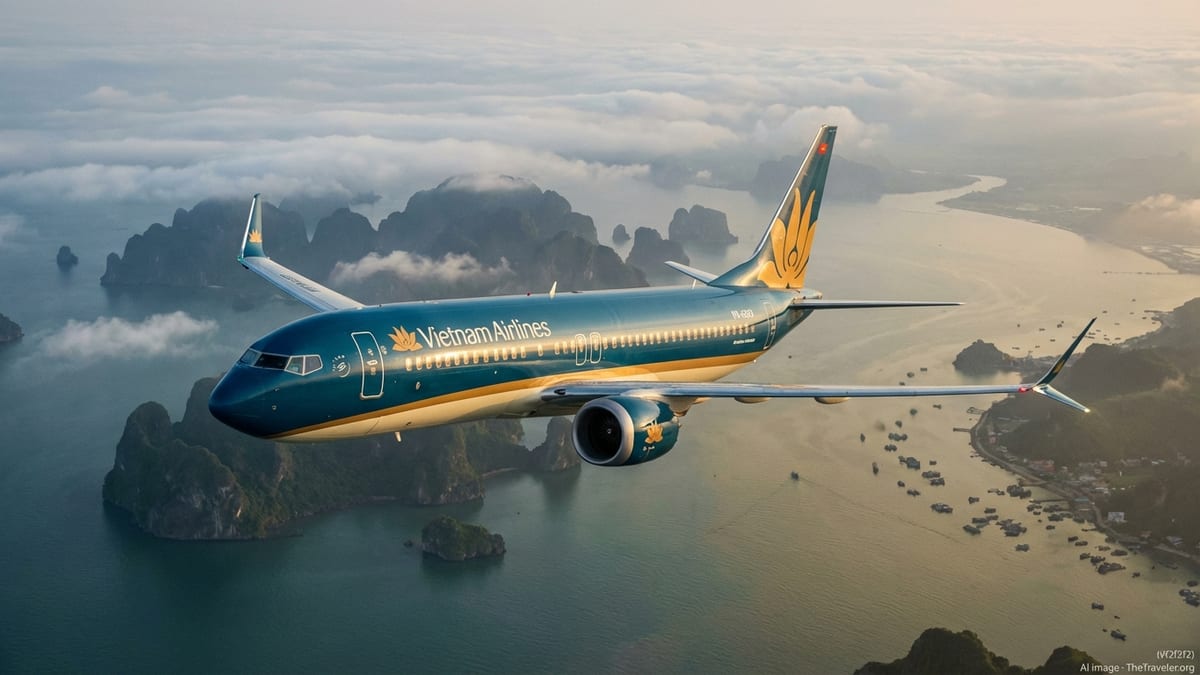
Vietnam Airlines has sealed a landmark deal for 50 Boeing 737 MAX aircraft worth up to US$8.1 billion, a fleet expansion poised to reshape Vietnam’s tourism flows, domestic connectivity and regional air travel just as passenger demand across Southeast Asia accelerates.
A Strategic Order Years in the Making
The newly announced agreement, finalized this week in Washington, D.C., caps a multi-year courtship between Vietnam’s national flag carrier and Boeing. The airline first signalled its intention to acquire 50 737 MAX aircraft in 2023, but the latest signing converts that earlier commitment into a firm order and clarifies delivery timelines, financing plans and deployment strategy.
The deal covers 50 Boeing 737-8 jets, a core variant of the 737 MAX family, and represents Vietnam Airlines’ first purchase of Boeing single-aisle aircraft. The carrier already operates a fleet of Boeing 787 Dreamliners on long-haul routes, but until now had relied predominantly on Airbus narrow-body aircraft for domestic and regional flying.
Valued at up to US$8.1 billion at 2025 catalogue prices, the order underscores Vietnam Airlines’ intent to modernize its fleet and position itself for a new phase of growth. The airline expects to take delivery of the 737-8s between 2030 and 2032, helping lift its total fleet to around 151 aircraft by the start of the next decade.
Company leaders describe the transaction as a cornerstone of a broader plan that also includes prospective investments in around 30 additional wide-body jets. Taken together, these moves would amount to more than US$20 billion in future aircraft spending, signalling considerable confidence in Vietnam’s long-term role as a tourism and transit hub.
Political Backdrop Highlights Deepening US–Vietnam Ties
The signing ceremony unfolded against a high-profile diplomatic backdrop, underlining how aviation deals have become entwined with broader economic and political ties between Hanoi and Washington. The agreement was concluded in the US capital in the presence of Vietnam’s General Secretary and senior officials during a multiday visit focused on trade, strategic cooperation and global security issues.
For the United States, the order represents a notable commercial win and a symbol of the deepening comprehensive strategic partnership with Vietnam. Large aircraft purchases support high-value manufacturing jobs in the US and across Boeing’s global supply chain, while anchoring the company’s long-term presence in one of Asia’s fastest-growing aviation markets.
For Vietnam, the deal reinforces its positioning as an increasingly important economic partner for Washington and a rising aviation power in Southeast Asia. The purchase complements earlier high-level announcements around the 737 MAX and builds on decades of cooperation between Boeing and Vietnamese civil aviation authorities, including technical training and industry capability-building.
The choreography of the signing, with senior leaders from both countries in attendance, underscores that the fleet decision is not only a commercial calculation but also a diplomatic signal about Vietnam’s orientation toward greater integration with global markets and supply chains.
Fuel-Efficient Jets to Meet Surging Passenger Demand
Vietnam’s air travel market has been on a rapid upward trajectory, fueled by a growing middle class, strong tourism inflows and the shift of manufacturing and services to the country. Industry forecasts suggest Vietnam’s annual air traffic could more than double over the next decade, surpassing 75 million passengers a year as new routes open and existing corridors become increasingly busy.
Vietnam Airlines’ current narrow-body fleet is already heavily utilized on high-frequency domestic sectors such as Hanoi to Ho Chi Minh City, as well as trunk routes to Da Nang, Nha Trang and Phu Quoc, and regional services to hubs across Northeast and Southeast Asia. The 737-8s are expected to shoulder much of this growth, especially on short and medium-haul routes of up to 3,500 nautical miles.
Each 737-8 can accommodate up to around 200 passengers depending on the configuration, giving the airline flexibility to match capacity to demand on popular leisure routes and emerging secondary city pairs. The aircraft’s enhanced range compared with previous-generation narrow-bodies will also allow Vietnam Airlines to pursue new non-stop services deeper into Northeast Asia, South Asia and the Pacific, while maintaining strong economics.
As demand rebounds and surpasses pre-pandemic levels, adding a modern, fuel-efficient narrow-body type is central to the carrier’s strategy to avoid capacity bottlenecks, reduce unit costs and stay competitive in a region where low-cost and full-service rivals are aggressively expanding their own fleets.
Transforming Vietnam’s Tourism and Regional Connectivity
The 737 MAX order lands at a pivotal moment for Vietnam’s tourism industry. The country has quickly re-established itself as one of Asia’s star destinations, with international arrivals climbing sharply on the back of visa reforms, new marketing campaigns and a diversified portfolio of beach, cultural and nature-based attractions stretching from Ha Long Bay and Hue to Da Nang, Nha Trang and the Mekong Delta.
With 50 additional single-aisle jets on the horizon, Vietnam Airlines is poised to knit these destinations more tightly together and link them more seamlessly to regional source markets. The 737-8 fleet is expected to reinforce domestic trunk routes while also enabling more direct connections from secondary Vietnamese cities to Bangkok, Singapore, Kuala Lumpur, Seoul, Taipei and other major Asian gateways.
Tourism officials argue that better air connectivity will be critical to sustaining double-digit growth in visitor numbers and dispersing tourists beyond traditional hotspots. The increased seat capacity should allow for more convenient frequencies, varied departure times and competitive fares, especially during peak holiday seasons when demand routinely outstrips supply on popular routes.
The move could also boost emerging tourism clusters such as Quy Nhon, Phu Quoc and the Central Highlands by supporting direct or one-stop connections tailored to international travellers. As Vietnam develops new coastal resorts, golf courses and meetings and incentive facilities, Vietnam Airlines’ enlarged narrow-body fleet will help convert infrastructure investment into repeatable tourism flows.
Fleet Modernisation, Sustainability and Cost Efficiency
Beyond raw capacity, the 737 MAX deal is central to Vietnam Airlines’ effort to refresh an aging narrow-body fleet with more efficient, lower-emission aircraft. The 737-8 offers fuel-burn reductions of roughly 20 percent compared with many older models it is intended to replace, contributing to lower operating costs and a smaller environmental footprint.
By pairing the new narrow-bodies with existing Boeing 787 Dreamliners, the airline expects to generate a step-change in fuel efficiency across both short and long-haul operations. The combined effect is particularly significant at a time when carriers face mounting pressure from regulators, investors and travellers to cut carbon emissions while grappling with volatile fuel prices.
Vietnam Airlines has framed the order as part of a broader commitment to sustainable growth, citing aircraft technology as one of the quickest levers available to reduce emissions intensity per passenger kilometre. The quieter, more efficient jets are also expected to help the airline meet increasingly stringent noise and environmental standards at key airports around the region.
From a financial standpoint, newer aircraft typically bring improved reliability, lower maintenance requirements and higher passenger appeal, all of which feed into better utilization and revenue potential. The carrier is working with both domestic banks and major US financial institutions to structure the long-term funding needed for such a large capital programme while safeguarding its balance sheet.
Network Strategy: Single-Aisle Powerhouse for Short and Medium Haul
Operationally, the 737-8 will become the backbone of Vietnam Airlines’ short and medium-haul network in the 2030s. The aircraft type is being positioned to handle high-density domestic flights, key regional business corridors and a growing number of leisure-focused point-to-point links.
On the domestic front, the jets are expected to dominate busy north–south routes, providing the frequency and seat counts required for both business travellers and price-sensitive tourists. Additional capacity will also support connectivity into the airline’s international services, ensuring smoother connections via Hanoi and Ho Chi Minh City for passengers originating in smaller Vietnamese cities.
Regionally, the range and versatility of the 737-8 open opportunities for Vietnam Airlines to further develop markets such as Northeast Asia, where demand from South Korea, Japan and Taiwan remains robust, and to explore selective expansion into South Asia and Australasia within narrow-body reach. The airline has signalled that new city pairs, added frequencies and seasonal services will all be on the table as deliveries get closer.
Crucially, the narrow-body expansion is designed to mesh with the long-haul network powered by the 787. By more precisely aligning aircraft size with route characteristics, Vietnam Airlines aims to improve load factors and yields across its system, maximising the benefit of Vietnam’s growing role as a stopover and destination in its own right.
Competitive Pressures in a Crowded Market
Vietnam’s skies are becoming increasingly crowded, with local low-cost carriers and regional competitors all racing to capture a slice of the country’s booming travel market. Orders for new-generation narrow-body aircraft have been piling up across Southeast Asia, as airlines compete to secure production slots and lock in their growth plans through the next decade.
Against this backdrop, Vietnam Airlines’ decision to secure 50 737-8s is as much a defensive move as a growth play. The national carrier is under pressure to protect its market share on domestic and short-haul routes, where price-sensitive leisure traffic dominates and low-cost rivals have historically been strongest. Deploying a fleet of fuel-efficient jets should give Vietnam Airlines more room to offer competitive fares while maintaining service standards aligned with its ambition to reach five-star international airline status by 2030.
The addition of a new aircraft type also introduces operational and training complexities, but the airline is betting that the benefits in flexibility, reliability and passenger appeal will outweigh the costs. Close cooperation with Boeing on pilot training, maintenance and support will be critical as the 737-8 enters service and ramps up across the network.
For travellers, the competitive dynamic could translate into more route choices, sharper pricing and improved onboard experiences as airlines upgrade cabins, connectivity and in-flight services to differentiate themselves in a market where capacity is rising quickly.
A Long-Term Bet on Vietnam’s Role as a Regional Hub
Viewed in a longer-term context, the 50-aircraft order is a statement of confidence in Vietnam’s trajectory as both a tourism powerhouse and a regional aviation hub. With strong economic growth, a young population and a series of major infrastructure projects under way at airports around the country, policymakers and industry leaders see aviation as a key enabler of trade, investment and cultural exchange.
For Vietnam Airlines, the commitment to the 737 MAX family signals that it intends to be at the centre of this transformation rather than cede ground to competitors. The airline’s leadership has consistently emphasized its goal of becoming a five-star international carrier by the end of the decade, and a modern, scalable fleet is central to that ambition.
The coming years will test the carrier’s ability to balance rapid expansion with financial discipline and operational reliability. Yet if executed effectively, the 737-8 programme could give Vietnam Airlines the tools it needs to sustain growth, deepen international partnerships and bring ever larger numbers of visitors to Vietnamese destinations.
As global tourism patterns evolve and travellers seek new experiences in Southeast Asia, the jets ordered today are likely to be the workhorses carrying future generations of tourists, students and business travellers into and out of Vietnam, reshaping not just the country’s air travel landscape but its broader economic and cultural connections with the world.