

More news on this day
Vietnam Airlines has sealed a landmark order for 50 Boeing 737 MAX aircraft, a fleet move that signals the flag carrier’s intent to compete more aggressively in Asia’s booming regional travel market as Vietnam’s aviation sector races past pre-pandemic records.
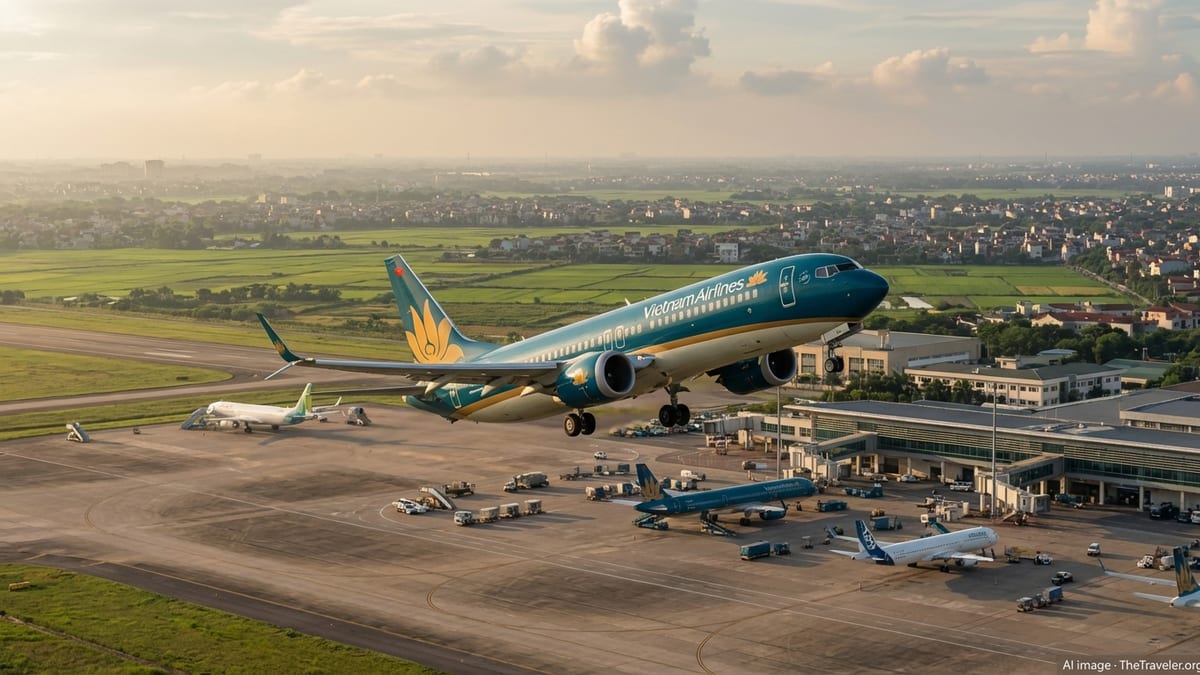
A Landmark Boeing Deal to Power Short- and Medium-Haul Growth
The newly finalized agreement, announced on February 18, 2026, confirms that Vietnam Airlines will add 50 Boeing 737 MAX jets to its fleet, marking the national carrier’s first single-aisle order with the US manufacturer. The aircraft will be the 737-8 variant, capable of carrying up to around 200 passengers and flying sectors of up to roughly 3,500 nautical miles, a range well suited to dense domestic routes and regional city pairs across Southeast and Northeast Asia.
For Vietnam Airlines, which has long relied on Airbus narrowbodies and Boeing 787 widebodies, the order is both a diversification and a strategic bet on regional connectivity. Executives describe the aircraft as a backbone for its next phase of growth, enabling higher frequencies on existing routes and opening new markets that were previously constrained by fleet size and operating economics.
The deal follows earlier in-principle government approval in 2025 for the carrier to procure 50 new narrowbody aircraft and aligns with a broader fleet modernization plan that will see older Airbus A321s progressively retired. By locking in delivery slots amid a global aircraft shortage, Vietnam Airlines is moving to secure capacity ahead of rivals in a fiercely competitive regional arena.
Industry analysts note that the decision to move forward with Boeing, after years of evaluating both Airbus and Boeing options, reflects a mix of performance, financing and delivery timing considerations. It also deepens Vietnam’s long-running aviation ties with the United States at a time when air links and trade flows between the two countries are expanding.
Rising Demand Puts Pressure on Vietnam’s Airlines
The Boeing order lands against a backdrop of rapid recovery in Vietnam’s skies. The country’s aviation sector handled about 83.5 million passengers in 2025, according to official data, an increase of more than 10 percent from 2024 and the highest volume ever recorded. International travel was the standout, surging as outbound tourism rebounded and more foreign visitors returned to Vietnam’s beaches, heritage cities and emerging business hubs.
Domestic demand has also proven resilient. Despite aircraft shortages and global engine issues that grounded portions of carriers’ fleets, domestic passenger traffic still climbed in 2025, helped by discount campaigns, expanded schedules to coastal destinations and improving economic conditions. Projections for 2026 point to another double-digit increase, with total passenger numbers estimated to reach around 95 million if growth targets are met.
For Vietnam Airlines, the rebound has brought both opportunity and strain. The airline’s planes have been flying longer hours than before the pandemic to compensate for grounded aircraft, stretching operations and squeezing maintenance windows. As new competitors enter the market and existing rivals enlarge their fleets, maintaining schedule reliability and preserving market share on key domestic and regional routes has become a delicate balancing act.
Capacity constraints have been particularly visible during peak holiday and summer periods, when the Civil Aviation Authority of Vietnam has coordinated ad hoc aircraft leases and extra flights to prevent bottlenecks. The planned inflow of new Boeing narrowbodies is expected to ease some of this pressure in the latter part of the decade, giving Vietnam Airlines more flexibility to match capacity with seasonal and route-specific demand.
How the 737 MAX Fits into Vietnam Airlines’ Network Strategy
The 737-8 is poised to become a workhorse on Vietnam Airlines’ domestic trunk routes linking Hanoi, Ho Chi Minh City and Da Nang, as well as busy leisure corridors to Cam Ranh, Phu Quoc, Da Lat and Quy Nhon. These markets have seen surging passenger traffic as rising incomes and promotional fares make air travel more accessible to Vietnam’s growing middle class.
Beyond the domestic network, the new Boeing narrowbodies will support expansion into high-growth regional markets. Short- and medium-haul routes to Thailand, Singapore, Malaysia, Indonesia, the Philippines, China, South Korea and Japan are expected to benefit, as Vietnam Airlines adds frequencies and explores new city pairs that can be profitably served with a fuel-efficient single-aisle jet.
The aircraft’s range and payload characteristics allow Vietnam Airlines to fine-tune capacity, offering multiple daily frequencies on key business routes while also sustaining thinner leisure markets where widebody aircraft would be uneconomical. This flexibility is critical as the airline looks to compete not only with Vietnamese low cost carriers but also with regional giants based in Bangkok, Singapore and Kuala Lumpur.
Network planners also see the 737-8 as a tool to strengthen Vietnam’s role as a connecting hub between Northeast Asia, Southeast Asia and, increasingly, parts of South Asia and Oceania. By coordinating narrowbody arrivals and departures with long haul Boeing 787 flights, Vietnam Airlines aims to capture more transfer traffic through Hanoi and Ho Chi Minh City, particularly as airport infrastructure upgrades come on stream.
Fleet Modernization, Efficiency Gains and Sustainability Goals
The Boeing order is central to Vietnam Airlines’ broader fleet renewal strategy, which targets a mix of modern narrowbody and widebody jets with significantly lower fuel burn than the aircraft they replace. The airline currently operates a fleet that includes Boeing 787 Dreamliners on long haul routes and has signaled plans to add more widebody aircraft later this decade to underpin intercontinental growth.
In combination with its 787s, the 737-8 is expected to deliver fuel efficiency gains in the range of 20 to 25 percent compared with older narrowbodies, according to manufacturer estimates and industry benchmarks. These improvements are critical not only for lowering operating costs in a high fuel price environment but also for helping Vietnam Airlines align with international emissions reduction targets and environmental expectations from regulators and corporate customers.
The new jets will also give the airline an opportunity to update its cabin product. While final seating configurations have not yet been publicly detailed, Vietnam Airlines is widely expected to introduce refreshed interiors, improved lighting and upgraded inflight connectivity on the new Boeing fleet. That would bring the on board experience closer to regional peers that have invested heavily in passenger comfort as a competitive differentiator.
Over time, the gradual retirement of aging Airbus A321 aircraft, some of which have faced utilization and maintenance challenges amid engine supply issues, should further standardize the fleet around newer platforms. A more homogenous and younger fleet typically yields cost efficiencies in training, spare parts, scheduling and ground handling, which can translate into more consistent service and potentially more attractive fares.
Competing in a Crowded and Fast-Evolving Market
Vietnam’s aviation landscape is becoming more crowded. Alongside established players such as Vietjet Air, Bamboo Airways and Vietravel Airlines, a new entrant, Sun PhuQuoc Airways, has begun operations, intensifying competition for both leisure and business travelers. Analysts expect fleet expansion by Vietnamese airlines to outpace passenger growth in 2026, setting the stage for sharper pricing and capacity battles.
Against this backdrop, Vietnam Airlines is using its Boeing deal to reinforce its position as the country’s leading full service carrier with a broad international footprint. The addition of 50 737-8s will help it defend market share on trunk domestic routes where low cost rivals have made inroads, while also giving it the scale to compete more effectively for regional travelers attracted by connectivity, schedule breadth and frequent flyer benefits.
Price competition is likely to remain intense, especially on high density domestic routes and short hops to nearby ASEAN capitals. However, Vietnam Airlines is betting that a combination of network depth, coordinated connections with international partners and a more modern, fuel-efficient fleet will allow it to balance competitive fares with sustainable profitability.
The airline’s fleet investment also sends a signal to global partners and investors that it intends to play a larger role in the region’s aviation ecosystem. As more carriers look to Vietnam as a growth market and potential connecting hub, Vietnam Airlines will face continued pressure to keep upgrading its product, technology and operational reliability.
Partnerships, Connectivity and Regional Hub Ambitions
Fleet renewal is only one part of Vietnam Airlines’ regional strategy. The flag carrier has been deepening partnerships to extend its reach beyond its own metal. A codeshare agreement with Singapore Airlines, which took effect in late 2025, is one recent example, improving connectivity between Vietnam and one of Southeast Asia’s key financial and aviation hubs.
Such partnerships allow Vietnam Airlines to offer customers more destinations and frequencies without having to operate every route itself. In turn, partner carriers can feed additional passengers into Vietnam Airlines’ domestic and regional networks, improving load factors on the very 737-8 routes that the new Boeing order will support.
As Vietnam enhances its visa policies and reaches more bilateral air service agreements, hub ambitions at Noi Bai and Tan Son Nhat airports are expected to gain momentum. The upcoming Long Thanh International Airport near Ho Chi Minh City, slated to relieve congestion at Tan Son Nhat, is widely viewed as a future cornerstone of Vietnam’s regional connectivity. Vietnam Airlines’ expanded single-aisle fleet is likely to be central to how effectively the carrier leverages this new infrastructure once it opens.
By combining larger widebody aircraft on long haul routes with a dense narrowbody network across Asia, Vietnam Airlines aims to emulate hub strategies seen in Singapore, Bangkok and Doha, albeit on a smaller scale. Success will depend not only on aircraft and slots but also on coordinated schedules, efficient transfers and strong alignment with tourism and trade promotion initiatives.
Financial Stakes and Execution Challenges
The scale of Vietnam Airlines’ fleet ambitions carries significant financial stakes. The 50 narrowbody aircraft and associated engines have been valued at several billion US dollars at list prices, and while airlines typically secure discounts, the investment remains one of the largest capital commitments in the carrier’s history. Funding plans include both domestic and international financing partners, reflecting the government’s decision to allow the acquisition without a sovereign guarantee.
The airline is emerging from a difficult post-pandemic period marked by mounting losses, high debt and cash flow pressures. Although traffic and revenue have rebounded strongly, restoring balance sheet strength while committing to a major fleet program will require disciplined execution, tight cost control and continued support from shareholders and lenders.
Another challenge lies in delivery timing and industrial risks. Global order backlogs at both Boeing and Airbus are lengthy, and recent years have seen supply chain disruptions, certification delays and quality concerns affect production schedules across the industry. Vietnam Airlines will need contingency plans in case deliveries slip, including interim leases or redeployment of existing aircraft to protect its network plans.
Operationally, integrating a new aircraft type from a different manufacturer adds complexity. The airline will have to invest in pilot training, engineering support, spare parts provisioning and ground crew familiarization for the 737-8. While such transitions are standard in the industry, they demand careful planning to avoid short term disruptions and to capture the full efficiency benefits of the new fleet.
What the Boeing Bet Means for Travelers
For passengers, Vietnam Airlines’ Boeing expansion is likely to mean more flight options, particularly on busy domestic and regional routes. Over time, travelers can expect additional frequencies at popular departure times, better connectivity between secondary cities and improved chances of securing seats during peak travel seasons, when tickets have traditionally been scarce and prices volatile.
The new aircraft are also expected to bring a refreshed onboard experience, with quieter cabins, improved air quality systems and updated seating and lighting. Depending on final cabin layouts, business travelers on key regional routes may see upgraded premium cabins, while economy passengers could benefit from newer seats, enhanced inflight entertainment or more reliable onboard connectivity.
At a broader level, increased capacity from Vietnam Airlines and its competitors should support the tourism industry’s push to attract more visitors to Vietnam’s coastal resorts, cultural destinations and emerging inland attractions. Better air links across Southeast and Northeast Asia are likely to encourage multi-destination itineraries, with Vietnam positioned as a central stop on wider regional journeys.
For now, the landmark order for 50 Boeing 737 MAX aircraft underscores how Vietnam’s flag carrier is repositioning itself for a new phase of growth. As travel demand continues to climb and competition intensifies, the success of this strategy will be measured not only in fleet size but in how effectively Vietnam Airlines can turn new hardware into a more connected, reliable and appealing experience for the millions of travelers moving across the region each year.