

More news on this day
Vietnam’s aviation sector is bracing for a sharp contraction in capacity from April, as carriers move to cut flights and reshape networks in response to a sudden surge in jet fuel prices and tightening regional fuel supplies.
Get the latest news straight to your inbox!
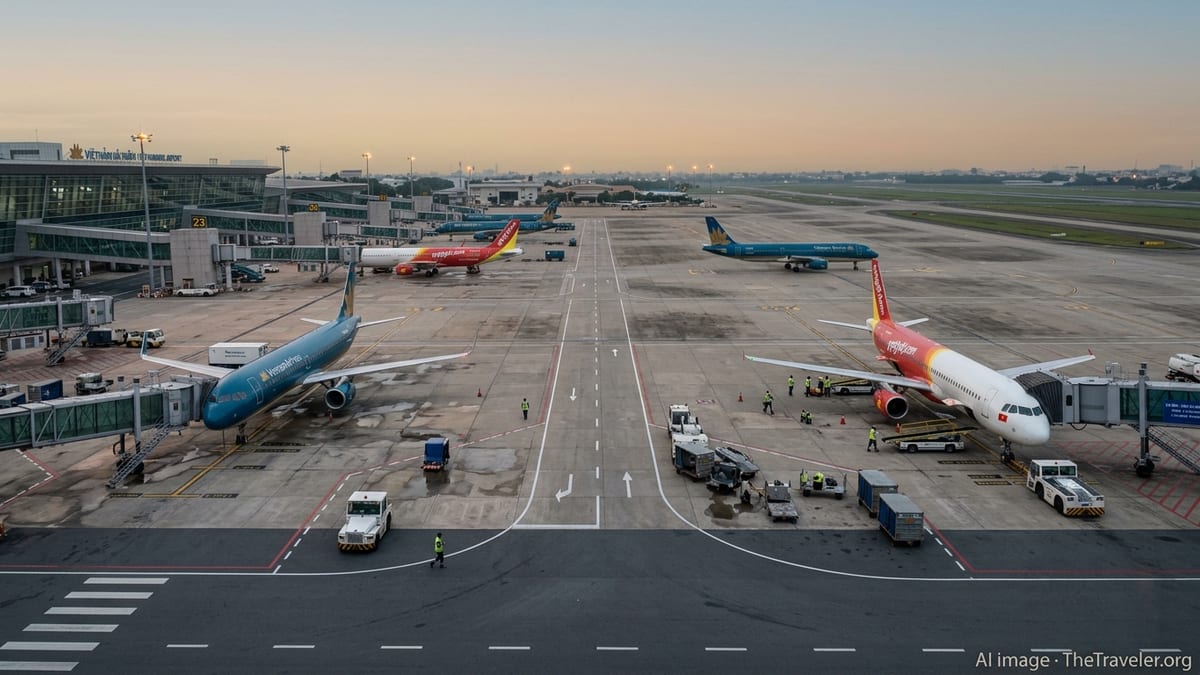
Fuel Shock Pushes Airlines to Rethink Schedules
Publicly available information indicates that Vietnamese airlines are preparing to reduce flight frequencies on selected routes beginning in April 2026, after the cost of Jet A1 aviation fuel spiked to about three times previous levels within weeks. Reports describe jet fuel trading near 200 dollars per barrel in early March, transforming what had been a manageable cost headwind into an immediate threat to profitability across the sector.
Vietnam Airlines, the national flag carrier, has outlined plans to cancel around two dozen weekly domestic flights from April, according to recent coverage of regulatory filings and aviation authority updates. Low cost rival Vietjet has adjusted frequencies on specific routes, with reports indicating that schedules are being fine tuned to match constrained fuel availability and concentrate operations on the most commercially viable services.
Analysts note that fuel typically represents 30 to 40 percent of an airline’s operating expenses, but for some Vietnamese carriers the share has climbed even higher as they rely heavily on single aisle jets for dense domestic and regional routes. With costs jumping by an estimated 50 to 70 percent for some operators, industry data suggest that many flights would operate at a loss if schedules were not cut or restructured.
Export Bans and Conflict Tighten Vietnam’s Fuel Supply
The flight reductions are unfolding against a backdrop of regional supply disruption. Recent coverage from regional media outlets highlights that China and Thailand, historically important suppliers of aviation fuel to Vietnam, have halted exports in response to the conflict in the Middle East and concerns over their own stockpiles. Those decisions have added pressure to Vietnam’s domestic refiners and fuel distributors, which now face the challenge of covering a much larger share of demand.
Officially released documents from the Civil Aviation Authority of Vietnam show that the regulator has warned of a possible fuel shortfall from early April, advising airlines to revisit their schedules and prioritize essential domestic links and strategic international connections. Airport operators have reportedly been asked to prepare additional parking stands in case significant numbers of aircraft are grounded or rotated less frequently due to limited fuel.
While aviation fuel suppliers in Vietnam maintain that they can meet demand in the very short term, published commentary from industry and government figures underscores a high level of uncertainty beyond March. Market observers say that any further escalation of geopolitical tensions, or prolongation of export bans in neighboring countries, could deepen the squeeze and force more aggressive cuts to capacity later in the year.
Tax Relief, Surcharges and Higher Fares on the Table
As airlines trim schedules, Vietnam’s regulators are exploring financial tools to keep carriers flying. According to recent policy proposals and local media reporting, the Civil Aviation Authority has recommended a full waiver of environmental protection tax on aviation fuel until at least the end of May 2026, along with a reduction in value added tax applied to jet fuel. The aim is to blunt the immediate impact of the price surge on airlines’ cash flow and preserve core connectivity.
Regulators have also floated the idea of allowing flexible fuel surcharges on domestic tickets, linked to movements in Jet A1 prices. Publicly available analyses suggest that such surcharges, already common on many international routes, would give airlines more scope to pass a portion of the fuel cost burden to passengers when global prices spike. Industry calculations cited in recent reports show that if jet fuel remains near 200 to 230 dollars per barrel, the monthly operating costs of some Vietnamese carriers could rise by 50 to 60 percent compared with precrisis levels.
Any move to increase fares or add surcharges is likely to be politically sensitive, particularly after a period in which domestic air ticket prices have been under close scrutiny. However, sector experts quoted in financial and economic coverage argue that without some combination of tax relief, higher ticket prices and cost cutting, the current spike in fuel costs could erode balance sheets that are still recovering from the pandemic and previous energy shocks.
Domestic Routes Bear the Brunt as Networks Are Reshaped
Network adjustments announced so far indicate that domestic services are likely to absorb much of the initial impact. Guidance from the aviation regulator has emphasized the need to safeguard key trunk routes that connect major economic centers such as Hanoi, Ho Chi Minh City and Da Nang, as well as essential links to remote regions where air travel is vital for mobility and economic activity.
Carriers appear to be focusing cuts on secondary or lower yielding domestic routes, while maintaining or even protecting long haul and high demand regional services that feed international tourism and trade. Public schedule data and investor presentations suggest that Vietnam Airlines and Vietjet are concentrating capacity on routes with strong load factors and higher yields, as well as on markets where connecting traffic from partner airlines can help fill aircraft.
For travelers, this rebalancing may mean fewer departure time options, more crowded flights and reduced flexibility, particularly on shorter domestic sectors. Travel agents and online booking platforms are already advising customers to plan further ahead for trips in April and May, as the combination of fewer seats and persistent demand keeps prices elevated and narrows opportunities for last minute deals.
Global Context and Outlook for Vietnam’s Carriers
Vietnam’s flight reductions mirror developments across the wider Asia Pacific and global aviation markets, where airlines from full service network carriers to low cost operators have been raising fares, introducing new fuel surcharges or cutting less profitable routes in response to the same spike in oil and jet fuel prices. Recent international coverage notes that some large airlines in North America and Europe are also trimming schedules over the next two quarters, betting that passengers will absorb higher prices on remaining flights.
For Vietnamese carriers, the challenge is compounded by ongoing fleet renewal programs and investments in new infrastructure, including the ramp up toward commercial operations at the new Long Thanh International Airport. Industry analysts caution that delaying growth plans could slow Vietnam’s broader tourism and trade ambitions, yet maintaining capacity at current fuel prices could generate sustained losses.
Near term prospects for relief depend largely on developments in the Middle East and on how quickly regional fuel markets adjust to new trade flows. If fuel prices ease, some of the recently announced flight reductions could be reversed and temporarily grounded aircraft returned to service. If the current price environment persists, observers expect further adjustments to Vietnam’s flight schedules, a more permanent shift toward leaner networks and continued pressure for regulatory measures to support the country’s airlines.