

More news on this day
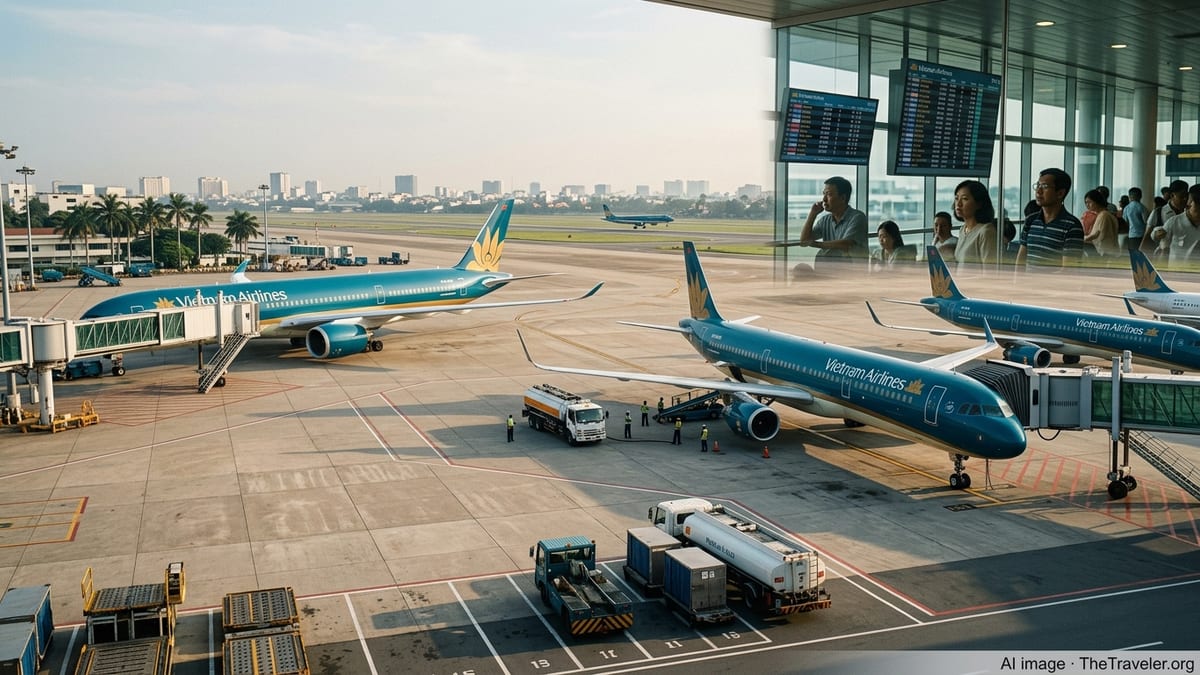
Vietnam Airlines has begun trimming its schedule by 23 weekly flights as a worsening jet fuel crunch ripples across Asia, adding Vietnam to a growing list of destinations where travelers are facing higher fares, tighter capacity and shifting itineraries linked to the conflict in the Middle East.
Get the latest news straight to your inbox!
How the Middle East Conflict Triggered a Jet Fuel Squeeze
The latest round of conflict in the Middle East, which escalated in late February 2026, has disrupted key oil and aviation fuel supply routes and pushed jet fuel prices to levels not seen in years. Industry analysis indicates that closures and restrictions around the Strait of Hormuz and neighboring airspace have forced tankers and airlines into longer, less efficient routes, tightening fuel availability and sharply raising costs.
According to publicly available data from international aviation bodies, the Middle East supplies a substantial share of the jet fuel consumed in Asia. When refineries in the region struggle to move products out, Asian buyers are left competing for fewer cargoes at higher prices. Recent estimates suggest that the price of Jet A-1 has roughly doubled compared with pre-crisis norms, with some benchmarks briefly testing the 200 dollar per barrel threshold.
For airlines, fuel is typically the single largest operating expense. Analysts say that every sustained increase of 10 dollars per barrel can translate into a significant jump in monthly costs. With routes being lengthened to skirt closed skies and war-risk premiums being added to insurance and logistics, the current spike is magnified. Carriers from Europe to the Asia Pacific are now rebalancing schedules, trimming marginal routes and seeking emergency support measures to stay ahead of the shock.
Vietnam’s aviation market, which sources much of its fuel from regional hubs linked to Middle Eastern crude flows, has been singled out in recent reports as particularly vulnerable if the disruptions extend into the coming months.
Vietnam Airlines’ 23-Flight Cut: What It Means in Practice
Within this volatile backdrop, Vietnam Airlines has moved to cut 23 weekly flights from its network, according to recent industry reporting. The reductions are part of a broader contingency plan designed to preserve fuel supplies for the most in-demand and strategically important routes while limiting financial losses from operating less profitable services at elevated fuel prices.
Publicly available information suggests that the airline is prioritizing trunk routes connecting Hanoi and Ho Chi Minh City with major regional and long-haul destinations, while scaling back on lower-yield frequencies and certain off-peak rotations. The details of each adjustment can vary week by week, but travelers are already seeing fewer options on select domestic and regional sectors.
Vietnam’s authorities have warned that Jet A-1 supplies could become tight from early April 2026 if market conditions do not improve, and local media note that carriers such as Vietnam Airlines, Vietjet and others are projecting steep monthly cost increases under current price scenarios. In parallel, policy proposals under discussion include temporary tax relief on aviation fuel, permission to add fuel surcharges to domestic tickets and reductions in airport-related fees to help airlines absorb the shock.
For passengers, the near-term impact is likely to be most visible in reduced seat availability on popular dates and times, rather than wholesale route cancellations. However, as schedules are revised, some travelers with existing bookings may find their flight numbers, departure times or even routings altered on relatively short notice.
Ripple Effects Across Thailand, Indonesia, Malaysia and the Philippines
The pressures facing Vietnam Airlines are part of a wider pattern across Southeast Asia. Carriers in Thailand, Indonesia, Malaysia and the Philippines are also contending with more expensive fuel, complex rerouting needs and fragile supply chains that depend on stable flows of Middle Eastern crude.
In Thailand, regional and long-haul operators are watching fuel procurement closely while adjusting capacity on routes most exposed to longer detours around restricted Middle Eastern airspace. In Indonesia and Malaysia, both of which have large domestic networks spread over extensive archipelagos, higher fuel prices are particularly painful because shorter sectors offer fewer opportunities to spread costs over long distances. Philippine carriers, meanwhile, are already applying steeply higher fuel surcharges on tickets issued for early April 2026, according to local regulatory filings, signaling that higher operating costs are being passed directly to consumers.
While not every airline in these markets has announced outright schedule cuts tied specifically to fuel shortages, the overall trend points toward tighter capacity growth, cautious fleet deployment and a renewed focus on profitable core routes. Vietnam’s decision to preemptively trim 23 weekly flights fits that broader regional strategy of “defensive optimization” as carriers attempt to navigate an uncertain fuel supply landscape.
Travelers planning multi-country itineraries through Southeast Asia, especially those connecting Europe or the Middle East with destinations in Vietnam, Thailand, Indonesia, Malaysia and the Philippines, should be prepared for a more fluid operating environment than in recent peak seasons.
What Travelers Should Do Now Before Flying to or via Vietnam
With Vietnam Airlines’ schedule already tightening and fuel-related pressures spreading across neighboring markets, travelers heading to or through Vietnam in the coming weeks should take a more proactive approach to trip planning. The first step is to monitor bookings frequently. Airlines across the region are adjusting schedules as fuel supply and pricing data evolve, and changes that once happened quarterly are now being made within days.
Passengers are also likely to encounter higher fares than they might expect for the shoulder season. Aviation and tourism data point to robust demand for travel to Vietnam and its neighbors as the region’s post-pandemic recovery continues. When strong demand collides with constrained capacity and higher operating costs, fares and surcharges tend to rise. Booking early, being flexible with travel dates and avoiding the busiest national holidays can provide some relief on price.
Another emerging issue is routing. Because several Middle Eastern airspaces and hubs have been intermittently closed or restricted, many Europe–Asia services are being rerouted over longer paths or via alternative hubs in South Asia and Europe. Travelers who once relied on quick one-stop connections through Gulf airports to reach Vietnam may now find themselves offered longer itineraries, different intermediate stops or rebookings through substitute gateways. Allowing longer connection times and carefully reviewing updated itineraries before departure can help avoid missed flights and confusion at transit points.
Finally, passengers should pay close attention to fare rules and travel insurance coverage. Some policies treat large-scale geopolitical disruptions and fuel shortages as extraordinary events, potentially limiting compensation for schedule changes or cancellations. Understanding the level of protection in place before departure is increasingly important in a period when airlines are making rapid operational decisions in response to shifting fuel markets.
Tourism and Economic Implications for Vietnam and the Region
The jet fuel crunch arrives at a sensitive moment for Vietnam’s tourism sector. Visitor numbers have been climbing back toward pre-pandemic levels, supported by relaxed visa policies, aggressive promotion of beach destinations and heritage cities, and growing interest from both regional and long-haul markets. Cuts to flight frequencies and higher fares risk tempering that momentum, particularly among budget-conscious travelers and tour operators that rely on stable airlift.
Industry observers note that Vietnam has ambitions to position itself as a transit and tourism hub linking Northeast Asia, Southeast Asia and parts of Europe. Achieving that goal depends heavily on reliable, competitively priced air connectivity. If fuel prices remain elevated for an extended period, airlines may delay route expansions, reduce secondary-city links or concentrate capacity on only the highest-demand corridors, limiting the diversity of options for inbound visitors.
The same dynamics apply across Thailand, Indonesia, Malaysia and the Philippines, where tourism contributes significantly to employment and foreign exchange earnings. Higher travel costs could shift some regional tourism flows toward closer, less fuel-intensive routes or alternative modes of transport where feasible. At the same time, governments and airports may look at short-term incentives, fee reductions or targeted marketing to keep international arrivals on track despite the headwinds.
Over the longer term, the present disruption is likely to revive discussions about fuel hedging strategies, diversification of supply sources and the accelerated use of more efficient aircraft and alternative fuels. For now, however, the immediate reality for travelers is straightforward: flying to and within Vietnam and its Southeast Asian neighbors is still possible and generally safe, but it may be more expensive, less predictable and more subject to last-minute change than in recent years.