

More news on this day
Vietnam Airlines is preparing a series of international terminal changes through 2026 at major regional hubs, aligning with Vietnam’s wider airport expansion program to ease congestion and improve the passenger experience for growing long haul and regional traffic.
Get the latest news straight to your inbox!
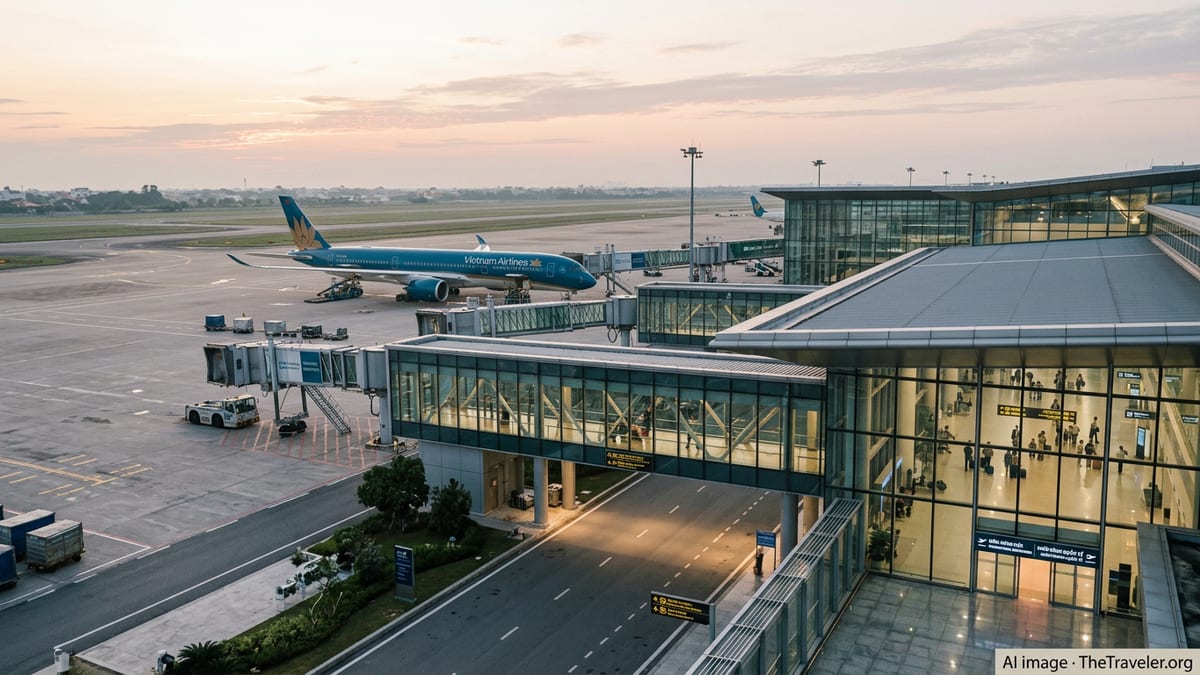
Regional Hub Shuffle Puts Focus on 2026
Vietnam’s aviation network is entering a period of rapid reconfiguration as new infrastructure comes online and older terminals are repurposed. Airports Corporation of Vietnam has outlined a timeline that includes the expansion of Noi Bai International Airport’s Terminal 2 in Hanoi and the ramp-up of operations at the new Long Thanh International Airport near Ho Chi Minh City, both targeted around 2026 to relieve pressure on the country’s busiest gateways.
Publicly available information shows that the expanded international Terminal 2 at Noi Bai is being developed with a fully integrated digital passenger flow, shifting many processes from manual to automated systems. This includes upgraded check in, security, immigration, and boarding technologies that are expected to shorten queues and create more predictable connection times for Vietnam Airlines’ international passengers using Hanoi as a hub.
Industry reports indicate that the new Long Thanh airport, planned to take over much of Southern Vietnam’s international traffic from Tan Son Nhat, remains scheduled for an initial opening phase in 2026. While precise airline allocations are still being refined, planning documents and local media coverage suggest that Vietnam Airlines is expected to be a core tenant of the first international terminal at Long Thanh, shaping future connection patterns for travelers bound to and from Ho Chi Minh City.
Together, these projects form the backbone of a multi year strategy in which domestic and some regional services are concentrated at existing urban airports, while a growing share of long haul and higher volume international operations gradually shifts to new or expanded facilities designed to handle larger aircraft and higher passenger throughput.
Noi Bai’s Expanded T2 to Become a Digital International Gateway
The expansion of Terminal 2 at Hanoi’s Noi Bai International Airport marks one of the most immediate changes for Vietnam Airlines’ international passengers. Official project information describes T2’s upgraded complex as Vietnam’s first fully integrated digital passenger flow, integrating self service tools and back end automation to streamline airport processes from curb to gate.
Check in and baggage handling are expected to be supported by additional self service kiosks, more automated bag drops, and enhanced baggage screening systems. These upgrades aim to reduce bottlenecks at peak hours and enable Vietnam Airlines to process more international passengers through its primary northern hub without adding substantial floor space to the existing building.
Trial operations carried out in late 2025 used Vietnam Airlines widebody services on routes such as Hanoi to Tokyo Narita to test the full journey, including smart security screening, improved wayfinding, and boarding gate procedures. Reports from these trials indicate that the digitalized process significantly cuts handling times while maintaining regulatory checks, a key factor for tight international to domestic connections via Hanoi.
As the expansion is fully folded into regular operations leading into 2026, Vietnam Airlines is expected to concentrate more connecting itineraries through Noi Bai’s international terminal, using the improved processing capacity to support growing demand from Northeast Asia, Europe, and the Pacific. For passengers, the practical impact should be shorter queues, clearer passenger flows between immigration and onward gates, and a more consistent experience at one of the airline’s main international hubs.
From Tan Son Nhat to Long Thanh: Rethinking Southern Vietnam’s International Traffic
Ho Chi Minh City’s aviation landscape is undergoing its own transformation as authorities prepare to rebalance long term international operations between Tan Son Nhat International Airport and the under construction Long Thanh International Airport. Tan Son Nhat’s new Terminal 3, which opened in 2025 as a domestic facility, has allowed Vietnam Airlines to shift most domestic flights into a modern dedicated building, freeing Terminal 2 to focus on international operations in the interim.
Planning documents and public discussions around the Long Thanh project highlight a proposed model in which Tan Son Nhat increasingly specializes in domestic and short haul regional flights, while Long Thanh assumes the bulk of long haul and higher volume international services. Vietnam Airlines has been cited in policy discussions proposing that, once Long Thanh opens, the carrier would maintain domestic and some Southeast Asian international services at Tan Son Nhat while leveraging Long Thanh as a primary base for broader international connectivity.
For travelers, the 2026 transitional period is likely to involve parallel operations, with Vietnam Airlines international flights gradually redistributed between the two airports as Long Thanh’s first terminal becomes operational. Passengers connecting between domestic and international services may need to pay closer attention to ticketed airports, ground transfer times, and schedule coordination during the early years of the split hub system.
Over time, the new configuration is expected to ease the chronic congestion and taxiway bottlenecks that have long characterized Tan Son Nhat, enabling Vietnam Airlines to operate more reliable international schedules with fewer delays caused by airfield capacity limits and apron constraints at the inner city airport.
International Terminal Rebalancing Beyond Vietnam’s Borders
Vietnam Airlines’ 2026 terminal changes are not limited to airports within Vietnam. Regional coordination with foreign airport operators is also reshaping how passengers experience the airline’s services at key overseas hubs. In Manila, operator announcements for Ninoy Aquino International Airport detail a significant terminal reorganization that takes effect in 2026, with Vietnam Airlines moving from Terminal 1 to the larger Terminal 3.
This reassignment, planned as part of wider efforts to decongest the Philippine capital’s main airport, is intended to consolidate more full service international carriers in a terminal equipped with greater capacity and more modern facilities. For Vietnam Airlines customers traveling between Vietnam and the Philippines or using Manila as a connection point, Terminal 3 promises more retail and dining options, expanded security and immigration processing lines, and improved gate infrastructure compared with the older Terminal 1.
According to publicly available airport planning information, the Manila realignment is phased, with Vietnam Airlines included in the first wave of carriers shifting terminals. By the time all phases are completed in 2026, passengers on Vietnam Airlines flights to and from Manila are expected to experience a different terminal layout, new check in areas, and altered ground transport pickup points, all of which will require careful attention to pre flight instructions.
Similar though smaller adjustments are anticipated at other regional airports where Vietnam Airlines operates, as partners and local authorities tweak terminal allocations to better group alliance members, streamline security screening, and accommodate growing traffic from Vietnam’s expanding international network.
What Travelers Can Expect From the 2026 Transition
The combined effect of these terminal changes is a more segmented but potentially smoother journey for Vietnam Airlines passengers, provided travelers remain attentive to airport and terminal information printed on itineraries and boarding passes. In Hanoi, the expanded international Terminal 2 is set to operate as a digital enabled hub, while in southern Vietnam, international traffic will increasingly pivot toward the new Long Thanh airport as it opens.
International travelers connecting through Vietnam Airlines’ network should see tangible benefits from upgraded check in technology, more automated security and immigration steps, and expanded departures halls with additional boarding gates. At the same time, any transition period brings risks of confusion, especially where domestic and international operations are split between different terminals or even different airports.
Passenger experience reports from early trial operations at Noi Bai and Tan Son Nhat emphasize the importance of clear signage, multilingual information screens, and robust coordination between airline staff and airport operators. While the 2026 changes are designed to reduce congestion and enhance comfort in the long term, travelers using Vietnam Airlines during the rollout phase may need to allow extra time, verify terminal assignments before departure, and be prepared for evolving procedures as new infrastructure beds in.
As construction milestones are met and trial operations give way to full commercial use, Vietnam Airlines’ alignment with these upgraded international terminals positions the carrier to scale up its long haul ambitions and strengthen Vietnam’s role as a regional transit point between Southeast Asia and the rest of the world.