

More news on this day
Vietnam Airlines’ decision to relaunch nonstop flights between Ho Chi Minh City and Phuket from April 2, 2026 is already rippling through Southeast Asia’s tourism sector, with hotel partners in both Thailand and Vietnam reporting a sharp rise in advance bookings for the upcoming summer peak.
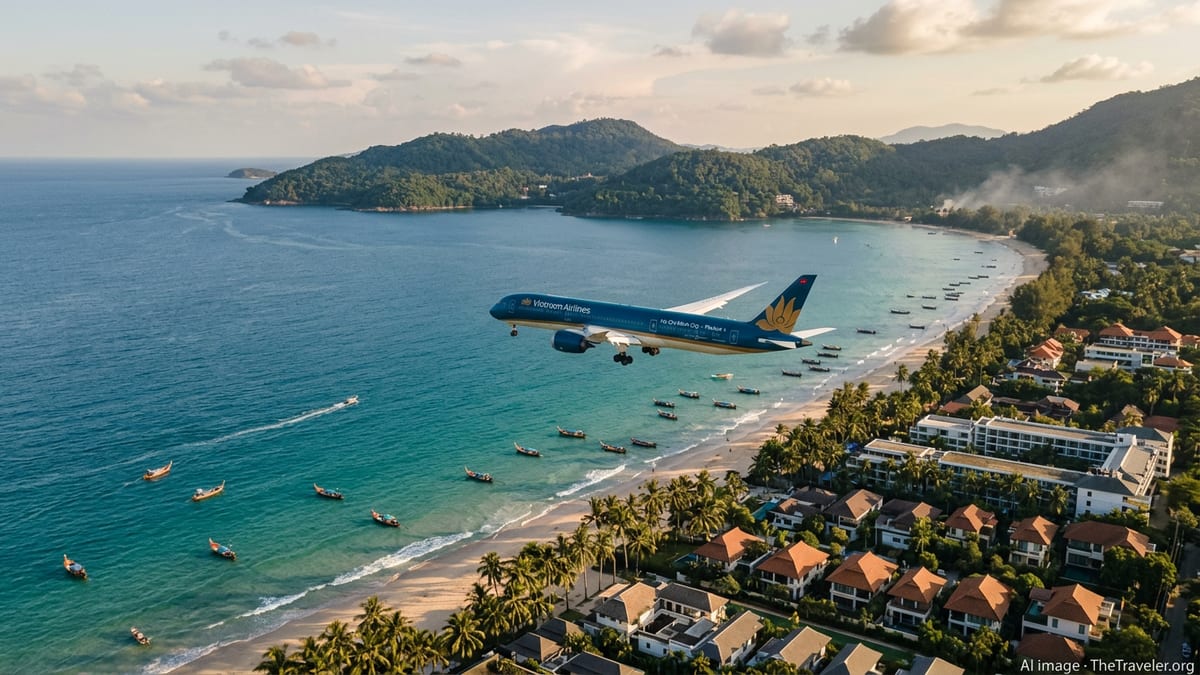
Route Relaunch Links Two of Southeast Asia’s Busiest Beach Gateways
The national flag carrier will operate four weekly round-trip services between Ho Chi Minh City and Phuket from early April, restoring a direct connection between Vietnam’s commercial hub and Thailand’s best-known island resort just ahead of the main holiday rush. The schedule is timed to appeal to short-break and extended-weekend travelers, with departures that allow passengers to maximize beach time on both outbound and return legs.
Industry observers note that Vietnam Airlines is using the Phuket launch to cement its role as a full-service bridge across mainland and maritime Southeast Asia. The new service slots neatly into the carrier’s growing regional network, which in the past year has added or reinstated routes linking Ho Chi Minh City with Bali, Beijing and other leisure-focused destinations as travel demand rebounds.
For Ho Chi Minh City, the Phuket link further reinforces its position as a regional aviation gateway rather than simply an origin market. Tour operators say the city is increasingly being sold as a twin-center destination with a Thai beach extension, with Phuket and other southern Thai islands marketed as an easy add-on to itineraries that also include time in Vietnam’s cities or along its own coastline.
The relaunch also builds on Vietnam Airlines’ long history in the Vietnam–Thailand market. The carrier first connected Ho Chi Minh City and Phuket several years ago and has steadily expanded its Thailand footprint through flights to Bangkok and other resort gateways, responding to resilient demand from both Vietnamese travelers and third-country visitors combining the two countries in a single trip.
Surging Bookings for Phuket and Vietnamese Beach Resorts
Even before the first flight takes off, regional hotel operators report that the new route is having a tangible impact on forward demand for late spring and summer 2026. Large international chains with properties in both Phuket and Vietnam’s established beach destinations such as Nha Trang, Da Nang and Phu Quoc say they have seen a noticeable uptick in multi-stop itineraries pairing the two countries.
Vietnam-based destination management companies describe a flurry of new requests from European and Middle Eastern tour wholesalers looking to package Phuket with Vietnam’s coastal resorts. They point to the convenience of a single-ticket itinerary on Vietnam Airlines, with guaranteed connections through Ho Chi Minh City that simplify logistics and luggage handling for long-haul passengers transiting between the two countries.
Thai hoteliers in Patong, Kata and Karon beaches are also reporting stronger-than-expected lead-in demand from Vietnam and from markets such as South Korea and Australia that now have the option of connecting via Ho Chi Minh City instead of Bangkok. Several Phuket resorts say they are adjusting inventory allocations for Vietnamese and regional partners, anticipating that the direct service will support higher occupancies through July and August.
On the Vietnamese side, hotels in Ho Chi Minh City and nearby beach destinations see an opportunity to capture stopover nights from travelers who previously would have flown in and out of Thailand alone. Urban properties close to Tan Son Nhat International Airport are fine-tuning weekend stay-and-fly packages, while coastal resorts are working with tour operators on combined Thailand–Vietnam beach holidays that highlight contrasting landscapes and cultures.
Airline Strategy Targets Rising Intra-Regional Leisure Demand
The Ho Chi Minh City–Phuket launch is part of a broader regional push by Vietnam Airlines to rebalance its network mix toward high-yield leisure traffic. After rebuilding its long-haul operations to Europe and North America, the carrier has turned its attention to short- and medium-haul routes where rising middle-class incomes and pent-up travel demand are driving strong growth in passenger volumes.
By prioritizing Phuket ahead of the 2026 summer season, the airline is tapping into one of Asia’s most resilient resort markets at a time when international arrivals to Thailand continue to trend upward. Analysts say positioning Ho Chi Minh City as a key connecting hub for Phuket-bound passengers from Northeast Asia and Europe allows Vietnam Airlines to capture additional sixth-freedom traffic that might otherwise route through Bangkok, Singapore or Kuala Lumpur.
The route also dovetails with Vietnam’s own tourism ambitions. Policymakers in Hanoi and Ho Chi Minh City have consistently highlighted aviation connectivity as a pillar of their strategy to sustain double-digit growth in international visitor arrivals. Industry data for 2025 showed Vietnam leading regional recovery metrics, and stakeholders expect the 2026 summer season to build on that momentum as more city pairs are linked by nonstop or one-stop connections.
Travel trade representatives add that Vietnam Airlines’ full-service positioning differentiates the HCMC–Phuket route from existing low-cost options in the marketplace. Inclusive checked baggage, frequent-flyer accrual and interline partnerships are especially attractive to long-haul travelers booking complex itineraries that stitch together both Vietnam and Thailand over two or three weeks.
Tour Operators Rush to Build Twin-Center Thailand–Vietnam Packages
In Ho Chi Minh City, outbound tour operators have moved quickly to design short, beach-focused holiday products around the new flights. Several agencies are promoting four- and five-day Phuket breaks targeted at Vietnamese families and young professionals, with pricing that bundles airfare, hotel stays, airport transfers and popular excursions to nearby islands and viewpoints.
At the same time, inbound specialists are crafting integrated Thailand–Vietnam programs aimed at Europeans, North Americans and Gulf-region travelers seeking more varied itineraries. These packages often begin in Bangkok or Phuket, include a week on the Thai islands, then connect directly to Ho Chi Minh City before sending visitors onward to Hoi An, Da Nang, Nha Trang or the Mekong Delta, with Vietnam Airlines sectors providing the backbone of the routing.
Thai-based operators are exploring reciprocal products that highlight Vietnam as a rising beach rival to Phuket. Marketing materials emphasize the contrast between Thailand’s well-developed tourism infrastructure and Vietnam’s still-emerging coastal destinations, framing the two-country combination as a way to pair familiar hotspots with more off-the-beaten-path experiences.
Early booking patterns suggest strong interest from younger, experience-driven travelers who are comfortable flying multiple sectors within a single trip. Many are drawn by the possibility of visiting two countries without the expense or time commitment of a long around-the-world itinerary, helped by liberal visa policies and expanding regional air links.
Hotel Revenue Prospects Strengthen Ahead of Peak Summer 2026
Revenue managers across both markets are revising their projections for the May to August period, with some Phuket and Vietnamese coastal properties now forecasting higher average daily rates and occupancies than at the same time last year. Hoteliers cite the new HCMC–Phuket service as a key factor, alongside generally buoyant regional demand and expanded capacity from other carriers.
For Thailand, the added feed from Vietnam and beyond is expected to support continued recovery in international visitor numbers, particularly in the high-spend segment that traditionally favors full-service airlines and upscale or luxury accommodation. Phuket’s resort operators anticipate stronger weekday occupancy from regional city-break travelers, supplementing the island’s already robust weekend and holiday trade.
In Vietnam, properties in Ho Chi Minh City, Da Nang, Nha Trang and Phu Quoc are positioning themselves to benefit from increased stopover and twin-center business. Several hotel groups are in advanced talks with Vietnam Airlines and major tour operators about joint marketing campaigns, tactical discounts and value-added promotions designed to encourage travelers to extend their stays on either side of the HCMC–Phuket leg.
With peak summer travel for 2026 approaching, stakeholders across the tourism ecosystem see the new route as a timely addition that enhances flexibility for travelers, opens up creative itinerary design for the trade and underpins stronger performance for hotels and resorts from the Gulf of Thailand to Vietnam’s central and southern coasts.