

More news on this day
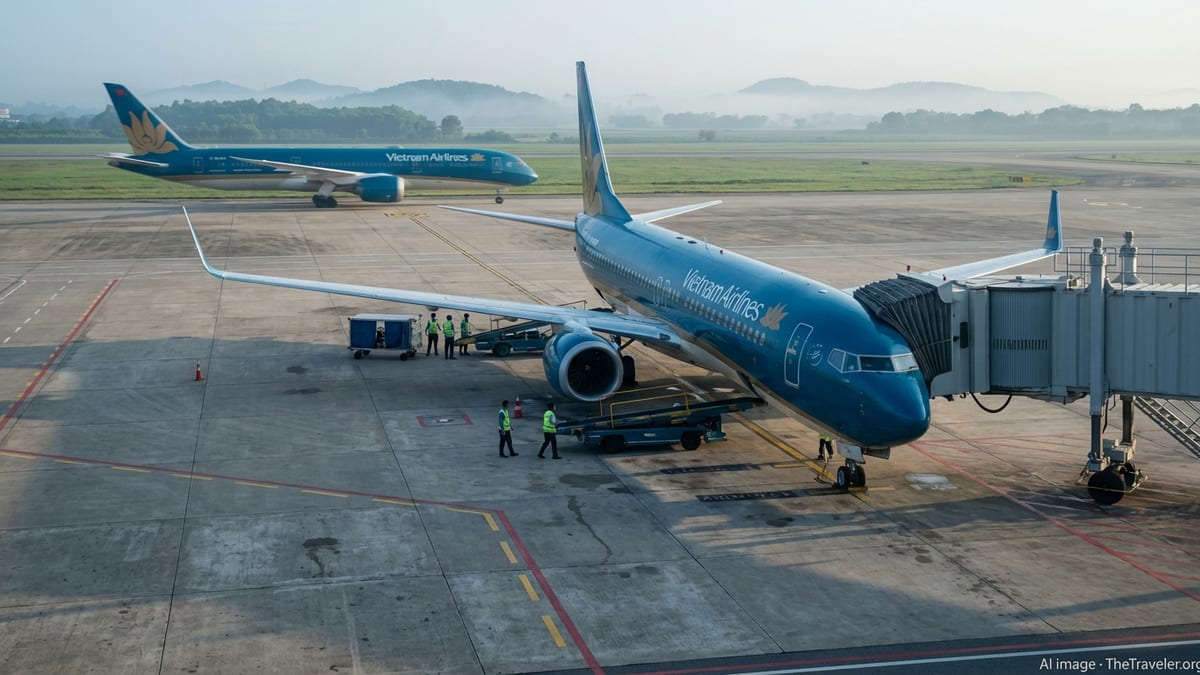
Vietnam Airlines has finalized a landmark order for 50 Boeing 737-8 MAX aircraft, a multibillion-dollar deal that will overhaul the flag carrier’s narrowbody fleet and expand its regional footprint across some of Asia’s fastest-growing travel markets.
A Strategic Deal Sealed in Washington
The agreement between Vietnam Airlines and Boeing was formally announced in Washington on February 18, 2026, marking the airline’s first-ever purchase of Boeing single-aisle jets. The order, valued at about 8 billion dollars at list prices, converts a previously unidentified commitment into a firm contract, underscoring deepening aviation and trade ties between Vietnam and the United States.
Senior Vietnamese officials, including General Secretary To Lam, joined U.S. representatives at the signing ceremony, highlighting the political and economic significance of the transaction. The deal follows a broader package of commercial agreements first signaled during high-level bilateral visits in 2023, when Vietnam upgraded its relationship with Washington and pledged to expand cooperation in high-tech sectors, including aviation.
For Boeing, the contract strengthens its foothold in an important Southeast Asian market where narrowbody competition with Airbus is intense. For Vietnam Airlines, the move provides a long-anticipated counterweight to its existing Airbus narrowbody fleet and aligns with an ambitious plan to modernize operations, improve efficiency and support the country’s fast-rising passenger volumes.
According to Boeing’s announcement, the 737-8 aircraft will be configured to carry up to around 200 passengers and will primarily serve domestic and short to medium-haul routes across Asia, giving Vietnam’s flag carrier a more flexible, fuel-efficient workhorse for high-density regional traffic.
Fleet Modernization to Power Regional Growth
The new 737-8 jets form a central pillar of Vietnam Airlines’ fleet renewal strategy as it targets a 150-strong fleet by 2030 and more than 200 aircraft by 2035. The carrier already operates 17 Boeing 787 Dreamliners on regional and long-haul routes, and the addition of the 737 MAX family will create a standardized Boeing platform spanning both single-aisle and widebody segments.
By pairing the 737-8 with its existing 787s, Vietnam Airlines expects to achieve a step change in fuel efficiency and maintenance commonality. Boeing estimates that the 737 MAX and 787 families together deliver roughly 20 to 25 percent lower fuel burn compared to the older aircraft they are designed to replace, a key consideration as airlines across Asia work toward decarbonization targets while keeping operating costs in check.
Deliveries of the 737-8 fleet are scheduled between 2030 and 2032, according to fleet planning information, allowing Vietnam Airlines to time the arrival of the jets with the retirement of aging narrowbodies and anticipated infrastructure expansion at key hubs such as Hanoi and Ho Chi Minh City. The airline has also signaled separate plans to add up to 30 new widebody aircraft later in the decade, as it eyes further long-haul growth.
Financing for the 737-8 deal is expected to be supported by a mix of domestic Vietnamese banks and major U.S. financial institutions, including the Export-Import Bank of the United States and Citibank, reflecting strong lender appetite for Asia’s post-pandemic aviation recovery and Vietnam’s improving credit profile.
Riding the Wave of Asia’s Travel Boom
The timing of Vietnam Airlines’ order taps into a powerful regional demand story. Boeing’s latest 20-year market outlook projects that airlines in Southeast Asia alone will need around 4,885 new aircraft between 2025 and 2044, with narrowbodies accounting for roughly 80 percent of that total. Passenger traffic in the subregion is expected to grow about 7 percent annually, making it one of the world’s fastest-expanding air travel markets.
Even as capacity recovers from the pandemic, Boeing data show that Southeast Asia’s single-aisle fleet remains slightly smaller than it was in 2019, highlighting pent-up demand for both replacement and growth. Many carriers are operating aircraft with an average age above 10 years, prompting a wave of renewal decisions focused on fuel-efficient models such as the 737 MAX and Airbus A320neo families.
Within this context, Vietnam sits at the crossroads of major travel flows between Northeast Asia, South Asia and Australasia, and it has emerged as one of the region’s most dynamic tourism and manufacturing economies. Inbound visitor numbers rebounded steadily through 2024 and 2025, while rising incomes and improved airport infrastructure have unleashed strong domestic demand as travelers shift from road and rail to air.
Industry forecasts from major manufacturers suggest that the broader Asia Pacific region will require nearly 20,000 new aircraft over the next two decades, with China and India leading global growth and Southeast Asian markets like Vietnam playing a pivotal supporting role. Vietnam Airlines’ latest order positions the carrier to capture a larger share of that traffic as network liberalization and visa policy reforms continue to open new routes.
What the 737-8 MAX Brings to Vietnam Airlines
For passengers, the introduction of the 737-8 MAX promises a more comfortable and consistent cabin product across Vietnam Airlines’ regional network. The aircraft is typically configured in a two-class layout with modern slimline seats, larger overhead bins and quieter engines, while improved cabin pressurization and lighting aim to reduce fatigue on longer short-haul sectors.
Operationally, the 737-8’s range of up to about 3,500 nautical miles, or roughly 6,480 kilometers, allows Vietnam Airlines to deploy the aircraft on dense domestic routes such as Hanoi to Ho Chi Minh City as well as regional flights to Northeast Asia, South Asia and Oceania. This flexibility will support increased frequencies on popular business and leisure routes and could open new point-to-point connections between secondary Vietnamese cities and emerging destinations across the region.
The 737 MAX program has undergone intense scrutiny following its global grounding in 2019 after two fatal accidents involving foreign carriers. Since then, regulators around the world have approved a series of design, software and training changes, and the U.S. Federal Aviation Administration recently restored Boeing’s authority to certify 737 MAX aircraft after enhanced oversight of production quality and safety practices.
By joining other Asian airlines that have already reintroduced or newly taken delivery of the 737 MAX, Vietnam Airlines is signaling confidence in the aircraft’s improved safety regime and in Boeing’s long-term commitment to the region. The choice of LEAP-1B engines supplied by CFM International also reflects a wider industry shift toward more efficient powerplants with lower fuel burn and emissions per seat.
Competitive Landscape in Vietnam’s Skies
The Vietnam Airlines order arrives against the backdrop of intense competition at home. Low-cost carriers such as Vietjet and newcomer regional players have already invested heavily in 737 MAX fleets, using the aircraft to expand from domestic routes into secondary markets in Thailand, India and Northeast Asia. Vietjet, for example, has started inducting 737 MAX 8 jets under a large multiyear order, deploying them on high-growth routes from Bangkok and Vietnamese coastal cities.
Until now, Vietnam Airlines has relied primarily on Airbus A321 and A321neo aircraft for narrowbody operations, giving its budget rivals a head start in leveraging Boeing’s single-aisle economics on key routes. The new 737-8 order will partially rebalance that equation, enabling the flag carrier to match or exceed competitors on unit cost, range and passenger experience.
The arrival of the Boeing narrowbodies will also complement Vietnam Airlines’ membership in the SkyTeam alliance. More efficient aircraft should enable additional frequencies to partner hubs in South Korea, Japan and Greater China, as well as better connectivity for European and Australian travelers connecting through Hanoi and Ho Chi Minh City.
At the same time, the order raises the stakes in Vietnam’s ongoing fleet diversification debate. While the country’s airlines collectively operate substantial Airbus narrowbody fleets, the growing presence of Boeing types across both full-service and low-cost segments suggests a more balanced duopoly, which could translate into more competitive pricing and route options for travelers.
Economic and Industrial Ripple Effects
The impact of the 737-8 deal extends beyond airline boardrooms and airport departure boards. For Vietnam, the contract reinforces its status as a rising partner in global aerospace supply chains and a priority market for U.S. exporters. Boeing already maintains offices in Hanoi and Ho Chi Minh City, engages with local universities and technical institutes, and has been building a network of Vietnamese suppliers that contribute components and services to its global production system.
As the 737-8 order moves into the implementation phase, industry executives expect further opportunities in maintenance, repair and overhaul services, aviation training and digital solutions. Vietnam’s burgeoning aviation ecosystem will likely need more pilots, technicians and cabin crew, mirroring Boeing’s projection that Southeast Asia will require around 243,000 new aviation professionals over the next 20 years.
Local banks’ participation in financing the deal could also deepen Vietnam’s financial markets by expanding their experience in large-scale, dollar-denominated aircraft transactions. Coupled with potential credit support from U.S. export agencies and lenders, the package showcases how aviation can anchor broader economic and diplomatic ties.
U.S. officials have been keen to highlight such flagship deals as examples of how closer cooperation with Vietnam can unlock high-value, high-technology exports while supporting jobs on both sides of the Pacific. For Vietnam, the visibility of a national carrier expanding its fleet with cutting-edge jets aligns neatly with its aspirations to move up the manufacturing value chain and present itself as a modern, globally connected economy.
Shaping the Future of Travel Across Asia
Once deliveries begin early in the next decade, Vietnam Airlines’ new 737-8 fleet is expected to reshape travel patterns across some of Asia’s fastest-growing corridors. Higher capacity and improved efficiency should allow the airline to keep fares competitive even as fuel costs and environmental obligations rise, broadening access to air travel for first-time flyers and budget-conscious travelers.
The enhanced performance of the 737-8 will also support more direct services, reducing the need for travelers to connect through larger regional hubs. Secondary cities in Vietnam and neighboring countries could see more nonstop flights, shortening journey times for both business and leisure passengers and boosting tourism in emerging destinations.
For corporate travelers, increased frequencies and improved on-time performance will be critical as Vietnam cements its role as a manufacturing and investment hub for industries such as electronics, apparel and renewable energy. For leisure passengers, the combination of Vietnam’s expanding beach, cultural and culinary tourism offerings with more convenient air links promises richer, more flexible itineraries across the region.
As the 737-8 order progresses from announcement to implementation, the partnership between Vietnam Airlines and Boeing will be closely watched as a barometer of both the aircraft’s commercial momentum and the health of Asia’s wider aviation recovery. For travelers, the deal ultimately translates into more choice, newer aircraft and an increasingly connected network linking Vietnam with the rest of Asia and beyond.