

More news on this day
Vietnam’s aviation network is bracing for weeks of severe disruption as carriers move to cut or consolidate flights across domestic and international routes, responding to a fast‑escalating jet fuel crunch and warnings that shortages could hit from early April 2026.
Get the latest news straight to your inbox!
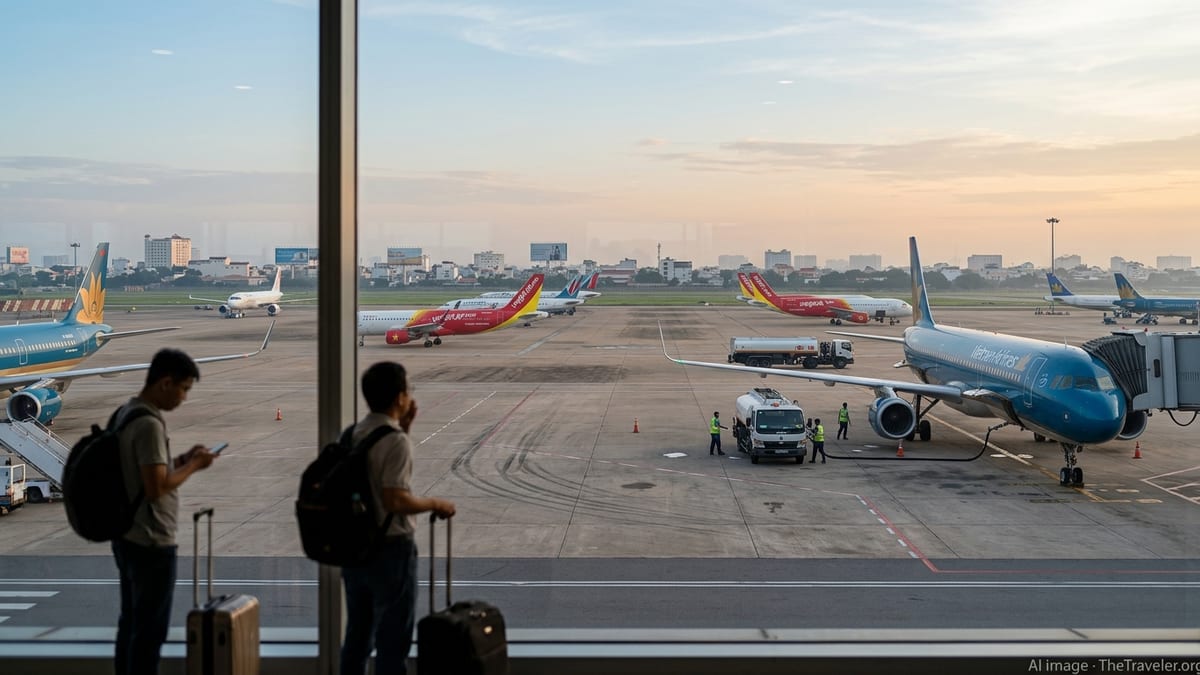
Fuel Shock Forces Rapid Network Retrenchment
Publicly available documents from Vietnam’s aviation regulator show that airlines have been urged to review flight schedules and prepare for reductions in operations as jet fuel supplies tighten and prices surge. The Civil Aviation Authority of Vietnam has highlighted risks of shortages from the beginning of April, after major regional suppliers such as China and Thailand restricted exports of aviation fuel in the wake of conflict in the Middle East.
Industry coverage indicates that Vietnam Airlines, Vietjet, Vietravel Airlines and newer leisure carrier Sun PhuQuoc Airways are all reworking their networks. Some services are being suspended outright, while others are seeing sharply reduced frequencies, particularly on routes regarded as nonessential or heavily reliant on discretionary leisure travel. Several carriers are reported to be prioritizing core domestic trunk routes and high‑yield international services where aircraft can be deployed most efficiently.
Reports in Vietnamese business media describe temporary halts on selected routes and capacity cuts extending from May into the off‑peak season, as airlines seek to lower fuel consumption and conserve cash. The picture that emerges is not of a sudden shutdown, but of a rolling adjustment in which flights are trimmed week by week, with schedules subject to revision at short notice.
Regional aviation analysis suggests that fuel currently accounts for more than one‑third of Vietnamese airlines’ operating costs, leaving little room to absorb further shocks. With jet fuel benchmarks linked to Singapore prices rising sharply, carriers are being pushed to choose between deeper flight cuts, higher fares or both.
Domestic Travelers Face Fewer Choices and Rising Fares
Domestic passengers are already seeing the impact in the form of thinner schedules and climbing ticket prices on key routes connecting Ho Chi Minh City, Hanoi and major tourist hubs. Vietnamese outlets that track airfares report that prices during upcoming public holidays, including the Reunification Day and Labour Day period at the end of April, are moving higher as airlines pull back capacity and hold remaining seats for travelers willing to pay more.
Coverage in national media indicates that regulators are weighing whether to allow new fuel surcharges on domestic tickets or adjust existing price caps so that airlines can legally pass on a portion of their higher costs. Proposals under discussion include a flexible surcharge mechanism tied to movements in Jet A‑1 prices, along with temporary reductions in airport service fees and other charges to keep base fares from rising too steeply.
At the same time, travel industry reports show that tourism operators are concerned about the risk of last‑minute flight changes during the April and May peak and into the summer holiday season. Some tour companies are beginning to advise customers to build in extra buffer time for domestic connections, or to consider alternative itineraries using rail or road where possible, especially to secondary destinations that are most vulnerable to flight cuts.
Despite these pressures, available information suggests that Vietnam’s airports and airlines are working to avoid blanket cancellations on core domestic links. Priority is being given to maintaining connectivity between major economic centers and key tourist gateways, even if that means downgrading from multiple daily flights to a sparser schedule.
International Routes Reshaped as Carriers Chase Fuel and Revenue
The disruption is also rippling across Vietnam’s international network. Aviation tracking reports and regional news coverage indicate that some carriers serving Northeast Asia are trimming frequencies or suspending routes where refueling or onward routing has become more difficult or expensive. Low‑cost services between Vietnamese coastal resorts and cities in South Korea, in particular, have been flagged for cuts as airlines seek to consolidate capacity on more profitable or fuel‑efficient sectors.
On long‑haul and regional routes, publicly available information shows that airlines are adjusting flight paths to avoid sensitive airspace and to align with airports where reliable fuel supplies can be secured. This can add time and cost to journeys, and in some cases is prompting reductions from daily operations to a handful of flights per week while the fuel situation remains uncertain.
Travel trade publications note that foreign carriers are also reassessing Vietnam capacity as the regional fuel crunch intensifies. Some international airlines have signaled plans to fine‑tune schedules or upgauge aircraft on specific days rather than maintaining evenly distributed daily services, in an effort to preserve overall seat numbers while operating fewer actual flights into the country.
For inbound travelers, this translates into more volatile timetables and a higher risk that flights booked months in advance may be retimed or merged with other services. Travel advisers are recommending more frequent checks of reservation details and closer coordination between separate tickets, especially when connecting between foreign airlines and Vietnamese carriers on the same journey.
Policy Response Seeks to Cushion the Blow
Vietnam’s aviation authorities are advancing a series of policy measures intended to stabilize the sector during what is increasingly described in local analysis as a fuel crisis. According to publicly accessible policy proposals, options on the table include temporary exemptions from environmental protection taxes on aviation fuel, cuts to value‑added tax rates applied to jet fuel, and permission for airlines to introduce or expand fuel surcharges.
Regulatory filings and local economic commentary suggest that officials are also considering further relaxation of certain aviation fees, such as landing, takeoff and air traffic management charges, to ease immediate liquidity pressures on carriers. Some proposals call for a review of domestic airfare caps introduced in recent years, with advocates arguing that such limits make it harder for airlines to respond flexibly to extraordinary cost spikes.
In parallel, published reports describe efforts to diversify Vietnam’s fuel supply sources and to secure new contracts to replace volumes affected by export restrictions from neighboring countries. This includes discussions with alternative suppliers and coordination with state‑owned fuel firms to prioritize aviation fuel amid competing domestic energy demands.
Analysts following Vietnam’s aviation sector point out that the current squeeze arrives just as airlines were emerging from several years of restructuring and fleet optimization. The industry is now being asked to absorb another exogenous shock, testing the resilience of balance sheets that only recently began to recover.
What Travelers Should Expect in the Coming Weeks
For passengers with tickets to, from or within Vietnam over the next few months, the most immediate impact is likely to be schedule volatility rather than outright loss of connectivity. Based on current airline announcements and timetable data, many affected routes are seeing reductions in daily frequency instead of full suspension, although some secondary international links are being paused altogether.
Travel industry guidance circulating in Vietnam and abroad encourages passengers to monitor flight status closely, opt for itineraries with longer connection windows, and consider booking with carriers that offer flexible change policies. Those planning multi‑stop trips across Southeast Asia are being urged to pay particular attention to sectors touching Vietnam, where timetable adjustments remain fluid.
Observers note that if global fuel prices stabilize or new supply arrangements are secured, airlines may gradually restore some of the trimmed capacity later in 2026, especially on high‑demand leisure routes. However, if the fuel crunch deepens, further rounds of flight cuts cannot be ruled out, and sustained upward pressure on airfares is widely expected.
For now, Vietnam’s aviation system remains operational but under strain, with carriers walking a narrow line between preserving vital connectivity and limiting financial damage. The coming weeks, as fuel contracts roll over and holiday demand peaks, are likely to determine how long the current phase of widespread schedule disruption will last.