

More news on this day
Vietnam Airlines is preparing a sweeping reshuffle of where its flights arrive and depart worldwide, with new terminal assignments from March 2026 and a broader shift toward Vietnam’s next-generation airports set to redefine how passengers move through key hubs.
Get the latest news straight to your inbox!
Manila’s NAIA Begins the March 2026 Shake-up
The first visible change for many international travelers will take place in Manila. Publicly available airport documentation for Ninoy Aquino International Airport indicates that a major reorganization of airline terminal assignments will begin at the end of March 2026, as the privatized operator seeks to rebalance traffic across the aging complex.
From 29 March 2026, Vietnam Airlines is among several Asian carriers slated to move from Terminal 1 to the larger and more modern Terminal 3. The same reshuffle will see a group of Chinese and regional airlines follow the same path to Terminal 3, while certain low-cost operators will shift in the opposite direction to Terminal 1 to ease congestion.
For Vietnam Airlines passengers, the move means that many Manila departures and arrivals will connect through an upgraded facility with more spacious departure halls, an expanded security and immigration area, and a deeper mix of shops and food options. Travelers with existing bookings that currently show Terminal 1 are being advised in public-facing notices and forums to recheck their itineraries closer to departure as terminal assignments are updated in reservation systems.
The Manila reshuffle also affects connecting journeys. Passengers using Vietnam Airlines to link between Southeast Asia and other parts of Asia or Oceania through Manila will face different transfer routes across NAIA from late March, with new signage and bus patterns expected as part of the operator’s broader modernization plan.
Tan Son Nhat’s New Terminal 3 Becomes the Domestic Powerhouse
Even before March 2026, Vietnam Airlines has been adjusting its home-base footprint. The carrier began moving domestic operations into the brand-new Terminal 3 at Ho Chi Minh City’s Tan Son Nhat International Airport in 2025, following a period of test flights and phased ramp-up.
By mid-2025, public information from the airline and Vietnamese media showed that all domestic flights at Tan Son Nhat were being concentrated in Terminal 3. That shift has already changed the on-the-ground experience for anyone flying within Vietnam on the flag carrier, replacing crowded legacy spaces with a more modern check-in hall, automated systems, and redesigned passenger flows intended to reduce bottlenecks at security and boarding.
For travelers connecting between Vietnam Airlines domestic and international services in Ho Chi Minh City, the move to Terminal 3 means a more distinct separation between local and overseas operations. Passengers now need to factor in additional time to move between terminals, using shuttle links or clearly marked walking routes, depending on the configuration in effect at the time of travel.
As March 2026 approaches, Tan Son Nhat’s new layout is expected to play a larger role in regional connections. Domestic feeders from across Vietnam will increasingly channel through Terminal 3, providing a more predictable experience for regular flyers and tour groups that have historically contended with heavy crowds at the older domestic terminal.
Long Thanh: Vietnam’s Future Hub Reshapes Long-haul Plans
The most transformative shift for Vietnam Airlines is not a simple terminal swap but a wholesale move to a new airport. Long Thanh International Airport, under construction in Dong Nai Province northeast of Ho Chi Minh City, is expected to start phased commercial operations in the second half of 2026, according to government and industry updates.
Public planning documents and recent coverage indicate that Long Thanh is being developed as a new primary hub for Vietnam Airlines, with long-haul international routes gradually moving from Tan Son Nhat once the new facility opens. Proposals discussed between the airline and airport authorities envision long-haul traffic relocating to Long Thanh from the start of commercial operations through the end of the 2026 winter season, with a wider shift of intercontinental flights by 2027.
For travelers, this will mean that a future flight booked to or from Ho Chi Minh City on Vietnam Airlines may not use Tan Son Nhat at all. Instead, passengers will check in or arrive at Long Thanh’s new terminal complex, which is being designed with larger transfer areas, expanded runway capacity, and space for further growth of Vietnam’s flag carrier and its partners.
The change will introduce an additional layer of planning for visitors and business travelers. Ground transport links between Long Thanh and downtown Ho Chi Minh City will become part of the standard travel checklist, and itineraries that combine domestic and long-haul segments may involve a mix of airports during the transition period as operations are redistributed between Tan Son Nhat and Long Thanh.
Regional Realignments and What Passengers Should Expect
Beyond Vietnam’s borders and the high-profile Manila reshuffle, Vietnam Airlines has been gradually fine-tuning its terminal positions at key Asian gateways. Recent updates show that at Shanghai Pudong, for example, the carrier moved its check-in and departure operations from Terminal 2 to Terminal 1 to align more closely with SkyTeam partners and streamline baggage connections.
The pattern across these changes is a push toward terminals that offer better synergy with alliance members and more efficient use of infrastructure. For travelers, that often translates into shorter minimum connection times when linking to partner airlines and a more consistent experience when flying multi-leg itineraries through major hubs.
However, the trade-off is that travelers must pay closer attention to the details printed on their tickets and boarding passes. With simultaneous changes rolling out in Manila, Ho Chi Minh City, Shanghai and, in time, at Long Thanh, a trip booked many months ahead may depart from a different terminal than originally indicated when travel day arrives.
Airports and airlines are directing passengers to verify terminal information within 24 to 48 hours of departure using booking platforms or mobile applications. This is particularly important in cases where changing terminals requires additional ground transfers or longer walking distances, such as moving between domestic and international facilities during peak hours.
How the Shake-up Will Change the Feel of Your Journey
The cumulative effect of these moves is more than a line of code changing in a reservation system. For many Vietnam Airlines customers, the 2026 transition period will redefine the sensory experience of their journeys, from check-in and security to boarding and arrival.
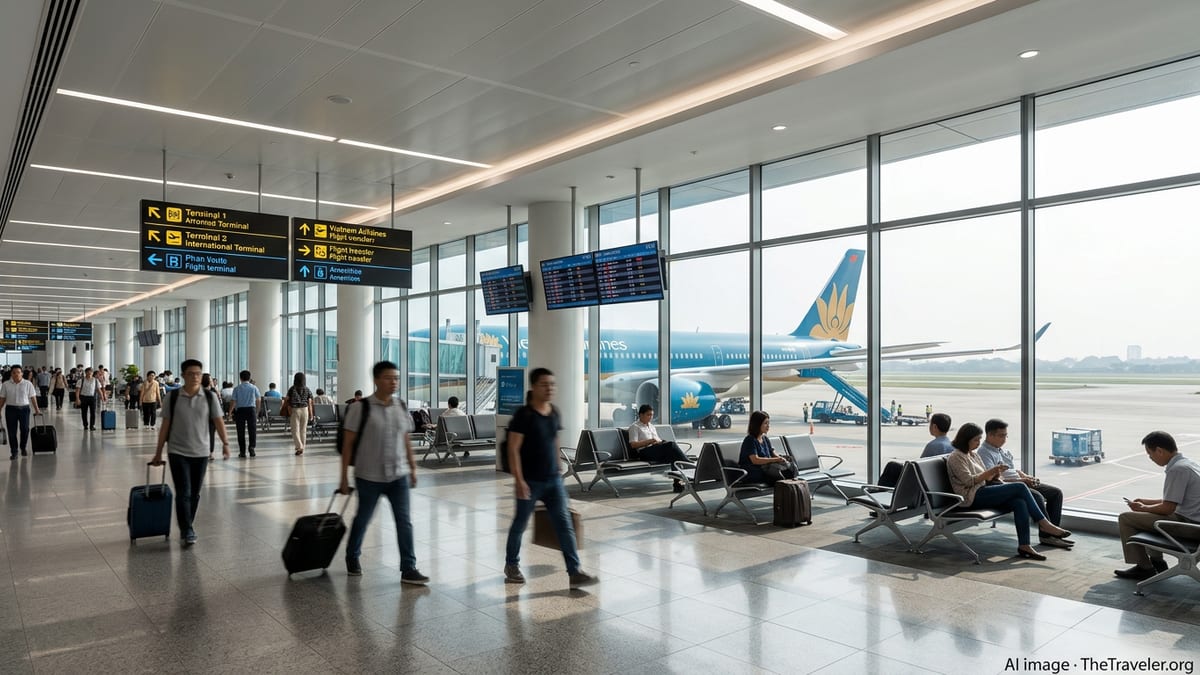
At airports such as Manila’s NAIA and Ho Chi Minh City’s Tan Son Nhat, the shift into newer or more spacious terminals should make queues more manageable and provide access to a wider range of lounges, retail outlets, and dining options. Travelers may notice brighter, more open departure halls, improved air conditioning, updated seating, and more plentiful power outlets compared with the legacy terminals they replace.
Looking ahead to Long Thanh, the change will be even more pronounced. A purpose-built hub designed around modern aircraft and high passenger volumes is expected to replace the familiar, if frequently congested, experience of long-haul departures from Tan Son Nhat. Wider corridors, expanded immigration zones, and more intuitive wayfinding are central to the new airport’s concept and should gradually become the face of Vietnam Airlines for long-distance travelers.
For now, March 2026 marks the point where the shake-up becomes visible to many passengers, with Manila’s terminal swap as an early signal of what is to come. Over the following months and years, the carrier’s progressive shift into newer terminals and an entirely new hub is poised to change not only how Vietnam Airlines routes are structured on paper, but how every step of the journey feels on the ground.