

More news on this day
Vietnam’s two biggest carriers have just inked a combined $14.4 billion in contracts with U.S. aerospace giants, a sweeping set of aircraft and engine deals that will expand fleets, modernize cabins and potentially change what your next vacation to Vietnam looks and feels like.
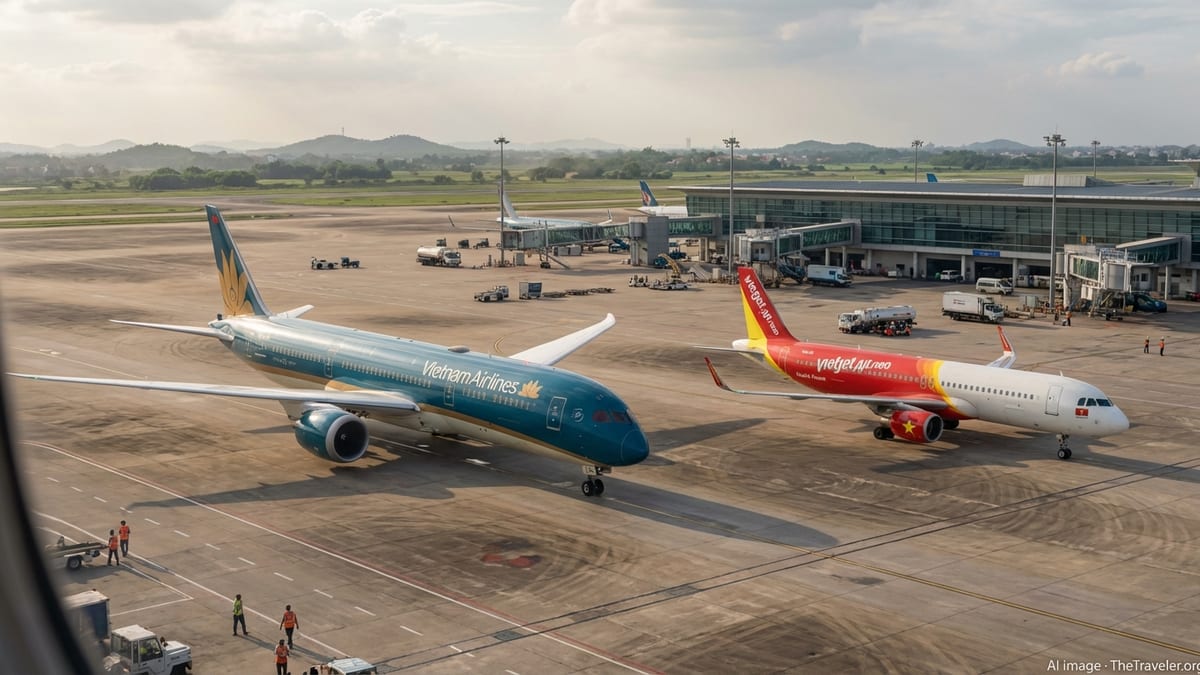
Inside the $14.4 Billion Wave of New Deals
The latest announcements out of Washington confirm a powerful new phase in Vietnam’s aviation expansion. During a high-profile visit by Vietnam’s top leader to the U.S. capital on February 19, 2026, Vietnam Airlines and budget carrier Vietjet signed agreements with American aerospace companies worth a total of about $14.4 billion. The centerpiece is Vietnam Airlines’ finalized purchase of 50 Boeing 737-8 jets, alongside Vietjet’s multibillion-dollar commitments for advanced engines and aircraft financing.
For travelers, those big numbers translate into more aircraft, newer technology and a deeper integration of Vietnam’s airlines into the global aviation supply chain. They also signal that both carriers are betting heavily on sustained growth in international tourism and regional travel over the decade ahead, even as the global industry continues to navigate safety concerns, tariffs and economic uncertainty.
Vietnam Airlines’ deal with Boeing, valued at around $8.1 billion according to government and company statements, locks in its first major single-aisle order from the U.S. manufacturer. Vietjet’s freshly signed contracts, worth more than $6.3 billion with Pratt & Whitney and U.S. financiers, underscore how the low-cost carrier is aligning with American partners for engines, maintenance and aircraft leasing.
Vietnam Airlines’ New Boeing 737-8 Fleet: What It Means in the Cabin
Vietnam Airlines has now finalized its order for 50 Boeing 737 MAX-family aircraft, specifically the 737-8 variant, in a move that will reshape its narrow-body fleet over the next decade. The airline, which already operates Boeing 787 Dreamliners on long-haul routes, is turning to Boeing’s single-aisle workhorse to serve dense domestic routes and short- to medium-haul regional flights across Southeast and Northeast Asia.
For passengers, that shift should gradually bring fresher interiors and more consistent onboard products. The 737-8 typically seats up to about 200 travelers depending on configuration, allowing Vietnam Airlines to balance economy capacity with a competitive premium or business cabin for regional business and high-end leisure traffic. Expect updated seats, improved overhead storage bins and modern in-flight entertainment or Wi-Fi offerings to become more standard as this new subfleet enters service.
The investment is also part of a broader modernization plan. Vietnam Airlines has government approval to acquire dozens of new narrow-body jets to replace older Airbus A321 aircraft and to prepare for forecast demand growth through 2035. That means travelers booking Hanoi to Ho Chi Minh City, Da Nang, Phu Quoc or regional favorites like Bangkok, Singapore and Taipei are increasingly likely to find themselves on newer jets designed to feel quieter, brighter and more comfortable than some of the aging planes still in service today.
Vietjet’s Engine Megadeal and New Leased Jets
While Vietnam Airlines focused on a blockbuster airplane order, Vietjet’s Washington signing ceremony centered on the high-tech systems that keep its fleet flying. The low-cost carrier concluded agreements worth about $6.3 billion with U.S. partners, led by a roughly $5.4 billion deal with Pratt & Whitney for GTF engines and long-term maintenance services covering 44 Airbus A321neo and A321XLR aircraft.
Those next-generation geared turbofan engines are designed to burn less fuel and cut emissions compared with older powerplants. For travelers, that can mean a smoother, quieter ride and potentially more direct medium-haul routes as airlines lean into the longer range and efficiency of the A321neo family. Vietjet has already signaled ambitions to connect Vietnam more deeply with markets in India, Australia and Northeast Asia, where these aircraft can fly thinner routes that widebodies might not sustain.
On top of the engine deal, Vietjet has arranged financing with Griffin Global Asset Management to lease six Boeing 737-8 aircraft, with a total list-price value approaching $1 billion. Those jets will complement its large Airbus narrow-body fleet and follow on an earlier landmark commitment to Boeing. Budget-conscious travelers may see these aircraft appear on popular domestic legs such as Ho Chi Minh City to Nha Trang or Da Lat, as well as short international hops to beach and city destinations across the region.
Taken together, Vietjet’s contracts are less about headline-grabbing plane orders and more about sustaining a rapid growth plan. With nearly 300 aircraft deliveries in its broader pipeline over the next several years, the carrier is securing the engines and financing required to keep ticket prices sharp while upgrading to more efficient hardware.
More Seats, More Routes: How Capacity Could Reshape Your Itinerary
The most immediate impact of these deals for travelers is capacity. Each new narrow-body jet entering the fleets of Vietnam Airlines and Vietjet effectively adds several hundred seats per day, depending on utilization and route structure. As dozens of aircraft are delivered over the second half of the 2020s, Vietnam’s domestic and regional networks are expected to thicken considerably.
On the domestic front, that could translate into more frequent flights on trunk routes, better connectivity to emerging secondary destinations and additional early-morning or late-night options that make complex itineraries easier. For example, reaching lesser-known coastal towns or highland gateways may become more straightforward as carriers add frequencies and experiment with new point-to-point services built around tourism growth.
Internationally, the combination of efficient 737-8s and A321neos allows both airlines to open or sustain routes that were previously marginal. Secondary cities in Japan, South Korea, India or even southern China can be linked directly to Hanoi or Ho Chi Minh City, bypassing traditional hubs. Vacationers planning multi-country Southeast Asia journeys may find more direct pairs like Da Nang to Seoul or Nha Trang to Osaka, trimming hours off travel days and reducing the need for overnight layovers.
Greater capacity can also influence pricing. While fares depend on many factors, including fuel costs, competition and taxes, a steady stream of new aircraft usually pressures carriers to keep seats filled. That dynamic often benefits leisure travelers in the form of promotional sales, competitive one-way fares and bundled offers with hotels and tour operators, especially outside peak holiday periods.
Comfort, Sustainability and Safety: What Travelers Should Watch
Beyond sheer capacity, the Vietnam Airlines and Vietjet announcements highlight a shift toward newer, more fuel-efficient aircraft and propulsion technology. Both the Boeing 737-8 and Airbus A321neo families offer significant fuel-burn reductions compared with older jets, helping airlines manage operating costs and respond to growing pressure to decarbonize air travel. For eco-conscious tourists, flying on these newer models can modestly lower the carbon footprint of a long-haul trip to Vietnam and onward regional hops.
Cabin experience is also set to improve. Airlines typically introduce upgraded interiors when they take delivery of new aircraft, incorporating better lighting, quieter cabins and more streamlined baggage storage. Vietnam Airlines has made clear that it sees a modern narrow-body fleet as central to its goal of achieving five-star international airline status by 2030, a target that hinges on both hard product and service upgrades.
Still, some travelers may keep a close eye on safety issues, especially given the troubled history of the Boeing 737 MAX program and the scrutiny U.S. regulators have applied to Boeing’s manufacturing and certification processes. U.S. authorities have only recently restored key certification powers to the manufacturer after years of direct federal oversight. Passengers who are anxious about aircraft types can expect airlines and regulators in both Vietnam and the United States to emphasize compliance with stringent safety protocols before these jets enter commercial service in greater numbers.
For most vacationers, however, the main day-to-day impact will be subtler: fewer older cabins, more reliable schedules as new aircraft replace aging frames prone to technical delays, and a broader choice of departure times and connection options across Vietnam’s growing aviation hubs.
Boost for Vietnam’s Tourism Hubs and Emerging Destinations
The aviation buildout is closely intertwined with Vietnam’s wider tourism strategy. Authorities and airlines alike are promoting the country as a regional aviation hub, aiming to capture not only point-to-point leisure traffic but also connecting passengers bound for other parts of Asia. That ambition depends heavily on having enough modern narrow-body aircraft to support high-frequency banks of flights at peak times.
For marquee destinations such as Hanoi, Ho Chi Minh City, Da Nang and the island of Phu Quoc, the new fleets will reinforce their roles as entry points for international visitors. Increased seat supply can encourage more seasonal charter operations, support new codeshare arrangements with foreign carriers and make it easier for global tour operators to package reliable air components into Vietnam itineraries.
At the same time, the deals may accelerate the rise of emerging destinations beyond the familiar circuit. Central and northern coastal provinces, mountain towns in the northwest and lesser-known islands in the south are all courting new routes. Low-cost carriers like Vietjet, armed with efficient single-aisle jets and aggressive financing, are well positioned to test new markets frequently and redeploy capacity quickly if demand softens.
For travelers eager to go beyond Hanoi’s Old Quarter or Hoi An’s lantern-lit riverfront, that flexibility multiplies options. It becomes easier to combine city breaks with beach stays or highland trekking within a single trip, without having to backtrack through one or two major hubs for every domestic leg.
What Travelers Should Expect Over the Next Five Years
While the headline numbers are huge, the impact of these deals will play out over several years. Aircraft production slots are limited, and deliveries typically stretch across a long timeline. Vietnam Airlines’ 50 Boeing 737-8 jets, for example, will join the fleet gradually, dovetailing with the retirement of older aircraft and the airline’s evolving network strategy. Vietjet’s engine and financing contracts support a delivery stream that has been mapped out through at least the late 2020s.
Travelers planning trips to Vietnam in the near term should therefore view these announcements as a strong signal of future capacity rather than an immediate transformation. In the next one to two years, you may notice incremental changes: an increased frequency on certain routes, improved reliability on busy leisure corridors and the first appearance of new cabin products on select flights.
By the early 2030s, however, Vietnam’s skies could look substantially different. With both the flag carrier and its low-cost rival operating large fleets of new-generation single-aisle jets, the country is positioned to become one of Asia’s most dynamic short- and medium-haul markets. That should benefit not just inbound vacationers but also regional travelers using Vietnam as a springboard to explore neighboring countries.
For now, the key takeaway for would-be visitors is simple. Vietnam’s airlines are betting big that more of the world will want to fly into and around the country in the years ahead. If you are planning your next beach escape, food-focused city break or multi-stop adventure across Southeast Asia, these latest U.S. aircraft deals suggest that getting there, and getting around once you do, is only going to get easier, more frequent and more comfortable.