

More news on this day
Vietnam’s fast-growing aviation sector is bracing for a new phase of expansion after President Donald Trump moved to remove Vietnam from a US list of countries subject to heightened high-tech export restrictions, a shift that could unlock next-generation aircraft, avionics and airport systems just as the country’s carriers race to capture soaring regional travel demand.
A Strategic U.S. Shift With Big Implications in the Skies
The Trump administration’s move follows months of lobbying from Hanoi, which has been urging Washington to stop treating Vietnam as a higher-risk destination for advanced technologies. Vietnamese officials had pressed the United States not to use trade defense measures against the country and to take it off the Commerce Department’s roster of states facing strict curbs on sensitive exports, particularly in high-tech sectors. The policy change, while framed in Washington as part of a broader effort to counter China and reroute supply chains, lands as a clear win for Vietnam’s ambitious transport and aerospace agenda.
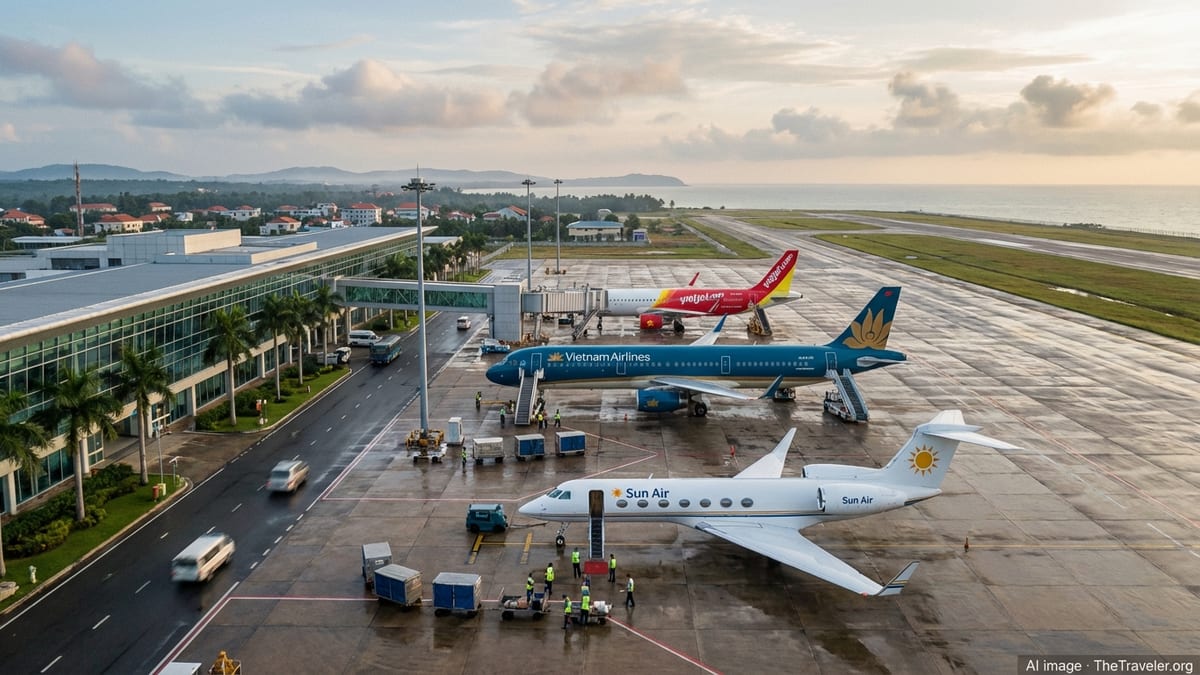
For aviation, the timing could hardly be more consequential. Vietnam Airlines, low-cost giant VietJet, and boutique private carrier Sun Air on Phu Quoc Island have all been mapping out aggressive fleet and route expansions, banking on Southeast Asia’s post-pandemic travel rebound and Vietnam’s emergence as a manufacturing and tourism powerhouse. Access to US-origin avionics, advanced maintenance systems and digital platforms without the drag of extra export scrutiny could lower costs, speed deliveries and help Vietnamese carriers compete more directly with regional heavyweights in Singapore, Thailand and the Gulf.
The decision also dovetails with recent US-Vietnam trade negotiations, in which Hanoi offered sweeping market access for American goods and signaled willingness to deepen cooperation in technology and aviation. While tariffs on Vietnamese exports remain a major point of friction, the easing of export controls on high-tech items marks a rare bright spot in an otherwise tense economic relationship, and one that the country’s airlines are eager to leverage.
How Export Controls Shape Aircraft, Avionics and Airports
US export control rules may sound arcane, but for airlines and airports they affect the nuts and bolts of everyday operations. From flight management computers and navigation systems in modern jets to secure communications, cybersecurity tools and sophisticated air-traffic management platforms, much of the cutting-edge hardware and software that keeps global aviation moving is either American-made or heavily reliant on US intellectual property. When a destination country is placed in a tighter control category, acquisitions of these technologies can face licensing delays, higher compliance costs and, in some cases, outright denials.
Vietnam’s previous status meant that deals for advanced avionics suites, predictive maintenance platforms powered by artificial intelligence, or certain airport surveillance and screening technologies demanded extra scrutiny. That created friction for Vietnamese carriers trying to standardize fleets with US or US-linked suppliers, and for airport operators looking to modernize infrastructure in Hanoi, Ho Chi Minh City and emerging hubs like Da Nang and Phu Quoc. Removing Vietnam from the high-restriction list should allow more transactions to be handled under general licenses or expedited review, shortening timelines and making US-origin solutions more competitive against European or Chinese alternatives.
For plane manufacturers and major systems integrators, the shift could also simplify collaboration with Vietnamese partners. As Hanoi courts investment from companies like Boeing and leading aerospace suppliers, relaxed export controls mean design work, pilot training, data sharing and long-term service agreements can be structured with fewer regulatory hurdles. That, in turn, may accelerate Vietnam’s own ambitions to build an aerospace ecosystem, from parts manufacturing to maintenance, repair and overhaul facilities serving airlines across the region.
Vietnam Airlines: National Flag Carrier Poised for an Upgrade
As the country’s flag carrier, Vietnam Airlines stands to be one of the biggest beneficiaries of looser US technology controls. The airline is already a key connector between Vietnam and major markets in Northeast Asia, Europe and Australia, and has been eyeing more direct traffic to North America. Securing slots and schedules for long-haul trans-Pacific routes is only part of that equation; the other part lies in operating fuel-efficient, long-range aircraft with state-of-the-art flight management systems and cabin products that can draw premium travelers.
With fewer export obstacles, Vietnam Airlines could find it easier to negotiate for the newest avionics packages, in-flight connectivity solutions and digital operations platforms that optimize fuel burn and turnaround times. More seamless access to US-origin components and diagnostic tools should also improve maintenance reliability, an increasingly critical factor for airlines competing on punctuality and safety. Vietnam’s government, which retains a significant stake in the carrier, has been promoting the airline as a symbol of the country’s modernization; aligning its fleet technology more closely with top-tier global standards fits neatly into that narrative.
The export policy change could also strengthen Vietnam Airlines’ hand in partnerships and alliances. As global carriers look for reliable partners in Southeast Asia, demonstrable access to advanced systems and compatible technology stacks matters. Over time, more integrated use of American-built back-end platforms, including revenue management, loyalty program integration and flight operations software, could make code sharing and joint ventures with US and allied carriers smoother and more attractive.
VietJet and the Low-Cost Race for Regional Dominance
VietJet, Vietnam’s pioneering low-cost carrier, has built its business on rapid fleet expansion, high aircraft utilization and an aggressive network footprint spanning domestic routes and key regional destinations. Its growth model depends on squeezing every ounce of efficiency out of narrowbody jets, minimizing downtime for maintenance, and leaning heavily on ancillary revenues supported by digital platforms. For such a carrier, export rules governing components, diagnostics and software upgrades can have an outsized impact on profitability.
With Vietnam’s removal from the high-tech restriction list, VietJet could find a smoother path to acquiring the latest performance-enhancing upgrades for its aircraft, from more advanced engine monitoring systems to data-driven maintenance planning tools. Quicker approvals for importing spare parts and specialized equipment, especially those embedded with dual-use technologies, may reduce the risk of aircraft sitting idle on the tarmac waiting for clearances. In a fiercely competitive low-cost market that includes rivals in Thailand, Malaysia and Indonesia, shaving even a small percentage off operating costs or improving on-time performance can tilt the balance.
Equally important is the digital layer that underpins low-cost aviation. Customer-facing mobile apps, payment gateways, dynamic pricing engines and route-planning algorithms increasingly rely on cloud infrastructure and software stacks shaped by US tech giants. While those services are not typically blocked by export controls, tighter regimes can complicate collaboration, data hosting and cybersecurity arrangements. A more permissive environment signals to US providers that Vietnam is a safer bet for long-term digital investment, which should benefit carriers like VietJet that are constantly refining their e-commerce and operations platforms.
Sun Phu Quoc Airways and the Rise of Island Luxury
On Phu Quoc, Vietnam’s up-and-coming island playground in the Gulf of Thailand, boutique operators such as Sun Air are targeting a very different slice of the market. Designed to serve high-net-worth travelers, resort guests and corporate clients, these carriers run smaller fleets of business jets and premium-configured aircraft, linking Phu Quoc with regional capitals and private aviation hubs. Their business model hinges on offering privacy, flexibility and bespoke service, often using aircraft packed with the latest communications and cabin technologies.
For these niche airlines, export controls on high-tech items can be particularly sensitive. Satellite communications gear, secure connectivity systems and advanced cockpit avionics often fall into categories that attract closer scrutiny from US regulators. The removal of Vietnam from the high-restriction list could ease the process of sourcing and upgrading such equipment, allowing Phu Quoc-based operators to offer the same level of on-board connectivity and safety features that wealthy travelers expect in more established private aviation markets.
The development is also timely for Phu Quoc’s broader tourism ambitions. The island has rapidly added luxury resorts, golf courses and entertainment complexes, positioning itself as a rival to destinations such as Phuket and Bali. Improved access to top-tier aviation technology can support plans for expanded private jet facilities, upgraded navigation aids at Phu Quoc International Airport and more resilient air links during peak holiday seasons. For investors backing integrated resort-airport models, a friendlier export regime reduces uncertainty around capital-intensive projects dependent on imported high-tech systems.
Tourism, Trade and the Demand Shock for Air Travel
In parallel with the export control shift, Vietnam’s economy remains deeply entwined with global trade and tourism flows. Trump’s tariff regime has created volatility, with Vietnamese exporters bracing for or already facing higher duties on goods heading to the US. At the same time, Washington has encouraged Vietnam to increase imports of American products, including aircraft and related technology, in exchange for tariff relief. That complex dance between protectionism and strategic partnership is directly relevant to aviation, where aircraft purchases and airport investments are often counted as big-ticket imports that can help rebalance trade.
For Vietnam’s airlines, the prospect of deeper integration into US-centric tech and aerospace supply chains comes just as international travel demand to and from the country is rebounding. Vietnam’s status as a manufacturing hub for electronics, textiles and consumer goods continues to draw business travelers, while its beaches, heritage sites and food culture attract a growing share of global leisure tourists. More liberal access to US high-tech exports could support the capacity growth needed to match that demand, from new long-haul routes to denser domestic networks linking secondary cities and resort areas.
Yet the same policies that open doors for advanced aviation technology could also unsettle the economic foundations that make Vietnam an attractive destination in the first place. If higher US tariffs on Vietnamese goods bite deeply into export-driven growth, corporate travel budgets and inbound investment might suffer, softening demand for premium air services. Airlines and policymakers will need to navigate that tension carefully, ensuring that the benefits of technology liberalization are not offset by broader trade disruptions.
Risks, Safeguards and the Shadow of Geopolitics
The United States’ decision to ease high-tech export restrictions on Vietnam is not unconditional. Washington remains focused on preventing sensitive technologies from leaking to China or being repurposed for military use. In practice, that means Vietnam’s airlines, airports and aerospace partners will have to demonstrate robust compliance with end-use and end-user controls, including strict tracking of where imported systems are installed, how data is handled and who maintains access. For carriers already juggling safety, security and environmental regulations, this adds another layer of responsibility.
There is also the question of geopolitical perception. As Vietnam draws closer to US technology ecosystems, Beijing is likely to scrutinize any signs that its southern neighbor is tilting too decisively toward Washington in strategic sectors such as aviation and digital infrastructure. For airlines flying popular routes to Chinese cities, or for airports that have benefited from Chinese tourism and investment, managing those sensitivities will be important. Vietnam has long pursued a foreign policy of balancing major powers; its aviation sector could become one of the most visible arenas in which that balancing act plays out.
On the US side, export controls are inherently political instruments that can be tightened again if relations sour or security concerns escalate. The current easing offers Vietnamese carriers a window of opportunity, but it does not guarantee permanent access. Smart operators will seek to lock in long-term contracts, diversify suppliers where feasible and design technology roadmaps that retain some flexibility in case the regulatory tide turns once more in Washington or other Western capitals.
Is the Future of Vietnam’s Aviation Now Open?
For now, the mood across Vietnam’s aviation community is cautiously optimistic. The Trump administration’s removal of Vietnam from a high-tech export blacklist signals recognition of the country as a more trusted partner in sensitive sectors, including aerospace. It promises quicker access to cutting-edge aircraft systems, smoother integration with global aviation technology networks and new opportunities for carriers from legacy Vietnam Airlines to fast-growing VietJet and niche operators on Phu Quoc.
Whether this moment becomes a turning point depends on how effectively Vietnam capitalizes on it. Investments in training, safety oversight, digital infrastructure and airport capacity will be needed to translate new technology access into tangible improvements in service quality and competitiveness. At the same time, Hanoi will have to keep navigating the crosscurrents of US-China rivalry, volatile tariff policies and domestic economic pressures that shape everything from ticket demand to fuel costs.
The future of aviation in Vietnam is more open than it was before the export controls shift, but far from preordained. With the right choices, the country’s airlines could turn regulatory relief into a springboard for regional leadership, positioning Vietnam as a vital node in both the physical and digital air routes linking Asia to the world.