

More news on this day
Norwegian Sun guests sailing through Southeast Asia this week are seeing their itinerary reshaped on short notice, as port congestion in southern Vietnam forces the cruise line to drop a scheduled call and instead route the ship to Cambodia.
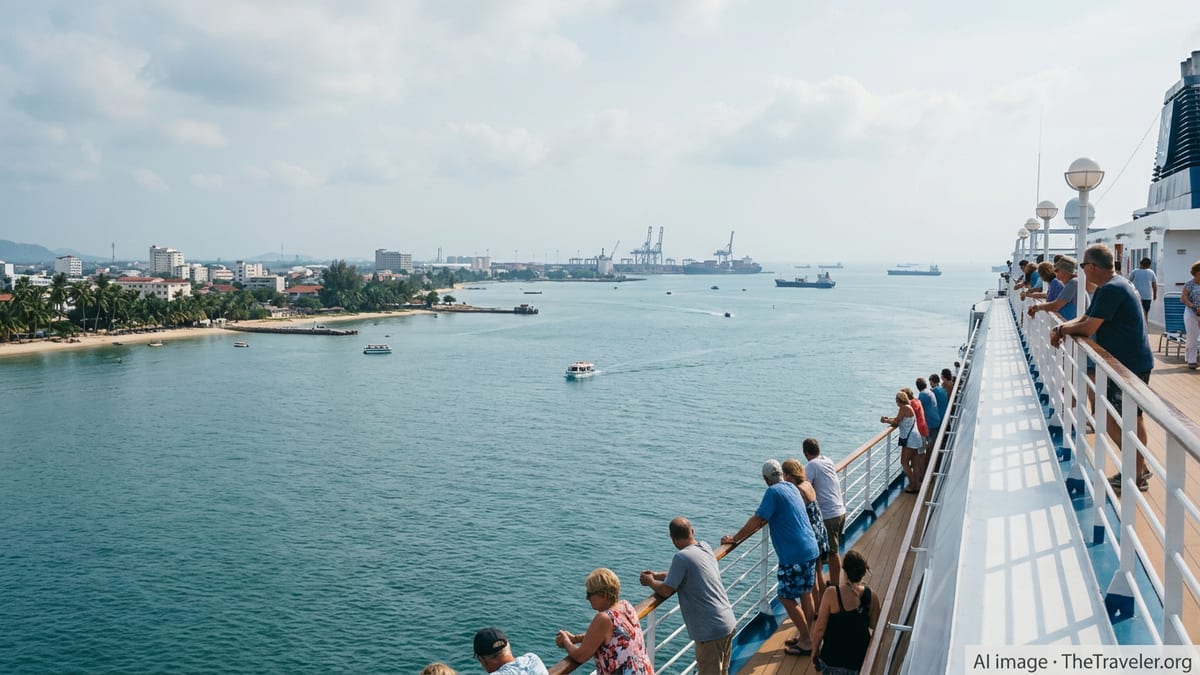
Vietnam Port Congestion Forces Last-Minute Change
Norwegian Cruise Line has confirmed that Norwegian Sun was unable to call at Phu My, the main cruise gateway to Ho Chi Minh City, on March 5, 2026, due to heavy cargo congestion at the port. The ship is currently operating a two-week voyage between Taiwan and Singapore featuring multiple ports across East and Southeast Asia.
In a letter delivered to staterooms, the line informed guests that the reserved cruise berth in Phu My was no longer available, citing ongoing congestion driven by commercial shipping movements. Without a suitable window for safe passenger operations, the call was cancelled and the itinerary reworked while the ship was already underway.
Phu My was the only scheduled stop in Vietnam on this particular sailing, meaning the country has effectively dropped off the program for these guests. The decision underscores how quickly cargo-related pressures at busy regional hubs can spill over into the passenger sector, even during peak travel season.
Guests with shore excursions booked through Norwegian Cruise Line for Ho Chi Minh City have been advised that their tours will be automatically cancelled and refunded to their onboard accounts, a standard practice when a port is removed after departure.
Cambodia’s Sihanoukville Steps In as Replacement Port
To preserve the balance of sea days and port calls, Norwegian Sun has added Sihanoukville, Cambodia, as a replacement stop for the lost Vietnamese call. The Gulf of Thailand city, which was not part of the original itinerary, now gives passengers a new country to explore on short notice.
Sihanoukville offers long, sandy beaches, offshore islands and access to a growing portfolio of resorts and local eateries, as well as excursions to nearby national parks and Buddhist temples. For many travelers on this sailing, the substitution will deliver a first-time glimpse of Cambodia in place of the urban intensity of Ho Chi Minh City.
The rerouting keeps the cruise’s overall country count at six, matching the original marketing of the voyage even though the mix of destinations has changed. For the line, that helps maintain the perceived value of an “exotics” itinerary while accommodating operational constraints in Vietnam.
Port officials and local operators in Sihanoukville are expected to benefit from the unexpected call, with short-notice demand for shore excursions, transportation and hospitality services as the ship slots into a busy regional cruise calendar.
Ripple Effects From Southeast Asia Cargo Pressures
The disruption at Phu My reflects wider strain across container and general cargo terminals in Southeast Asia, where booming trade flows and shifting supply chains are challenging port capacity. Vietnam’s southern gateway ports, including the Cai Mep Thi Vai complex that serves the Ho Chi Minh City region, have been handling rising volumes as manufacturers and logistics operators diversify beyond China.
Recent logistics updates have highlighted tight schedules, vessel bunching and weather-related slowdowns in parts of the region, prompting terminals to prioritise essential cargo movements and adjust berthing windows. For cruise ships, which typically require dedicated gangways, security screening zones and passenger handling areas, even modest delays on the cargo side can eliminate available berths.
Lines like Norwegian Cruise Line build contingency plans into seasonal deployment, but same-week changes remain disruptive for passengers and shore-based partners. However, operators also stress that safety and local regulatory requirements must take precedence over itinerary promises when port conditions deteriorate.
Travel advisers say the incident is a reminder that Asia sailings, particularly those weaving through working commercial ports rather than purpose-built cruise terminals, can be more vulnerable to last-minute shifts driven by freight activity.
Guest Experience and Compensation Measures Onboard
Onboard Norwegian Sun, staff have been working to rebook guests on alternative tours in Sihanoukville and to adjust onboard programming tied to the original port call in Vietnam. Destination presentations, daily schedules and dining themes are being revised to highlight Cambodian culture and shore options instead of Ho Chi Minh City.
Passengers who had arranged private or independent shore plans in Vietnam are being advised to contact their providers directly regarding refunds or cancellation terms, as cruise lines generally only compensate for excursions purchased through their own channels. Travel insurance policies may cover some nonrefundable expenses, depending on individual coverage.
While the substitution maintains a full day in port, some guests who were particularly interested in Vietnam’s history, food and urban energy may be disappointed. Others, however, have welcomed the chance to explore an unexpected destination, particularly given Sihanoukville’s beaches and relaxed resort atmosphere.
Crew members report that information briefings and clear communication about the reasons for the diversion have helped manage expectations, with the emphasis placed on operational safety and the unpredictability of commercial port congestion in a fast-growing logistics hub.
Implications for Future Asia Cruise Planning
Industry observers note that the Norwegian Sun adjustment may foreshadow similar challenges for regional cruise itineraries if cargo volumes continue to surge across Vietnam and neighboring countries. As ports invest in deeper channels, expanded terminals and digitalised operations to support freight, cruise operators will be watching closely for dedicated infrastructure and clearer berth guarantees.
Norwegian Cruise Line has been gradually increasing its Asia presence in recent seasons, positioning ships like Norwegian Sun on longer, more immersive itineraries that connect Taiwan, Hong Kong, the Philippines, Malaysia, Brunei, Thailand, Vietnam and Singapore. These voyages rely on complex scheduling in multi-use ports where cargo typically takes priority.
For travelers considering upcoming sailings in the region, experts recommend building flexibility into pre- and post-cruise plans, closely monitoring line communications in the days before departure and viewing itineraries as subject to operational change rather than fixed promises. While last-minute shuffles like the Vietnam to Cambodia switch are far from the norm, they remain an inherent possibility when cruising through some of Asia’s busiest working harbors.
As Norwegian Sun continues its current voyage toward Singapore, the ship’s experience is likely to feed into broader discussions between cruise lines, port authorities and tourism boards on how to balance booming trade flows with a growing appetite for ocean-based tourism in Southeast Asia.