

More news on this day
New data, safety maps and traveler surveys released over the past year are converging on a clear message for women planning their next solo trip: Vietnam has become one of the world’s standout destinations for safety, infrastructure and everyday welcome, challenging the traditional dominance of European hotspots.
Get the latest news straight to your inbox!
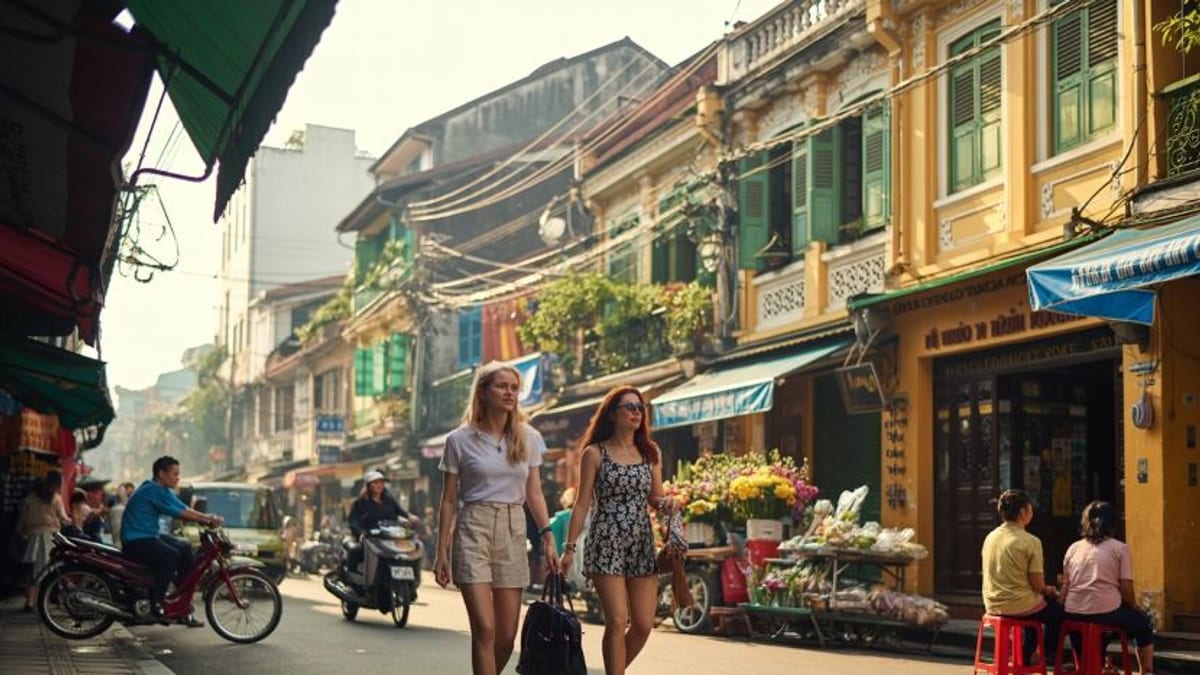
Image by Travel And Tour World
Safety Rankings Put Vietnam Ahead of Traditional Favorites
Recent regional safety guides and female-focused risk maps place Vietnam among the lowest-risk countries in Asia for women on the move, citing low rates of violent crime against tourists and strong perceptions of personal security in major cities. Composite indexes that blend the Global Peace Index, women’s safety indicators and on-the-ground traveler reviews consistently score Vietnam highly, often on par with or ahead of many popular European city-break destinations.
Travel risk assessments for 2025 categorize most of Vietnam as low to moderate risk for visitors, with particular emphasis on urban hubs such as Hanoi, Ho Chi Minh City and Da Nang, where tourism infrastructure and policing levels are strongest. Female travel safety maps released in late 2024 outline Vietnam as one of the more favorable environments in Southeast Asia for women moving independently, especially in comparison with some neighboring countries where political volatility or higher crime rates affect the outlook.
Specialist guides aimed at solo female travelers in Asia updated in early 2026 now rank Vietnam at or near the top of regional lists, highlighting a safety score above 9 out of 10 based on public order statistics, transport quality and verified reviews from women who have traveled alone. These rankings suggest Vietnam is no longer a niche, “adventurous” choice for women traveling solo, but a mainstream option where safety is viewed as a core strength.
International perception studies also indicate growing confidence. Surveys tracking where women feel safe walking alone at night show Southeast Asian destinations gaining ground, with Vietnam singled out for relatively high comfort levels despite rapid tourism growth and busy urban streets.
On-the-Ground Experience: Low Violent Crime, Predictable Risks
Reports from travelers and safety-focused guides paint a consistent picture of day-to-day life in Vietnam for solo women: violent incidents are rare, while the most common issues involve petty theft, overcharging and the usual big-city inconveniences. Practical advice therefore focuses less on avoiding serious crime and more on standard precautions such as keeping valuables close in markets, using licensed taxis or ride-hailing apps and staying alert to common scams.
Coastal hubs such as Da Nang and Nha Trang are frequently cited as examples of Vietnam’s safety profile. Updated guides for 2026 describe Da Nang as one of the safest large cities in the country, noting low reported violent crime and an emphasis on lighting, cameras and visible staff in tourist-heavy neighborhoods and along My Khe Beach. Nha Trang, another major beach destination, is regularly assessed with a high safety index, with authorities and tourism operators primarily warning about bag snatching and late-night incidents tied to nightlife rather than targeted violence against women.
Central Vietnam’s tourism corridor, running from Hoi An through Da Nang to Hue, has developed a reputation as a manageable entry point for first-time solo visitors. Travel writers and online communities point to walkable old towns, well-used bus and train routes and a wide choice of reputable guesthouses where staff are accustomed to hosting unaccompanied women from around the world.
Risk mapping tools used by corporate and leisure travelers alike back up these impressions, rating Vietnam more favorably for overall security than several widely visited parts of Europe that have seen elevated concerns about harassment or theft in recent years. For many women, that comparison is reshaping where a “safe” first solo trip might be.
Policy Shifts and Infrastructure Make Solo Trips Easier
Vietnam’s rise as a solo travel hub for women is not only about crime statistics. Policy changes and infrastructure upgrades over the past few years have also made independent trips simpler to plan and execute, reducing friction points that can heighten stress for first-time solo visitors.
Visa rules have become more flexible for many nationalities, with longer visa-free stays or streamlined electronic visas allowing travelers to move more spontaneously between regions. International flight capacity into gateways such as Hanoi, Ho Chi Minh City and Da Nang has expanded, and Da Nang’s international terminal has drawn recent recognition for service standards, giving solo travelers more direct entry options beyond the capital and southern megacity.
Within the country, a dense network of buses, trains, domestic flights and ride-hailing services allows women to rely less on informal transport or unvetted drivers. Intercity bus and train routes frequently used by backpackers now offer clearer online booking and seat selection, while major coastal and highland routes are well documented in contemporary travel guides.
Digital connectivity further supports independent movement. Many cafes, hostels and hotels advertise robust wifi, and local-language ride-hailing and delivery apps now offer English interfaces or intuitive design, reducing language barriers when arranging safe rides home at night or navigating unfamiliar neighborhoods.
Community, Culture and the “Welcome” Factor
Equally important for solo women is how welcoming a place feels in everyday encounters. Publicly available traveler feedback suggests Vietnam scores consistently well on this metric, with many reports describing locals as curious, helpful and accustomed to seeing women navigating the country alone. Staff in guesthouses, homestays and tour offices are often familiar with the specific questions solo women ask about late-night returns, secure rooms and route planning.
Cultural norms in Vietnam tend to favor community oversight in busy areas, which can enhance perceived safety. Streets in major cities stay active well into the evening with families, food vendors and groups of friends, creating a sense of watchful presence even in smaller lanes. Solo women frequently note in forums that they feel observed but not threatened, with occasional unwanted attention generally limited to stares rather than confrontational behavior.
The country’s tourism industry has also begun tailoring experiences to women traveling independently. Motorbike tours, cooking classes and trekking trips in areas such as Ha Giang, Sapa and the central highlands increasingly highlight female guides or small-group options that appeal to solo participants seeking both safety in numbers and a sense of autonomy. Recent coverage of a surge in women booking motorbike itineraries across Vietnam reflects growing confidence in the destination’s roads, infrastructure and informal support networks.
At the same time, advocates and travel planners caution that “welcoming” does not mean free from problems. Reports occasionally reference unwanted photography on beaches, rigid gender expectations in rural areas or frustrations with touts in heavily touristed districts. For many women, however, these challenges are seen as manageable with clear boundaries and cultural awareness rather than as reasons to avoid the country altogether.
Solo Female Travel Boom Rewrites the Global Map
The global surge in solo female travel is shifting the geography of popular routes, and Vietnam is emerging as a central beneficiary. Industry surveys for 2025 and 2026 show growing numbers of women choosing Southeast Asia over Europe for extended independent trips, motivated by favorable exchange rates, diverse landscapes and improving safety scores.
Travel sentiment research in the region indicates that women increasingly prioritize personal safety and cultural openness over brand-name recognition when selecting destinations. Vietnam’s combination of low violent crime, visible tourism infrastructure and comparatively straightforward logistics has placed it at the intersection of these priorities.
For European cities accustomed to drawing first-time solo travelers by default, this trend represents real competition. Vietnam now offers an alternative narrative for women planning their first major independent journey abroad: a country where overnight trains link imperial capitals to lantern-lit river towns, where beach cities are monitored and well lit, and where recent safety data supports the confident choice to explore alone.
As more solo women document their experiences in Vietnam through blogs, social media and travel forums, the perception of the country is evolving from a once “intrepid” choice to a practical, even obvious, option. For a growing number of would-be travelers comparing destinations for safety, affordability and welcome, the question is becoming less about whether Vietnam is safe enough and more about how soon they can get there.