

More news on this day
Vietnam’s aviation sector is bracing for significant disruption as a looming jet fuel shortage forces airlines to scale back flights from April 2026, raising concerns for tourists with upcoming trips across the country and beyond.
Get the latest news straight to your inbox!
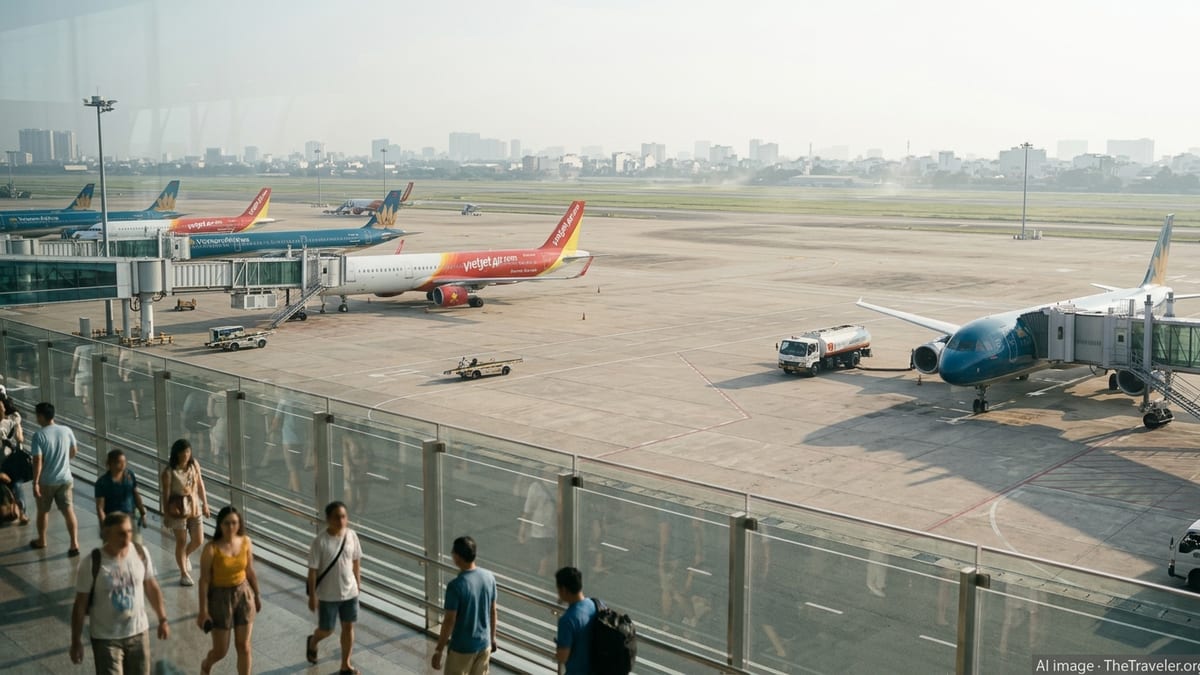
How Vietnam’s Jet Fuel Shortage Emerged
Publicly available government and industry documents indicate that Vietnam relies heavily on imported jet fuel, with a substantial share sourced from regional suppliers. Recent export restrictions on aviation fuel from China and Thailand, introduced in the context of wider geopolitical tensions and conflict in the Middle East, have sharply reduced supply options for Vietnamese carriers.
Reports citing a March 9 communication from the Civil Aviation Authority of Vietnam describe a clear warning to the transport sector that there is a risk of jet fuel shortages from early April and in the following months. The wording of that document, as summarized in international news coverage and widely discussed by travelers online, suggests that airlines have been instructed to prepare for reductions in flight activity to conserve fuel.
The concern comes on top of existing strains within Vietnam’s aviation network, including earlier operational issues and capacity constraints at major hubs such as Tan Son Nhat in Ho Chi Minh City and Noi Bai in Hanoi. Together, these factors are now converging into a period of heightened uncertainty for domestic and some international air services.
While no scenario points to a complete halt in air travel, analysis in regional business and aviation reports highlights that losing access to a large portion of imported jet fuel with little notice creates immediate scheduling pressures. Airlines are now prioritizing routes and considering how to adjust capacity while trying to protect key domestic and long-haul connections.
Which Flights Are Most at Risk
Based on current reporting and commentary from aviation analysts, the first wave of cuts is expected to focus on domestic and short-haul routes with lower passenger demand. Travelers posting recent experiences from inside Vietnam describe growing signs of strain, including last-minute timetable changes and cancellations on some services operated by local carriers.
Destinations served primarily by smaller airports and with fewer daily frequencies appear particularly vulnerable. Cities such as Vinh, Dong Hoi, Da Lat or Quy Nhon, which often rely on single carriers or limited daily flights, are frequently mentioned in public discussions as likely candidates for reductions if fuel supplies tighten. In contrast, trunk routes linking Hanoi, Ho Chi Minh City and Da Nang, which are essential for business and tourism flows, are likely to be maintained as far as possible, albeit with fewer departures and fuller aircraft.
Information shared by travelers also indicates early adjustments on certain international services operated by Vietnamese airlines, including some flights to Australia and Europe. In these cases, cancellations or re-routings appear to reflect attempts to consolidate demand and prioritize aircraft and fuel on routes that remain commercially and strategically vital.
Foreign airlines operating into Vietnam are monitoring the situation closely. These carriers often have access to their own fueling and logistics arrangements, but they still depend on reliable airport fuel supplies at Vietnamese gateways. If local fuel availability becomes constrained at specific airports, some foreign operators may reduce frequencies, upgauge or downgrade aircraft types, or temporarily shift capacity to alternative regional hubs.
What Current Visitors in Vietnam Should Expect
Travelers already in Vietnam should be prepared for a more fluid situation than usual when moving between cities by air over the coming weeks and months. Online accounts from visitors who recently flew routes such as Hanoi to Da Nang or Ho Chi Minh City to Phu Quoc point to a mix of normal operations alongside schedule changes, including same-day rebooking to later flights described broadly as operational adjustments.
Airlines are likely to continue consolidating services where possible, combining passengers from several lightly booked flights onto a smaller number of departures. For tourists, this can translate into time changes, longer layovers or, in some cases, the need to shift travel plans by a day. Short-notice notifications by email, app or text message are becoming more common, making it important for visitors to monitor their bookings closely rather than relying solely on printed itineraries.
At certain regional airports, travelers have also reported uncertainty around upcoming closures or reduced operations unrelated to the fuel issue, which can compound disruption. In such cases, airlines have been re-routing passengers through larger hubs like Nha Trang or Ho Chi Minh City and arranging onward ground transport. As airlines seek to preserve fuel, similar patterns could emerge more frequently on marginal domestic routes.
Given these conditions, visitors currently in Vietnam may find it useful to build additional flexibility into their schedules, particularly when planning time-sensitive connections such as international departures or fixed-date tours. Allowing extra buffer days before onward long-haul flights can reduce stress if a domestic leg is rescheduled.
Planning a Trip: How to Reduce Your Risk
For travelers planning to visit Vietnam from April 2026 onwards, the main takeaway from available information is the need for contingency planning rather than cancellation. There is no indication that Vietnam will become inaccessible by air, but the pattern of service could look different from previous years, with fewer domestic flights and more crowding on remaining routes.
Booking earlier and selecting flights at the start of the day may improve the chances of flying as planned, since morning departures are generally less exposed to cascading delays. Choosing larger, well-connected airports as your main hubs, such as Hanoi, Da Nang and Ho Chi Minh City, can also provide more rebooking options if an individual flight is cut.
Some international visitors are now considering mixing modes of transport, combining one or two key domestic flights with rail or bus journeys for shorter hops. Vietnam’s north–south railway, improved highways and an expanding network of intercity buses can offer alternatives on routes like Hanoi to Hue or Da Nang, or Ho Chi Minh City to Nha Trang, though these options may also feel some indirect pressure if fuel prices rise.
Flexibility in accommodation and activity bookings is another useful safeguard. Selecting hotels and tours with lenient change or cancellation policies can prevent additional costs if your arrival or departure dates shift. Travel insurance that explicitly covers schedule disruption and missed connections linked to airline operational issues may offer an extra layer of protection, provided travelers read policy wording carefully.
Practical Tips for Tourists Navigating Disruptions
In the near term, information transparency and rapid communication will be crucial for travelers. Tourists are strongly advised to regularly check airline apps or booking systems for updates and to confirm flight status a day or two before each domestic leg. As scheduling pressures increase, it is prudent to assume that departure times may shift even after tickets are issued.
Carrying essential items in hand luggage, including medications, travel documents and a basic change of clothes, can mitigate the impact of unexpected delays. Visitors should also factor potential disruption into same-day plans, avoiding tightly scheduled activities immediately after arrival, particularly in smaller destinations where alternative flights are limited.
At airports, arriving earlier than usual can provide a margin of safety if check-in counters are busy with rebookings or if security lines lengthen due to schedule compression. Keeping receipts for additional expenses such as meals, taxis or extra hotel nights may support later claims through airlines or travel insurance, subject to individual terms and conditions.
Finally, travelers should be prepared for evolving guidance as Vietnam’s authorities and airlines respond to the fuel situation. Publicly available information suggests that measures are still being refined, and further adjustments are likely. By staying informed, building flexibility into itineraries and considering back-up transport options, tourists can continue to enjoy Vietnam while navigating a more challenging air travel environment.