

More news on this day
Vietnam is rapidly repositioning itself from scenic shore excursion stop to serious deep-water cruise contender, joining Singapore and Malaysia in a high-stakes race to capture Asia’s next wave of ocean-going tourism.
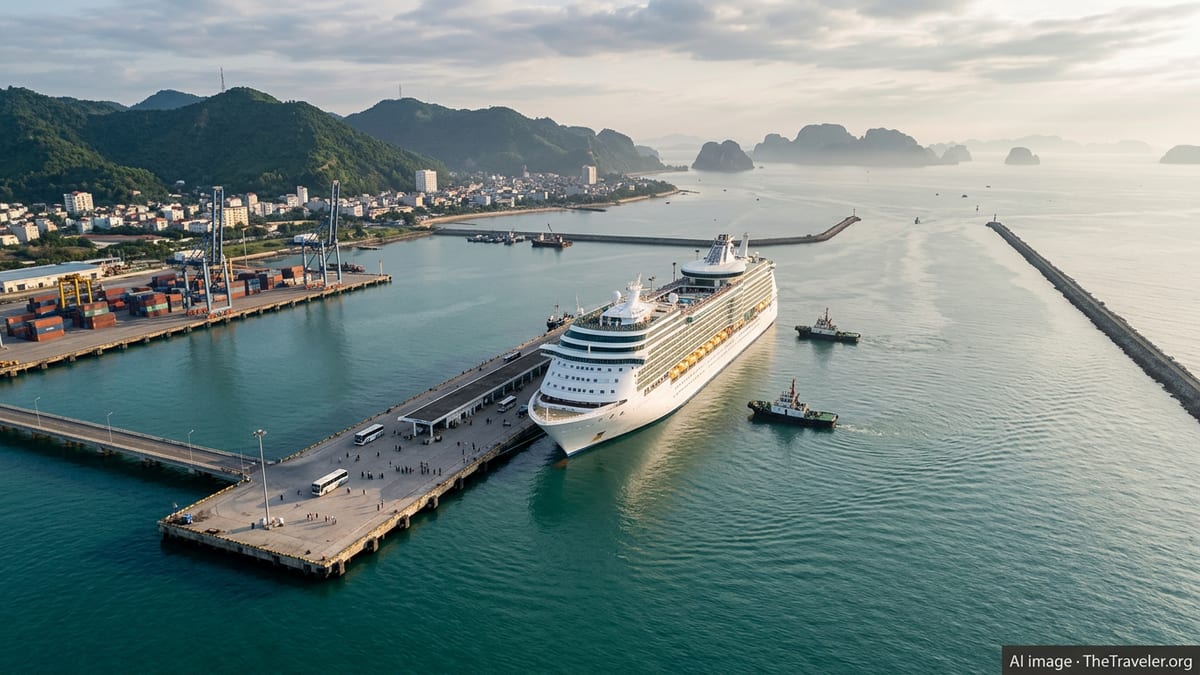
Deep-Water Ports Turn Vietnam Into a True Cruise Gateway
After years of watching mega-ships sail past to established hubs, Vietnam is now aggressively courting the world’s largest cruise lines with a growing network of deep-water ports stretching from Ha Long Bay to Cam Ranh and Cai Mep – Thi Vai. The country has secured extended permissions for international cruise calls at the Cai Mep – Thi Vai port cluster, a deep-draft gateway near Ho Chi Minh City that can handle large ocean vessels until at least mid-2026, reinforcing its role as the southern anchor of Vietnam’s cruise map.
Farther north, Quang Ninh province is emerging as a flagship deep-water cruise destination. Ha Long International Cruise Port is handling a rising roster of large ships, with dozens of international calls booked annually and thousands of passengers disembarking directly into the UNESCO-listed seascape rather than transferring via industrial piers. Authorities report steadily increasing cruise schedules through 2025 and 2026, cementing Ha Long’s status as Vietnam’s primary deep-water cruise showcase.
On the central coast, Cam Ranh International Port and Chan May Port near Hue are fast becoming high-value stops for premium and luxury itineraries. Cam Ranh hosted 29 five-star cruise calls in 2025 and expects an even busier 2026 season, while Chan May is forecasting a sharp jump in ship arrivals and passenger volumes as lines seek alternatives to overcrowded regional ports. Together, these deep-water facilities are giving cruise planners something Vietnam has never offered at scale: a string of modern, deep-draft berths spaced along the entire coastline.
This acceleration is reshaping how itineraries are drawn. Where Vietnam once appeared as a single overnight call between Hong Kong and Singapore, operators are increasingly designing multi-port Vietnam runs that might combine Ha Long, Da Nang or Hue, Nha Trang or Cam Ranh, and the Cai Mep gateway, turning the country into a multi-stop spine for Southeast Asian voyages.
Singapore’s Mega-Hub Sets the Regional Benchmark
Vietnam’s deep-water surge is unfolding in the shadow of Singapore, which remains the region’s undisputed cruise powerhouse. Marina Bay Cruise Centre Singapore, with its naturally deep waters and lack of air-draft limits, has long attracted the world’s biggest ships. Authorities are now pushing ahead with a major terminal expansion that will boost passenger handling capacity by more than 70 percent, from about 6,800 to 11,700 passengers at a time, reinforcing the city-state’s ambition to stay Asia’s primary embarkation point.
Singapore is also restructuring its infrastructure for scale. Plans to consolidate cruise operations from the older HarbourFront facility into an expanded Marina Bay precinct will create a dedicated, integrated cruise zone connected directly to the city’s hotel, retail and transport networks. This concentration of capacity, coupled with aggressive homeporting deals with major cruise brands, has made Singapore the default turnaround port for a growing share of Southeast Asian itineraries.
That dominance matters for Vietnam. The bulk of large-ship sailings that now call at Ha Long, Cam Ranh or Cai Mep still start or end in Singapore, with the city-state handling airlift, provisioning and pre- or post-cruise stays. Rather than competing head-on, Vietnam is positioning its deep-water ports as high-impact waypoints along Singapore-originating routes, offering the kind of full-day, high-spend shore programs that keep operators returning.
Industry observers expect Singapore’s expanded capacity from 2025 onward to push more ships into the region year-round, intensifying the search for reliable deep-water calls in nearby countries. Vietnam’s current building spree suggests it intends to be first in line when those deployment decisions are made.
Malaysia’s Penang Doubles Down on Homeport Ambitions
Across the Malacca Strait, Malaysia has quietly built a second pole of deep-water cruise strength around Penang. Swettenham Pier Cruise Terminal in George Town has completed a major expansion that allows it to berth two quantum-class ships simultaneously, accommodating up to 12,000 passengers at once and firmly establishing Penang as one of Southeast Asia’s busiest cruise gateways after Singapore.
The terminal operator and the Penang Port Commission are now pivoting from simple port-of-call traffic to true homeporting. Agreements with regional cruise brands aim to base ships out of Penang between 2025 and 2027, with projections of nearly 50 percent passenger growth in 2026. The focus is on shorter, high-frequency itineraries that loop through the Malacca Strait and Gulf of Thailand, giving Malaysia a powerful platform to market Penang as both heritage capital and embarkation city.
Malaysia’s deep-water strategy mirrors Vietnam’s in one important respect: both are leveraging existing commercial port infrastructure to fast-track cruise growth. Swettenham Pier’s upgraded berths sit within a busy container and ferry complex, while Vietnamese ports like Cai Mep and Cam Ranh are adapting cargo or naval facilities to handle modern cruise ships. This dual-use approach allows both countries to capture cruise demand without waiting for fully greenfield terminals.
As Penang’s homeport credentials strengthen, itineraries linking Singapore, Penang and Vietnam’s deep-water ports are proliferating, effectively creating a triangular cruise corridor that concentrates high-value calls within a relatively compact swath of Southeast Asia.
Vietnam’s Strategy: From Single Call to Full-Fledged Cruise Corridor
Vietnam’s deeper bet on cruise tourism goes beyond port approvals and channel dredging. Provincial authorities and port operators are racing to tailor shore experiences to high-yield passengers, from curated Ha Long seaplane flights and Hue imperial city tours to Nha Trang island-hopping and coastal golf. The goal is to turn each deep-water call into a full-day, high-spend stop that justifies premium itinerary space.
At the same time, planners are experimenting with sequence. The classic north–south run that once started in Hong Kong and finished in Singapore is evolving into more varied loops: Singapore–Penang–Cai Mep–Cam Ranh–Da Nang–Ha Long, or reverse; shorter Vietnam-focused sailings that both embark and disembark in Singapore; and hybrid routes that combine Vietnam’s coast with Thailand or the Philippines. Vietnam’s ability to offer multiple deep-draft ports within a single country is a powerful selling point in these designs.
Local governments are also weaving cruise expansion into broader transport and tourism plans. Improved expressways between ports and major cities, upgraded airport connectivity in Cam Ranh and Da Nang, and new private investment in waterfront hotels and marinas are all being marketed as part of a unified cruise-ready coastline. The message to operators is clear: Vietnam wants ships that come back season after season, not just once-off inaugural calls.
For travelers, the shift means Vietnam is increasingly experienced not just as a land tour or backpacking route, but as a string of coastal chapters on a single voyage: karst-studded bays in the north, royal citadels and war-era sites in central Vietnam, and tropical bays and beaches in the south, all accessible without ever packing and unpacking a suitcase.
Regional Winners and the Risk of Being Left Behind
The combined effect of Singapore’s mega-hub, Penang’s upgraded homeport and Vietnam’s fast-multiplying deep-water calls is a new cruise geography in Asia, one that concentrates growth in a handful of ports able to berth the latest generation of large ships. Analysts warn that destinations without deep-draft, purpose-designed facilities may see fewer calls or be relegated to smaller, older tonnage as operators chase economies of scale.
Traditional regional favorites that still rely on shallow or congested harbors, or that require tenders rather than direct berthing, face mounting competitive pressure. As more ships are deployed to Southeast Asia on a year-round or extended seasonal basis, lines are prioritizing ports that can turn vessels quickly, handle thousands of passengers with minimal delay and deliver consistent, weather-resilient access. Deep-water capability is no longer a bonus; it is becoming a baseline requirement.
Within this landscape, Vietnam’s decision to fast-track deep-water access at key gateways places it squarely alongside Singapore and Malaysia in the first tier of Asian cruise destinations. By pairing natural coastal assets with modern port engineering, the country is betting that cruise tourism can evolve from niche segment to core pillar of its visitor economy.
The stakes are significant. If current investment and deployment trends hold through 2026 and beyond, the deep-water triangle formed by Singapore, Penang and Vietnam’s new cruise corridor could define the region’s seaborne tourism for the next decade, setting a pace that other Asian ports may struggle to match.