

More news on this day
Vietnam is using its record-breaking tourism momentum from 2025 to stitch together a coastal and mountain "travel corridor" in 2026, pairing blockbuster destinations like Ha Long Bay and Da Nang with emerging highland hubs such as Da Lat, Sa Pa and the Central Highlands to capture longer stays and higher-spending international visitors.
Get the latest news straight to your inbox!
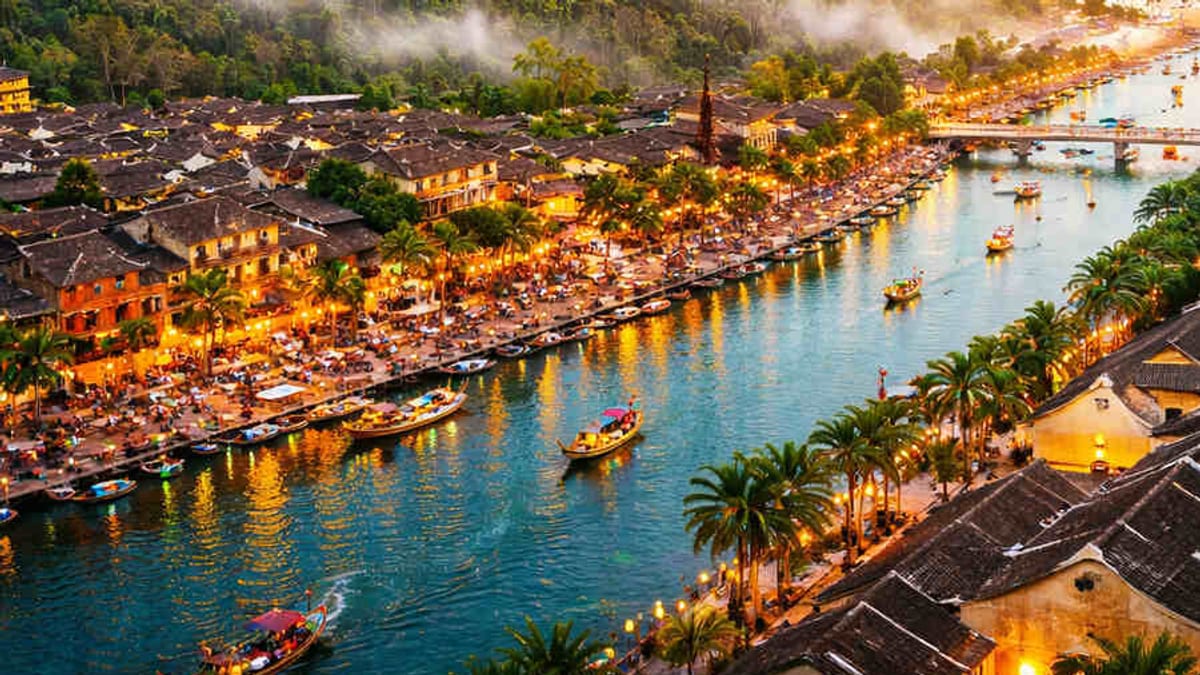
Image by Travel And Tour World
Record Arrivals in 2025 Set the Stage for a Bigger 2026
Publicly available data from Vietnam’s statistics authorities and recent media coverage show that the country welcomed more than 21 million international visitors in 2025, surpassing its 2019 peak and marking its strongest tourism performance on record. Analysts describe 2025 as the year Vietnam moved from recovery to expansion, with international arrivals growing at a pace that exceeded the global and wider Asia Pacific averages.
Tourism now accounts for a growing share of Vietnam’s gross domestic product, and sector plans for 2026 target another step up in international arrivals as airlines add capacity and tour operators promote more complex itineraries. Industry outlook reports for 2026 highlight that Vietnam’s visitor growth is increasingly driven not only by single-city breaks but by multi-destination journeys combining beaches, heritage sites and cooler mountain landscapes.
According to recent research briefings from regional banks and consultancies, international travelers in 2025 stayed longer and spent more when itineraries linked at least one coastal city with a secondary inland destination. That pattern is shaping national and provincial strategies in 2026, with a focus on turning disparate hotspots into a coherent corridor that can be marketed to long-haul visitors from Europe, North America and emerging Asian markets.
Coastal Powerhouses Anchor the New Corridor
Vietnam’s coastal destinations remain the primary magnet for international arrivals, and they form the backbone of the evolving travel corridor in 2026. Ha Long Bay in the north continues to draw cruise passengers and short-break visitors from Hanoi, while central hubs such as Da Nang, Hoi An and Hue are consolidating their role as a single integrated cluster built around beaches, UNESCO-listed heritage and year-round resort capacity.
Further south, Nha Trang, Cam Ranh and the bays of Khanh Hoa province are registering strong growth in international hotel occupancies, supported by direct flights from North Asia and charter capacity from Eastern Europe and Russia. Reports indicate that Binh Thuan and Phan Thiet are moving up the international tourism map as expressways from Ho Chi Minh City shorten travel times, encouraging city-break visitors to extend their trips along the coast.
On Vietnam’s southern seaboard, Phu Quoc Island continues to operate as a stand-alone beach and leisure destination but is increasingly being packaged as the final stop on longer north-to-south itineraries. Airline schedules in early 2026 show additional domestic connections that allow international visitors to start in Hanoi or Da Nang, travel through the central coast and Central Highlands, and then fly on to Phu Quoc without backtracking to major gateways.
Mountain Retreats and Highlands Step Into the Spotlight
While the beaches provide the first draw, mountain destinations are emerging as crucial components of Vietnam’s 2026 tourism strategy. In the cooler northwest, Sa Pa and surrounding Lao Cai province are benefiting from upgraded highways and rail services from Hanoi, allowing short transfers between capital-city cultural stops, Ha Long Bay cruises and highland trekking or community-based tourism in the same trip.
In the Central Highlands, destinations such as Da Lat, Buon Ma Thuot and Kon Tum are being more actively promoted for international travelers seeking coffee culture, waterfalls and temperate-climate escapes. Provincial plans emphasize smaller-scale resorts, eco-lodges and adventure products rather than the large coastal-style resort complexes that dominate the beach markets, positioning the highlands as a complementary contrast within the broader corridor.
Travel industry reports note rising demand for nature, wellness and climate-conscious travel experiences, trends that Vietnam’s upland regions are well placed to capture. By linking coastal resorts with highland stays, tour operators can offer travelers relief from tropical heat, opportunities for hiking and cycling, and closer contact with ethnic minority cultures, all without leaving the country’s main north-south tourism spine.
Infrastructure, Visas and Airline Capacity Tie the Corridor Together
Underlying Vietnam’s emerging coastal–mountain travel corridor in 2026 is a wave of infrastructure and policy changes that began earlier in the decade. Recent years have seen the completion or expansion of expressways connecting Hanoi to Ha Long and Lao Cai, as well as new highway links between Ho Chi Minh City, Phan Thiet and other south-central provinces. Parallel improvements around Da Nang and Nha Trang are shortening travel times between beaches and interior plateaus.
On the policy side, expanded e-visa schemes and longer permitted stays for a range of markets took effect in the mid-2020s, lowering barriers for multi-stop itineraries that span two to three weeks. Aviation data and airline announcements for the current winter and upcoming summer travel seasons show more direct intercontinental flights into Hanoi and Ho Chi Minh City, along with additional regional services into Da Nang, Nha Trang and Phu Quoc, which act as key entry or exit points for the corridor.
Domestic aviation is also adapting to the multi-faceted corridor concept. Carriers are increasing point-to-point routes that tie coastal cities directly to highland gateways, such as Da Nang to Da Lat and Nha Trang to Buon Ma Thuot, reducing the need for travelers to route through major hubs. This network approach allows international visitors to stitch together linear or circular itineraries that sample distinct climates and landscapes while limiting backtracking and domestic transit time.
Shifting Visitor Profiles and Sustainability Pressures
As Vietnam moves into 2026 with stronger connectivity and record visitor numbers, the profile of international travelers is evolving alongside the corridor. Market analyses show that while traditional regional markets in Northeast Asia remain dominant in absolute numbers, there is steady growth from Europe, North America and India, with these segments more likely to book longer, multi-stop trips that traverse both coast and mountains.
Travel behavior data points to rising interest in experiential and themed journeys, from culinary routes that run from Hanoi’s street food scenes to coastal seafood markets and highland coffee farms, to adventure-focused itineraries that combine surfing or diving with trekking and canyoning. This diversification supports local economies beyond the main resort belts, distributing visitor spending into inland districts and smaller communities.
The same reports highlight growing pressure on Vietnam’s natural and cultural assets, particularly in heavily visited coastal areas and fragile mountain ecosystems. Local and national planners are increasingly framing the travel corridor as a way to spread visitor flows more evenly, easing congestion in flagship sites while encouraging exploration of lesser-known beaches, bays and upland valleys. Initiatives promoting responsible trekking, limits on visitor numbers at sensitive attractions and investment in waste and water management are becoming part of the policy conversation around the 2026 tourism surge.