

More news on this day
Vietnam is moving a step closer to bringing bullet train style travel to one of its most visited regions, with a proposed high speed rail line between Hanoi and Ha Long Bay that would dramatically cut journey times between the capital and the country’s most famous coastal tourism hub.
Get the latest news straight to your inbox!
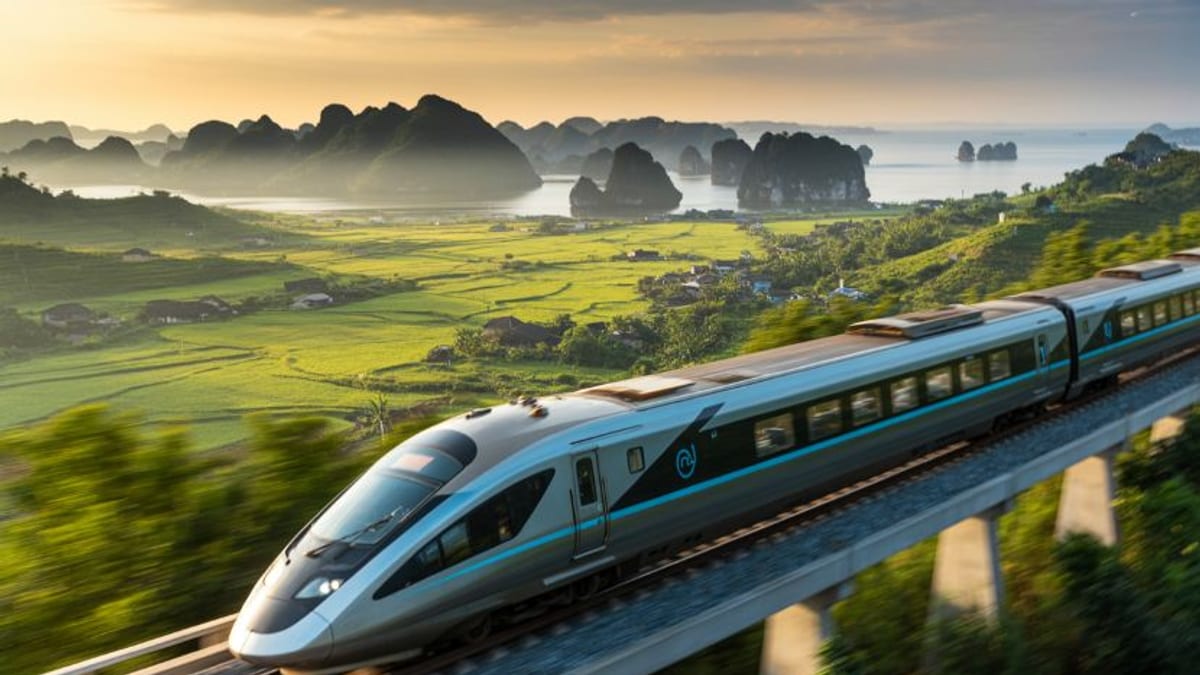
Image by Latest International / Global Travel News, Breaking World Travel News
A New High Speed Corridor on the Drawing Board
Publicly available planning documents in late 2025 indicated that Vietnam’s adjusted railway network plan for the 2021 to 2030 period now includes a dedicated high speed line linking Hanoi with Quang Ninh province, home to Ha Long Bay. The move follows years of debate over how to better connect the capital with key ports and tourism destinations in the northeast.
The proposed line forms part of a broader national vision for modern rail, including the flagship North South high speed railway connecting Hanoi and Ho Chi Minh City and several regional express routes. By adding Hanoi to Quang Ninh to the portfolio, planners seek to align long distance intercity services with shorter tourist oriented corridors that can relieve pressure on congested highways.
Reports in financial and infrastructure briefings describe the Hanoi to Quang Ninh project as a new build line designed to accommodate high speed passenger services, with alignment and technical standards to be developed in the coming years. The inclusion in the national plan does not itself authorize construction, but it does give the corridor official status and allows feasibility work to advance.
The concept aligns with Vietnam’s stated objective of gradually shifting passenger flows from road to rail on busy tourism and trade routes. The Hanoi to Ha Long Bay axis, currently dominated by express buses, minibuses and private transfers, is seen as a prime candidate for such a shift if journey times and service quality can compete with road based options.
Travel Time Ambitions and What a 30 Minute Trip Would Require
Current overland travel between central Hanoi and Ha Long Bay typically takes two and a half to three hours by road, depending on traffic and the specific embarkation point for cruises. Even with modern expressways and limousine style shuttles, visitors often dedicate most of a day to getting to and from the bay as part of overnight or two day itineraries.
Achieving a 30 minute rail journey over an approximate distance of 120 kilometers would require sustained high speeds and very limited intermediate stops. Basic calculations suggest that average speeds well above 200 kilometers per hour, and top speeds at or near 300 to 350 kilometers per hour, would be necessary to approach a half hour timing while accounting for acceleration, deceleration and potential slow zones near urban areas.
Vietnam’s national high speed rail vision already contemplates design speeds of up to 350 kilometers per hour on certain sections of the planned North South line, in line with contemporary high speed standards elsewhere in Asia and Europe. Applying similar technology and operating concepts to a shorter Hanoi to Ha Long Bay corridor would, in principle, make a 30 minute schedule technically feasible, assuming a direct alignment and minimal dwell times.
However, the exact journey time targets for the Hanoi to Quang Ninh high speed project have not yet been formally detailed in the planning documents that are publicly accessible. For now, references to a 30 minute connection function more as an illustration of the kind of time savings that modern high speed rail could potentially deliver compared with current highway based travel.
Integration With National High Speed Rail Strategy
The Hanoi to Ha Long Bay concept is emerging alongside Vietnam’s larger effort to build a transformational North South high speed railway. That flagship project, approved in principle by the National Assembly in late 2024, is envisioned as a multi phase program connecting Hanoi with Ho Chi Minh City via coastal provinces, with long distance services targeted for completion in the 2030s.
Industry and investment reports note that the national rail strategy now distinguishes between trunk high speed corridors, regional express lines and urban rail links in major cities such as Hanoi and Ho Chi Minh City. The proposed Hanoi to Quang Ninh line is categorized as a regional high speed or express corridor that would interface with the wider network at a major hub in the Hanoi area.
Planners are also considering how the new line might connect with existing and planned freight facilities and seaports in Quang Ninh, including deep water terminals that handle bulk cargo and containers. While the primary narrative around Hanoi to Ha Long Bay focuses on tourism, the corridor is also seen as important for trade, given the province’s role as a gateway to China and the broader Gulf of Tonkin.
Technical standards for the Hanoi to Quang Ninh line are expected to align with those being prepared for the national high speed network, including dedicated passenger tracks, modern signaling and electrification. This approach is intended to avoid the constraints that currently limit speeds on Vietnam’s existing meter gauge network, where mixed passenger and freight operations share single track routes.
Tourism and Regional Development Implications
Ha Long Bay, a UNESCO World Heritage site, is one of Vietnam’s most recognizable destinations and a key driver of visitor arrivals in the country’s north. Cruise operators, hotels and tour agencies in both Hanoi and Quang Ninh province rely heavily on predictable transfer times along the corridor, with many itineraries built around early morning departures from the capital and afternoon or evening returns.
A high speed rail link that cuts the effective travel time to a fraction of today’s journey could reshape how travelers plan their stays. Day trips from Hanoi would become more practical for visitors who are short on time, while longer itineraries might integrate multiple coastal and inland stops using rail rather than road based circuits. This could distribute tourism spending more evenly across the region.
Regional development strategies for Quang Ninh also emphasize the creation of year round tourism clusters beyond the core Ha Long Bay cruise market, including beach resorts, cultural heritage attractions and eco tourism in the mountains. Faster and more reliable rail access from Hanoi could support those plans, especially if stations are sited to serve emerging urban and resort areas rather than only the traditional port terminals.
At the same time, improvements in accessibility raise questions about managing visitor flows and protecting the bay’s sensitive environment. Local and national plans already highlight the need to cap cruise numbers in certain zones, upgrade waste management and enforce stricter environmental standards. Any future high speed rail connection would likely need to be accompanied by careful capacity planning at the destination end.
Timeline, Next Steps and What Travelers Should Expect
Although the Hanoi to Quang Ninh high speed line now appears in Vietnam’s railway network plan, the project remains in a preparatory phase. The inclusion in a national plan typically precedes detailed feasibility studies, route alignment work, environmental assessments and decisions on funding structures, all of which can take several years.
For the moment, reports and planning documents do not give a firm construction start date or opening year for passenger services on the Hanoi to Ha Long Bay corridor. Given the scale of Vietnam’s wider high speed ambitions and the need to prioritize segments of the North South trunk line, analysts generally expect that regional routes such as Hanoi to Quang Ninh will advance in parallel but may come into operation in stages.
Travelers planning trips to Ha Long Bay in the near term should therefore continue to expect road based transfers, either through organized shuttle services sold with cruises or via private cars and buses operating along the expressway network. Any future high speed rail option is likely to be several years away, with more specific timelines to emerge once feasibility work is complete and investment decisions are finalized.
For now, the inclusion of a Hanoi to Quang Ninh high speed corridor in national railway planning signals a clear intent to eventually provide a faster, higher capacity link between the capital and one of Vietnam’s signature tourism regions. If realized with the kind of speeds and service levels that modern high speed rail allows, the project has the potential to turn what is currently a multi hour transfer into a swift, routine hop and to reshape how visitors experience northern Vietnam.