

More news on this day
Vietnam is moving ahead with plans for a new high-speed railway between Hanoi and Quang Ninh Province, a strategic link that is expected to dramatically cut travel times to Ha Long Bay and unlock a new era of tourism and investment along the country’s northeastern coast.
Get the latest news straight to your inbox!
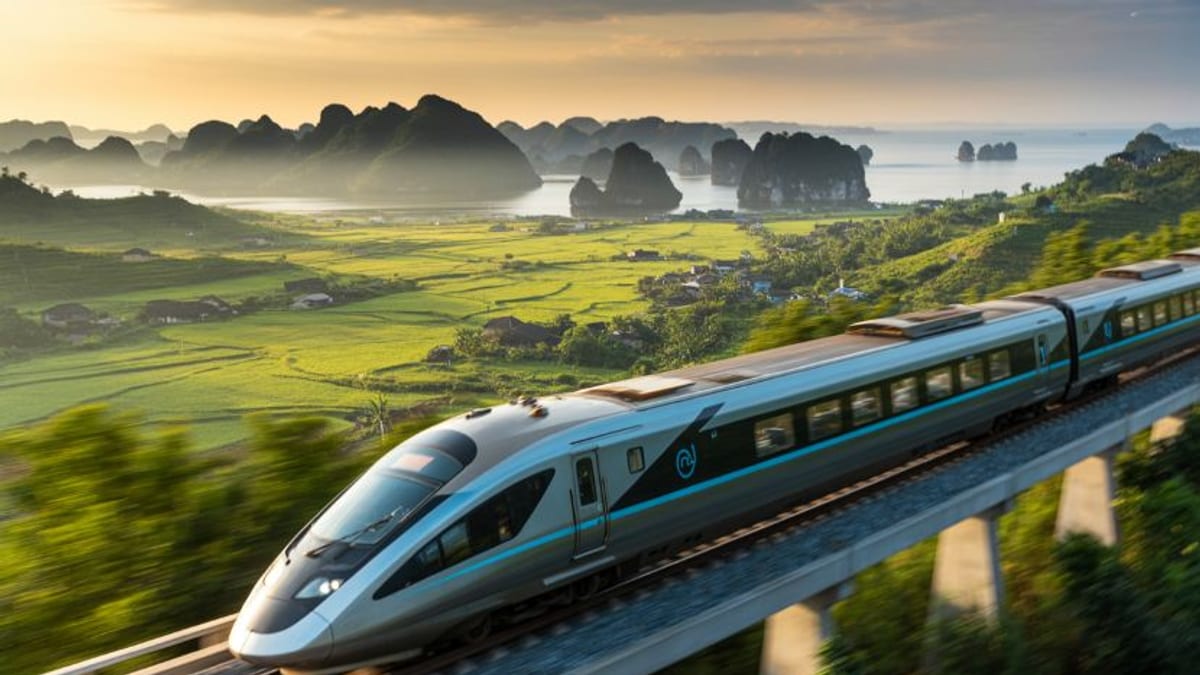
Image by Latest International Railway News, Global Rail Industry News
A Flagship Project In Vietnam’s New Rail Master Plan
Publicly available planning documents show that Vietnam’s updated National Railway Network Master Plan for 2021 to 2030 adds a dedicated high-speed corridor between the capital Hanoi and Quang Ninh Province, home to UNESCO-listed Ha Long Bay. The 124 kilometer line is part of a wider effort to modernize a rail system that still relies heavily on single-track metre gauge routes dating from the colonial era.
According to recent coverage of the plan, the Hanoi–Quang Ninh route is envisaged as a passenger-focused high-speed line, complementing the much longer North–South express railway now entering the project development stage. The new corridor is intended to integrate with existing ports, highways and airports in the Red River Delta, creating a multimodal hub that serves both domestic travelers and international visitors headed for Ha Long’s cruise terminals and beach resorts.
Separate reports on the project’s technical studies indicate that the planned line would start in the northern part of Hanoi, pass through Bac Ninh and Hai Phong, and terminate close to a new Ha Long station and depot complex in Quang Ninh. This would provide a direct, high-capacity rail alternative to the region’s crowded expressways and national highways, which currently carry most of the traffic between the capital and the coast.
While the Hanoi–Quang Ninh high-speed route remains in the planning and pre-investment phase, transport sector analyses describe it as one of Vietnam’s most commercially promising rail corridors, given the combination of dense population, strong industrial growth and Ha Long Bay’s status as one of the country’s most visited destinations.
From Seven Hours To Around One: Travel Time Set To Plummet
At present, travelers moving between Hanoi and Ha Long typically face a journey of at least two and a half hours by road, even on the upgraded expressway network. Older railway alignments and low operating speeds mean that conventional trains take many hours to cover similar distances, making rail an uncompetitive option for most tourists heading to Ha Long’s cruise piers or island hotels.
Concept documents for the proposed high-speed line outline design speeds in the range of 250 to 350 kilometers per hour, with some earlier proposals referencing a maximum of 350 kilometers per hour on dedicated tracks. Even allowing for more conservative operating speeds and intermediate stops, transport specialists suggest that the journey time between Hanoi and Ha Long could be reduced to roughly one hour once the project is complete.
Such a reduction would bring Ha Long Bay firmly into day-trip range from the capital by rail, in the same way that high-speed services in Europe and East Asia have turned coastal resort cities into easy escapes from major urban centers. Tour operators and hotel investors are already assessing how a one hour rail connection could support new products such as early morning departures for same-day cruises, late return services for weekenders, and integrated rail and resort packages pitched at both domestic and overseas travelers.
Crucially, high-speed rail is expected to offer more predictable travel times than the region’s expressways, which can experience congestion peaks during holiday periods and summer weekends. For cruise operators working with tight boarding schedules and airlines connecting travelers through Hanoi’s Noi Bai International Airport, the reliability of a clockface timetable could be as important as pure speed.
Ha Long Bay Tourism Poised For A New Growth Phase
Quang Ninh has spent the past decade upgrading its transport backbone through projects such as the Haiphong–Ha Long–Van Don–Mong Cai expressway chain and the privately financed Van Don International Airport. Provincial tourism strategies highlight transport infrastructure as a key factor in attracting higher-spending visitors and encouraging them to explore beyond the main bay and Bai Chay areas.
Recent tourism planning materials for Quang Ninh point to a shift from volume-driven growth to a model that emphasizes diversified experiences, including community-based tourism in mountainous districts, wellness and outdoor sports in Van Don, and cultural events throughout the year. A high-speed rail station at Ha Long would add another gateway for these emerging products, channeling visitors directly into new urban districts and coastal zones under development.
Industry observers note that a fast, frequent rail service could also help distribute visitor flows more evenly throughout the week and across different parts of the province. Instead of concentrating arrivals in large road-based tour groups, high-speed trains could feed a mix of individual travelers and small groups who are more likely to seek independent experiences, stay longer and spend more on local services.
There is also potential for the Hanoi–Quang Ninh high-speed corridor to reinforce Ha Long Bay’s position in regional itineraries that include Ninh Binh, Hai Phong, Cat Ba Island and cross-border destinations in China. With multiple high-speed and conventional lines now in planning or under development across northern Vietnam, travel companies are beginning to map out circuit routes by rail that would have been difficult to imagine a decade ago.
What Travelers Can Expect Once Trains Begin Running
While precise service patterns will depend on final design and operational decisions, current proposals and feasibility assessments provide early indications of what travelers might encounter on the Hanoi–Ha Long high-speed route. The line is anticipated to use standard gauge track and modern electric rolling stock compatible with Vietnam’s broader high-speed rail strategy, bringing it in line with systems used elsewhere in Asia.
Travelers can expect dedicated passenger stations at both ends of the route, with Ha Long’s new terminal planned near major tourism zones and linked to local bus and taxi networks. In Hanoi, planners aim to integrate high-speed services with the city’s evolving metro, bus rapid transit and ring road systems to create smoother transfers from urban districts and Noi Bai International Airport.
Journey times are likely to be competitive with door to door car or shuttle transfers, particularly for visitors staying in central Hanoi who can connect to the high-speed station via urban rail or bus. Onboard, passengers can anticipate airline style seating, luggage racks suitable for cruise and long-haul baggage, and digital information systems providing real time updates in both Vietnamese and English.
Given the importance of Ha Long Bay to Vietnam’s tourism image, analysts expect that ticketing platforms will be geared toward international users, with online booking systems, multiple language options and integration with major payment providers. Dynamic pricing and advance purchase discounts, now common on high-speed networks globally, are also likely to feature as operators seek to balance demand across peak and off peak periods.
Environmental And Economic Impacts On The Northeast Corridor
Beyond tourism, the Hanoi–Quang Ninh high-speed railway is being framed in policy documents as part of Vietnam’s broader push for greener, more efficient transport. By shifting a portion of passenger traffic from road to electric rail, the line is expected to reduce emissions per traveler, ease pressure on highways and cut the risk of road accidents on one of the country’s busiest tourist corridors.
Economic studies of similar projects in other countries suggest that high-speed rail can stimulate development around station areas, including hotels, conference centers, retail hubs and residential districts targeting commuters who split their time between the capital and coastal cities. Planners in Quang Ninh and Hanoi are already designating land around proposed station sites for mixed use projects, with an eye on transit oriented development models.
At the same time, observers caution that construction will need to be carefully managed to protect the sensitive coastal and karst environments that underpin Ha Long Bay’s appeal. Environmental impact assessments will be closely watched by the tourism industry, which depends on maintaining the bay’s status as a clean, scenic and culturally rich destination.
For travelers, the long lead times typical of major rail projects mean that the new service will not transform trips to Ha Long overnight. However, with the Hanoi–Quang Ninh high-speed line now embedded in national rail planning and detailed routing studies underway, the prospect of boarding a sleek train in Hanoi and stepping off an hour later within sight of Ha Long’s limestone peaks is moving steadily from vision to reality.