

More news on this day
Vietnamese travelers flying from Ho Chi Minh City and Hanoi to Europe are facing longer routes, missed connections and soaring fares as Middle East airspace closures linked to the Iran war disrupt some of Asia’s busiest long-haul corridors.
Get the latest news straight to your inbox!
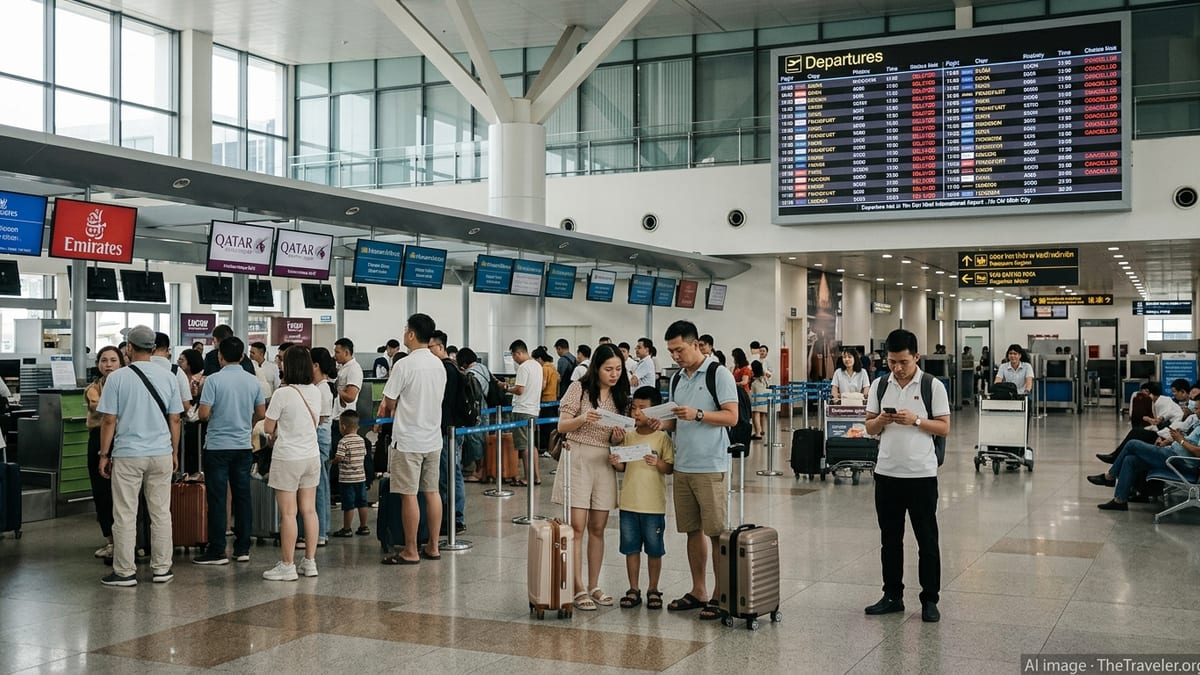
How the Iran War Is Reshaping Vietnam–Europe Flight Paths
The latest escalation of conflict involving Iran, the United States and Israel has triggered sweeping airspace restrictions across parts of the Middle East, affecting Iran, Iraq, Israel and several Gulf states. Publicly available information shows that the closures have upended traffic through key hubs such as Dubai, Abu Dhabi and Doha, which normally handle tens of thousands of passengers a day connecting between Asia and Europe.
For Vietnamese travelers, this has created a sudden fault line along what had become the most popular and affordable bridge to Europe. Before the conflict intensified in late February 2026, many passengers from Ho Chi Minh City and Hanoi relied on one-stop itineraries via Dubai or Doha on major Gulf carriers. Reports from international aviation trackers and news outlets indicate that waves of cancellations and diversions began as airspace shut down, with hundreds of flights grounded or forced into lengthy detours.
Unlike earlier disruptions during the war in Ukraine, which primarily pushed traffic away from Russian airspace, the current crisis directly affects the Middle Eastern corridors that had absorbed most Europe–Asia flows. As a result, Vietnamese travelers now face a more fragmented route map, with fewer viable transit options and mounting pressure on alternative gateways such as Istanbul and major European hubs.
Vietnam’s Rerouting Orders and What They Mean for Passengers
The Civil Aviation Authority of Vietnam has instructed all airlines operating to, from or through Vietnamese airports to avoid high-risk skies over the Middle East and to continuously review operational risk. According to Vietnamese media coverage, this guidance applies not only to local carriers but also to international airlines serving Hanoi’s Noi Bai and Ho Chi Minh City’s Tan Son Nhat airports.
Vietnam Airlines, the country’s flag carrier, has stated in public updates that its nonstop routes from Hanoi and Ho Chi Minh City to Paris, Frankfurt and London are being adjusted to skirt conflict zones. Earlier experience after missile and drone activity in 2024 already led the airline to develop alternative routings that add around 15 minutes of flying time to Europe, and similar precautionary paths are being reintroduced and refined.
International coverage notes that some Middle Eastern airlines have halted or severely reduced services to Vietnam during the current crisis. Emirates flights between Vietnam and Dubai have been suspended during periods of airspace closure, while Qatar Airways and other carriers have at times held aircraft on the ground in Hanoi or rerouted services via alternative airports. Even when flights operate, aircraft are being funneled through narrower safe corridors over Saudi Arabia, the Caspian region or the Red Sea, contributing to congestion and delays.
Detours, Delays and Rising Costs on Routes from HCMC and Hanoi
For travelers flying from Ho Chi Minh City, the disruption has been especially acute on previously popular one-stop itineraries to cities such as Berlin, Prague, Paris and Milan that relied on Gulf connections. Vietnamese and European passengers report spending long hours in terminals or being redirected through unexpected transit points such as Muscat or secondary Chinese hubs as airlines improvise around closed skies.
From Hanoi, where direct services to Europe coexist with strong demand for Middle Eastern transit options, published accounts describe travelers being informed mid-flight that Doha or Dubai was no longer available and that aircraft would divert to alternative airports. These detours extend total journey times by several hours and can wipe out onward connections to smaller European cities, forcing unplanned overnight stays or rebookings via crowded hubs like Istanbul, Frankfurt or London.
Industry assessments cited in the Vietnamese business press estimate that rerouting around Iranian and Iraqi airspace is pushing up fuel burn and crew costs on Vietnam–Europe sectors. Aviation analysts quoted in regional coverage suggest that fares on some long-haul routes may rise as airlines attempt to recover higher operating expenses and war-risk insurance premiums. Travelers booking from Ho Chi Minh City and Hanoi are already reporting limited seat availability on remaining Europe-bound services during peak periods, along with sharp increases in last-minute ticket prices.
Stranded Overseas Vietnamese and the Lunar New Year Hangover
The timing of the Middle East disruptions has been particularly painful for overseas Vietnamese who flew home for the Lunar New Year, or Tet, and planned to return to jobs and study in Europe via Gulf hubs. Vietnamese and international media describe thousands of passengers marooned when flights through Dubai and Doha were suddenly canceled or indefinitely postponed in the days after major strikes on Iranian targets in late February.
Some travelers who had transited smoothly into Vietnam before Tet found that their return legs no longer existed, with airlines unable to offer clear alternatives amid fluid airspace closures. Reports from travel forums and local outlets highlight cases of passengers from Europe who had to negotiate complex rebookings, sometimes persuading airlines to route them via East Asia and northern Europe rather than back through the Gulf.
Vietnamese travel agencies in Ho Chi Minh City say, according to domestic coverage, that they have activated emergency support teams to help clients rearrange itineraries, extend hotel bookings and navigate visa implications when stays in Vietnam unexpectedly stretch beyond planned return dates. For workers with fixed start times at factories, hospitals or logistics firms in Europe, the uncertainty has created intense pressure as they weigh the cost of alternative tickets against the risk of losing jobs or residency status.
Practical Advice for Travelers Planning Europe Trips Now
Current public information from Vietnamese aviation regulators, local carriers and international news outlets suggests that the situation remains fluid, with airspace restrictions and flight schedules shifting on short notice. Travelers in Ho Chi Minh City and Hanoi who are planning journeys to Europe in the coming weeks are being urged in official advisories and travel-industry guidance to build in more flexibility and to anticipate longer and more complex routings.
Passengers are widely advised to favor itineraries that either use nonstop Vietnam–Europe flights or route via hubs outside the core conflict zone, such as Istanbul, Singapore, Bangkok or major European gateways. While these options can be more expensive than pre-crisis Gulf connections, they are currently seen as less vulnerable to sudden airspace closures. Travel specialists also recommend allowing longer connection times and avoiding tight transfers, given the frequency of rolling delays and last-minute flight time changes.
For those already holding tickets via Dubai, Doha or other Middle Eastern stops, guidance from airlines and travel agents emphasizes the importance of closely monitoring booking records and flight-status tools and staying in regular contact through official digital channels. Many carriers have implemented flexible rebooking policies, but available seats on alternative routes can be limited, particularly for families and groups.
With no clear timeline for de-escalation in the Iran conflict, Vietnamese passengers and travel firms alike are bracing for a prolonged period of higher prices, reduced choice and lingering uncertainty on the once-routine journey from Ho Chi Minh City and Hanoi to Europe. For now, careful planning, early booking and a willingness to accept detours appear to be the new essentials for making these long-haul trips work.