

More news on this day
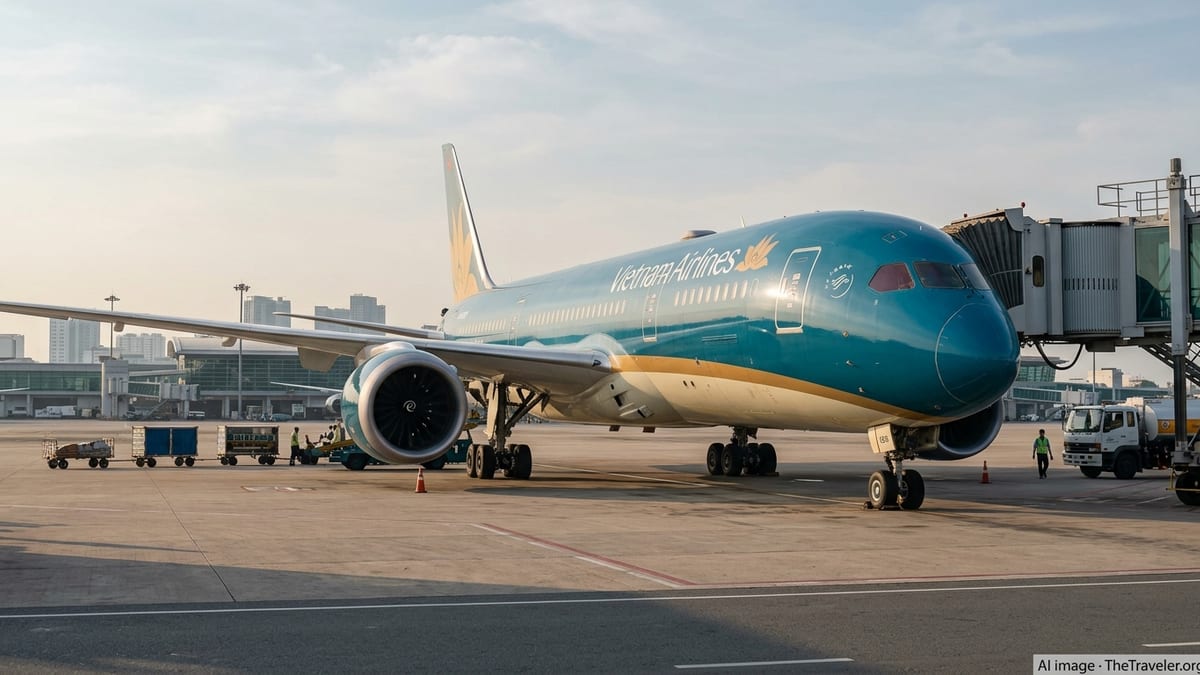
Vietnam has moved to significantly upgrade its national carrier’s fleet with a multibillion-dollar Boeing aircraft deal that aims to modernize Vietnam Airlines, boost long-haul capacity and strengthen the country’s role in Southeast Asia’s rapidly evolving aviation market.
Get the latest news straight to your inbox!
A Landmark Order Anchored in a Deepening U.S. Partnership
Publicly available information indicates that Vietnam Airlines has finalized a major order for 50 Boeing 737 MAX aircraft, valued at around 11 billion dollars at list prices and announced in February 2026. The agreement converts a previously unidentified Boeing customer into a confirmed deal tied to the Vietnamese flag carrier and adds fresh momentum to a long-discussed fleet renewal strategy focused on both efficiency and international competitiveness.
The order was unveiled during high-level engagements between Vietnamese and United States representatives in Washington, highlighting how commercial aviation is being used to reinforce broader economic and diplomatic ties. The transaction follows years of negotiations over aircraft pricing and financing, during which Vietnamese leaders publicly pressed Boeing to offer more favorable terms as the carrier emerged from the pandemic downturn.
While the 737 MAX family will primarily serve regional and medium-haul markets, analysts note that the scale of the deal underscores a long-term commitment to Boeing as a strategic partner across Vietnam Airlines’ network. Combined with the airline’s existing Boeing 787 Dreamliner fleet, the agreement gives Boeing a stronger foothold in a country that is increasingly seen as an aviation growth engine in Asia.
Industry commentary points out that the order also supports U.S. manufacturing and export goals, further aligning Washington’s economic agenda with Vietnam’s ambitions to become a regional transport, manufacturing and tourism hub. The transaction is therefore being viewed as both a commercial milestone and a signal of closer bilateral engagement between the two countries.
Modernizing Vietnam Airlines’ Fleet for a Post-Pandemic Era
Vietnam Airlines began refreshing its widebody fleet before the pandemic with Boeing 787-9 and 787-10 Dreamliners and Airbus A350-900s, but the new 737 MAX order deepens the carrier’s modernization strategy. As of late 2024, research by regional market observers showed the airline operating more than 100 aircraft, including over 30 widebodies that anchor its long-haul operations.
The carrier has continued to take new deliveries, such as additional Boeing 787-10 Dreamliners and Airbus A320neo jets, to reduce average fleet age and improve fuel efficiency. These additions have already been deployed on high-demand routes during peak travel seasons, including the Lunar New Year period, enabling the airline to add capacity without sacrificing operating economics.
In parallel, Vietnam Airlines has been scouting options for up to 30 new widebody aircraft, launching a formal process in 2025 that invited proposals centered on Airbus A350-900 or Boeing 787-9 types. That initiative aims to secure deliveries from 2028 through 2032, suggesting a staggered replacement of older widebodies and incremental growth to meet rising demand on intercontinental routes.
Taken together, the confirmed 737 MAX order, ongoing Dreamliner deliveries and planned widebody competition position Vietnam Airlines to operate a younger, more efficient and more flexible fleet. This shift is designed to cut fuel and maintenance costs, meet tightening environmental expectations and support a broader network of medium and long-haul routes across Asia, Europe, Australia and North America.
Strengthening Long-Haul Capabilities and Global Reach
Vietnam Airlines has steadily built its long-haul credentials around Boeing 787-9, 787-10 and Airbus A350-900 aircraft, which serve destinations across Europe, Northeast Asia and Australia. The airline is currently the only Vietnamese carrier offering nonstop flights between Vietnam and the United States, maintaining a key route between Ho Chi Minh City and San Francisco that has become emblematic of Vietnam’s rising global connectivity.
Industry coverage describes Vietnam Airlines as operating one of Southeast Asia’s larger widebody fleets, giving it a platform to expand frequencies and open new markets as additional aircraft arrive. The carrier’s decision to consider further 787-9 or A350-900 orders reflects a desire to deepen this long-haul presence while securing the range and payload needed for future nonstop services to North America and Europe.
The long-term development of Long Thanh International Airport near Ho Chi Minh City is expected to complement this fleet expansion. Planned as a new hub capable of handling the largest commercial aircraft types, Long Thanh is envisioned as a primary base for Vietnam Airlines, providing the infrastructure to support more long-haul departures, improved transit connectivity and higher service standards in line with the airline’s premium ambitions.
Analysts suggest that pairing a modern widebody fleet with a new international hub could significantly increase Vietnam Airlines’ competitiveness against regional rivals based in Bangkok, Singapore and Kuala Lumpur. It would also enhance Vietnam’s appeal as a one-stop gateway between North America, Europe and emerging secondary cities across Indochina.
Shifting the Competitive Landscape in Southeast Asia
Vietnam’s aviation market has been among the fastest growing in Asia, with rising middle-class demand, strong outbound tourism and expanding manufacturing activity driving air travel. Against this backdrop, Vietnam Airlines faces intense competition from low-cost carriers such as Vietjet and from full-service rivals across the region. Fleet renewal is therefore emerging as a critical lever for differentiation and long-term profitability.
Vietjet has pursued its own large-scale aircraft commitments, including deals with both Boeing and Airbus to support aggressive network growth. New entrants like Sun PhuQuoc Airways have also signaled ambitious long-haul plans, including a recent order for up to 40 Boeing 787 Dreamliners aimed at services to the United States and Europe. These moves suggest that Vietnam is on track to support multiple long-haul players, intensifying competition on key trunk routes.
Vietnam Airlines’ multi-billion-dollar Boeing alignment is seen by aviation analysts as a bid to secure economies of scale, lock in delivery slots and maintain a strong brand presence in premium and corporate segments. A refreshed long-haul product, underpinned by new-generation aircraft, could help the airline defend market share against foreign carriers that currently dominate much of the traffic between Southeast Asia, Europe and North America.
For the broader Southeast Asian market, Vietnam’s fleet expansion and long-haul ambitions may gradually rebalance traffic flows that have traditionally funneled through Singapore, Bangkok, Hong Kong and Doha. As Vietnam Airlines and emerging Vietnamese carriers add more nonstop and one-stop options, travelers may increasingly route through Vietnamese hubs, shifting tourism patterns and cargo flows across the region.
Economic Impact and Future Growth Prospects
The scale of Vietnam’s recent aircraft commitments points to confidence in sustained passenger growth over the next decade. Fleet renewal and expansion are expected to generate significant economic benefits, from high-skilled jobs in aviation and maintenance to increased tourist arrivals and improved logistics for export-oriented industries.
Vietnam Airlines’ Boeing deals also align with government efforts to position aviation as a strategic sector alongside manufacturing and technology. More capable long-haul aircraft support policies aimed at attracting foreign investment, hosting major events and encouraging Vietnamese companies to expand abroad. In turn, greater connectivity can deepen trade ties not only with the United States but also with Europe, the Middle East and other Asia Pacific economies.
However, analysts caution that realizing these benefits will require disciplined execution. Vietnam Airlines must navigate global supply chain constraints, manage financing costs in a higher interest-rate environment and ensure that capacity additions are aligned with actual demand. Competition from Gulf carriers, Chinese airlines and established Southeast Asian hubs will remain intense.
Even so, the combination of a modernizing fleet, new Boeing orders and emerging infrastructure projects places Vietnam at the center of a new phase of aviation growth in Southeast Asia. If current plans stay on track, Vietnam Airlines could move from regional heavyweight to a more influential global player, with its latest Boeing commitments serving as a key catalyst for that transformation.