

More news on this day
Vietnam is moving ahead with a series of major airport upgrades and new international routes that are set to tighten air links with Thailand, Malaysia, Singapore, Cambodia and Laos, positioning the country as a stronger hub for travel and trade across mainland Southeast Asia.
Get the latest news straight to your inbox!
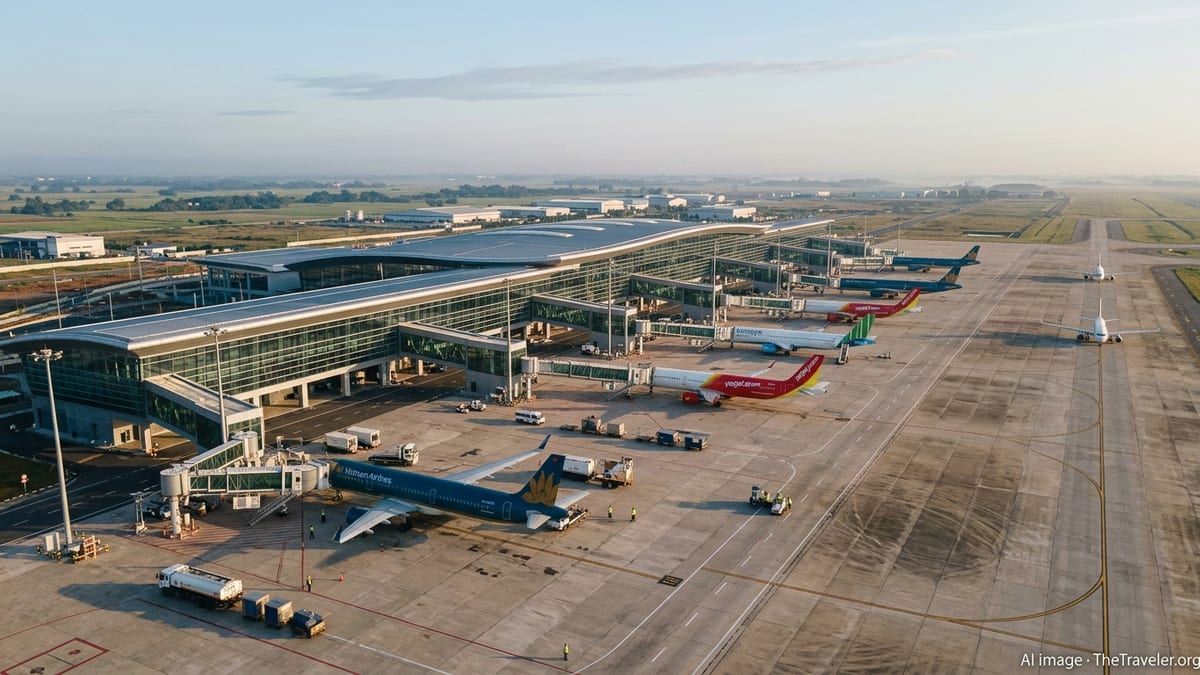
Long Thanh and Major Hub Upgrades Reshape Vietnam’s Air Network
Vietnam’s most closely watched aviation project is Long Thanh International Airport near Ho Chi Minh City, planned as a new long haul gateway that will gradually take over much of the international traffic from overloaded Tan Son Nhat. Publicly available planning documents describe a four phase development trajectory, with the first phase targeting capacity for around 25 million passengers and more than one million tonnes of cargo annually once operations begin, now expected in 2026 after earlier delays.
Government master plans identify Long Thanh, Tan Son Nhat and Hanoi’s Noi Bai as the backbone of a future three node system that will anchor Vietnam’s long haul and regional networks. Under the approved national airport system plan to 2030 with vision to 2050, investment is being prioritised at these hubs to support up to 100 million passengers a year at Long Thanh once all phases are complete, easing chronic congestion in Ho Chi Minh City and allowing more regional capacity to be deployed toward Southeast Asian markets.
Transition planning is already under way. Aviation authorities have released proposals for a phased shift of international services from Tan Son Nhat to Long Thanh tied to the readiness of runways, terminals, logistics areas and the surrounding airport urban zone. Reports indicate that an initial mix of domestic and selected international routes will operate in parallel before a full migration of most long haul and high capacity regional flights after 2030, a change that will directly shape connectivity with Thailand, Malaysia, Singapore, Cambodia and Laos.
Noi Bai in Hanoi is receiving its own capacity boost to balance the network. An expansion of the T2 international terminal has recently been inaugurated, with investor disclosures and local reporting indicating that the wider upgrade path is designed to lift the airport toward a long term capacity of up to 63 million passengers by 2030 and 100 million by 2050, creating additional space for more frequent and diversified ASEAN services.
Tan Son Nhat’s New Terminal and Surface Links Support Regional Growth
While Long Thanh moves toward completion, Tan Son Nhat remains Vietnam’s busiest airport and the primary gateway for much of the country’s Southeast Asian traffic. A new Terminal 3 has entered operation in 2025, lifting the airport’s total design capacity to around 50 million passengers a year according to investor updates and local infrastructure coverage. The additional gates and apron space are easing peak period strain and giving airlines more flexibility to schedule new flights to neighbouring capitals and secondary cities.
Authorities in Ho Chi Minh City and adjacent Dong Nai province are pairing airport expansion with improved ground connectivity. Regional infrastructure publications describe plans for an integrated metro alignment that would eventually link Tan Son Nhat with Long Thanh, alongside upgrades to expressways, ring roads and new bridges. For travellers from Thailand, Malaysia, Singapore, Cambodia and Laos, these investments are expected to shorten transfer times between international and domestic flights and make multi stop itineraries through southern Vietnam more efficient.
In practice, the new capacity at Tan Son Nhat is already underpinning a denser web of ASEAN routes. Vietnam based and foreign carriers are scheduling additional frequencies to Bangkok, Kuala Lumpur, Singapore and Phnom Penh, while secondary Vietnamese cities such as Da Nang and Nha Trang are securing more direct links to regional hubs. Over the medium term, planners see Tan Son Nhat evolving into a strong regional connector even after Long Thanh assumes much of the intercontinental traffic, with a focus on short and medium haul services across Southeast Asia.
For passengers, one of the key trends to watch is how airlines allocate operations between terminals at Tan Son Nhat as T3 ramps up. Travel advisories and airport guides published in late 2025 highlight that certain Vietnamese carriers have concentrated domestic and selected regional flights at the new facility, while others remain in older terminals. This split may gradually be refined as more Thailand, Malaysia, Singapore, Cambodia and Laos services are added and as Long Thanh enters service.
New Routes Deepen Links with Thailand, Malaysia and Singapore
Vietnamese and regional airlines are using the expanded airport capacity to grow point to point connectivity with major ASEAN markets. Vietjet has reported operating more than 170 routes by late 2024, including an extensive network across Thailand, Malaysia, Singapore, Laos and Cambodia, supported by a fleet of over 100 Airbus narrow body aircraft. Investor briefings note that new services have been introduced to Vientiane and Siem Reap, while links with Singapore and Malaysia have been steadily reinforced.
Thailand remains one of Vietnam’s strongest regional markets. In addition to multiple daily flights between Ho Chi Minh City, Hanoi and Bangkok, carriers have opened services from tourist centres such as Da Nang, Nha Trang and Phu Quoc to Thai gateways. Industry news from 2025 highlights long term plans for Thailand based affiliates of Vietnamese carriers to receive additional Boeing 737 aircraft from orders placed by their parent company, a move that is expected to further deepen cross border connectivity between the two countries.
Malaysia and Singapore are also seeing a rise in Vietnam capacity. Aviation magazines and tourism operators have reported new Da Nang to Kuala Lumpur flights and additional services from Ho Chi Minh City and Hanoi to the Malaysian capital. Singapore, meanwhile, is gaining more direct options to Vietnam’s beach and heritage destinations. Carriers have recently launched flights linking Singapore with Phu Quoc and Ha Long Bay’s gateway airports, creating new holiday corridors that rely heavily on the upgraded infrastructure at Vietnam’s coastal and primary gateways.
For travellers, the expansion translates into more non stop options, shorter travel times and potentially more competitive fares as low cost and full service airlines add capacity. It also increases the feasibility of multi country itineraries that combine Vietnam with neighbouring Thailand, Malaysia or Singapore in a single trip, using Vietnamese hubs as convenient stepping stones.
Strengthening Links with Cambodia and Laos in the Mekong Subregion
Beyond the larger ASEAN markets, Vietnam is also tightening air connectivity with Cambodia and Laos, two close neighbours in the Mekong subregion. Vietjet’s corporate reports highlight the launch of new services to Vientiane and Siem Reap, complementing existing links between Ho Chi Minh City, Hanoi and Phnom Penh. These routes allow faster access to Angkor temples, Mekong river destinations and emerging cross border tourism products built around shared cultural and natural heritage.
The upgrading of Hanoi’s Noi Bai and future development of Gia Binh cargo focused facilities are expected to support not only passenger flows but also regional trade. Public planning documents describe Gia Binh as a logistics oriented airport east of Hanoi, designed to relieve pressure on Noi Bai while enhancing air freight capabilities for electronics and high value goods. Stronger cargo connectivity between Vietnam, Laos and Cambodia can underpin industrial supply chains and facilitate the movement of time sensitive products across landlocked areas.
On the Cambodian and Lao side, Vietnamese carriers are emerging as important partners for onward connectivity. With expanding fleets and an increasing number of ASEAN city pairs, these airlines are able to feed passengers from Phnom Penh, Siem Reap and Vientiane into larger networks that span Northeast Asia, India and Australia via Ho Chi Minh City and Hanoi. Over time, Long Thanh’s opening is poised to amplify this role, especially for long haul itineraries originating in the Mekong subregion.
Travelers heading to or from Cambodia and Laos should watch for seasonal capacity shifts around key holidays and school breaks, particularly on routes into Vietnam’s main hubs. National carriers in the region typically adjust schedules in response to demand spikes linked to festivals, cruise seasons in Ha Long Bay and beach tourism in Da Nang and Phu Quoc, making flexibility and early booking increasingly important.
Key Travel Insights: What Flyers Should Watch Next
The rapid pace of airport and route expansion in Vietnam is reshaping how travellers plan journeys across Southeast Asia. One immediate consideration is airport choice in the Ho Chi Minh City area once Long Thanh begins commercial operations. For trips involving Thailand, Malaysia, Singapore, Cambodia or Laos, it will be essential to verify whether a given flight departs from Tan Son Nhat or Long Thanh, as the two airports are located in different provinces and will be linked by evolving but still developing ground transport options.
Another trend to monitor is the gradual consolidation of connecting traffic at specific hubs. With Noi Bai and Tan Son Nhat gaining new terminal capacity and Long Thanh designed as a high volume, wide body friendly facility, airlines are likely to refine their schedules to create more structured banks of connections between regional ASEAN flights and longer haul services. This could improve minimum connection times and reliability for itineraries that combine, for example, Bangkok or Kuala Lumpur with Japan, South Korea or Europe via Vietnam.
Operational performance and passenger experience will remain closely watched as capacity grows. Travellers can expect further rollouts of digital services such as biometric boarding trials, automated check in and upgraded security lanes, which are already being tested at major Vietnamese airports according to local aviation reports. At the same time, peak period congestion is likely to persist at times during holidays and during the early years of Long Thanh’s operation, when traffic patterns and terminal assignments are still stabilising.
For now, the core message for travellers is that Vietnam is rapidly reinforcing its role as a connector between mainland and maritime Southeast Asia. With upgraded terminals at Noi Bai and Tan Son Nhat, a new super hub at Long Thanh taking shape, and an expanding network of routes to Thailand, Malaysia, Singapore, Cambodia and Laos, the country is giving flyers more options and flexibility than ever before when moving around the region.