

More news on this day
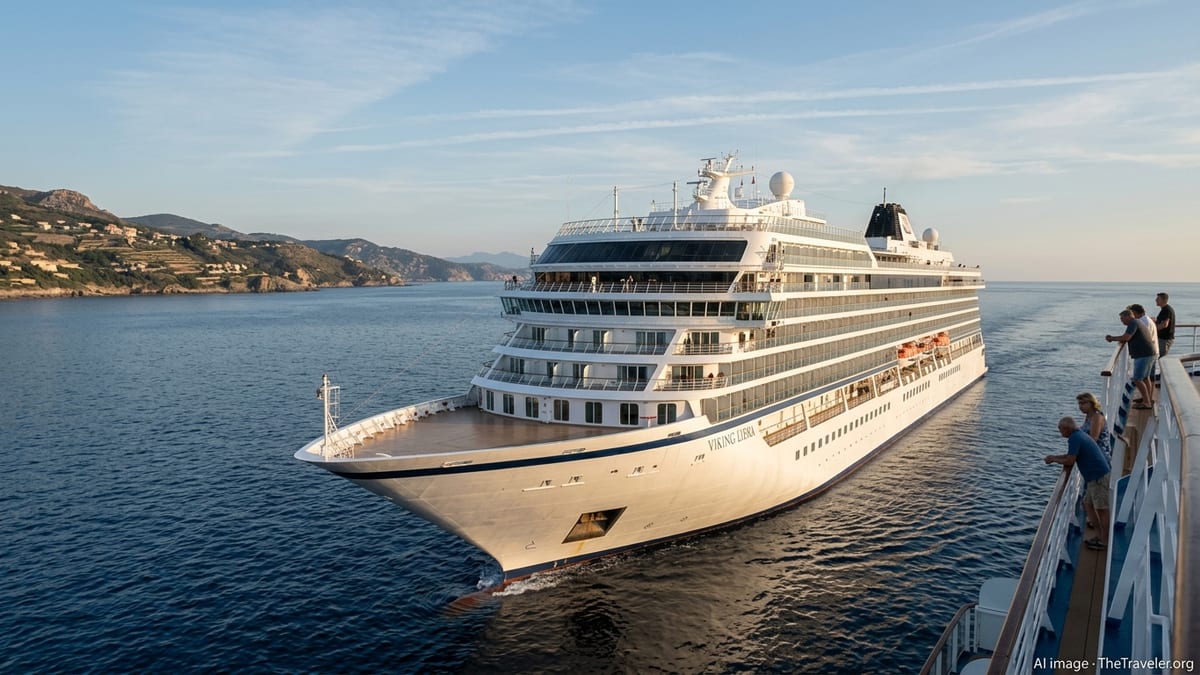
Viking is preparing to introduce what reports describe as the world’s first cruise ship powered by hydrogen stored on board, a landmark vessel expected to begin sailing Mediterranean and Northern Europe itineraries by late 2026 and signaling a new phase in low-emission sea travel.
Get the latest news straight to your inbox!
A New Flagship for Low-Emission Cruising
The new ship, Viking Libra, is being built at Fincantieri’s Ancona yard in Italy and is scheduled for delivery in November 2026, according to information released by the shipbuilder and cruise line. The vessel is described as a sister ship to Viking’s existing ocean fleet, but with a propulsion system that integrates liquefied hydrogen and advanced fuel cells to significantly cut conventional fuel use.
Publicly available specifications indicate that Viking Libra will measure around 47,000 to 54,000 gross tons and host close to 1,000 guests in just under 500 staterooms. That places the ship in the small-to-midsize segment of the ocean market, well below the capacity of the largest mega-ships, and aligns with Viking’s focus on destination-intensive itineraries rather than on-board theme-park amenities.
Industry coverage notes that the hydrogen-based system is designed to supply up to roughly six megawatts of power through polymer electrolyte membrane fuel cells. The stored liquid hydrogen will be used alongside more conventional marine fuels in a hybrid configuration, allowing the ship to switch to zero-emission operation in particularly sensitive areas, including certain ports and restricted coastal zones.
While Viking Libra will not rely solely on hydrogen for every phase of every voyage, analysts see the combination of fuel cells and traditional propulsion as an important transitional step. The configuration is expected to enable low- or zero-smokestack operation at reduced speeds and during port stays, where local air quality regulations are becoming more stringent.
From Fuel-Cell Trials to Full Hydrogen Integration
The hydrogen project builds on earlier collaborations between Viking and Fincantieri, where smaller fuel-cell units were installed on existing ships as test platforms. In one case, a 100-kilowatt hydrogen fuel cell module was deployed to power limited onboard systems, allowing engineers to gather operational data under real-world conditions before scaling up to multi-megawatt applications.
According to technical summaries circulated within the maritime sector, the Viking Libra design moves this work into a full-scale cruise deployment. The ship will carry containerized liquid hydrogen storage integrated into its energy management system, feeding fuel cells developed with Isotta Fraschini Motori, a Fincantieri subsidiary specializing in advanced propulsion solutions.
Experts say this step is significant because it demonstrates that hydrogen can be integrated into a large passenger vessel while meeting existing safety and certification requirements. The move from a trial module powering selected hotel loads to a system capable of supporting propulsion and broader onboard operations marks a shift from experimentation toward commercial-scale adoption.
Maritime analysts also view Viking Libra as a reference project for the wider industry. As other cruise and ferry operators explore hydrogen and alternative fuels, the technical and regulatory lessons drawn from this ship’s construction and early service are expected to inform subsequent designs across Europe’s busy short- and medium-haul routes.
Focus on the Mediterranean and Northern Europe
Routing plans reported by trade publications indicate that Viking intends to deploy Viking Libra initially in the Mediterranean and Northern Europe, two regions where environmental regulations and traveler expectations are rapidly evolving. These itineraries are expected to combine marquee ports with smaller destinations that have become more cautious about vessel emissions and local air quality.
Shorter legs between ports and access to emerging hydrogen supply chains around key European hubs make these waters a logical test bed. As energy corridors for low-carbon fuels develop between North Sea and Mediterranean ports, operators are increasingly positioning newbuilds to take advantage of more flexible bunkering options and shore-side infrastructure.
For travelers, the deployment could mean quieter approaches to historic harbors and scenic coastlines, particularly on segments sailed under fuel-cell power. Reports suggest that hydrogen systems can reduce noise and vibration compared with traditional engines, a potential benefit for both guests on board and communities along popular cruise routes.
The launch timing also positions Viking Libra to enter service just as several Mediterranean and Northern European destinations tighten emissions standards for ships at berth and at anchor. A vessel capable of near-zero local emissions during port stays may be more attractive to ports seeking to balance tourism revenue with environmental targets.
Implications for Sustainable Travel and Cruise Design
Viking’s hydrogen initiative arrives as the wider cruise sector faces mounting pressure to decarbonize, driven by regulatory measures, investor expectations, and changing consumer preferences. While many operators have moved toward liquefied natural gas, shore power connections, and efficiency upgrades, fully zero-emission operations at scale remain rare.
Industry observers note that hydrogen, particularly when produced from renewable sources, is seen as one pathway toward deeper cuts in greenhouse gas emissions. However, challenges remain around fuel production volumes, transport, storage, and overall lifecycle emissions compared with other alternatives, including synthetic fuels and biofuels.
By committing to a ship that stores hydrogen on board and uses it through large fuel-cell installations, Viking is effectively testing one of the more ambitious options currently under discussion. Analysts point out that success will depend not only on the vessel’s engineering, but also on parallel investments in port infrastructure, safety protocols, and reliable supply chains for low-carbon hydrogen.
If the project performs as anticipated, it could accelerate interest in similar designs for smaller expedition ships, coastal ferries, and eventually larger ocean vessels. For now, Viking Libra stands out as a high-profile case study in how established cruise brands are translating climate goals into concrete hardware.
What Travelers Can Expect by 2026
With delivery planned for late 2026, Viking Libra is expected to enter the market as a premium, small-ship option with a strong sustainability message. The layout and onboard experience will broadly mirror Viking’s existing ocean ships, with a focus on all-veranda accommodations, understated Scandinavian-inspired interiors, and destination-centric programming.
Reports indicate that underlying changes in the engine rooms and technical spaces will have practical effects for guests, even if many of the systems remain invisible. Reduced stack emissions, lower noise levels at low-speed operation, and the possibility of extended zero-emission periods are being promoted as tangible benefits for environmentally conscious travelers.
Travel planners are already watching how the hydrogen-powered ship will be integrated into the company’s Mediterranean and Northern Europe schedules. As details emerge, observers expect itineraries that highlight environmentally sensitive destinations, fjords, and coastal regions where quieter, cleaner operation can be a differentiating factor.
For the cruise industry, the vessel’s debut will serve as a high-profile test of whether hydrogen-fueled ships can move from technical concept to commercial reality on popular European routes. For passengers, it promises the prospect of exploring classic Mediterranean ports and Northern landscapes aboard a ship positioned at the leading edge of maritime decarbonization.