

More news on this day
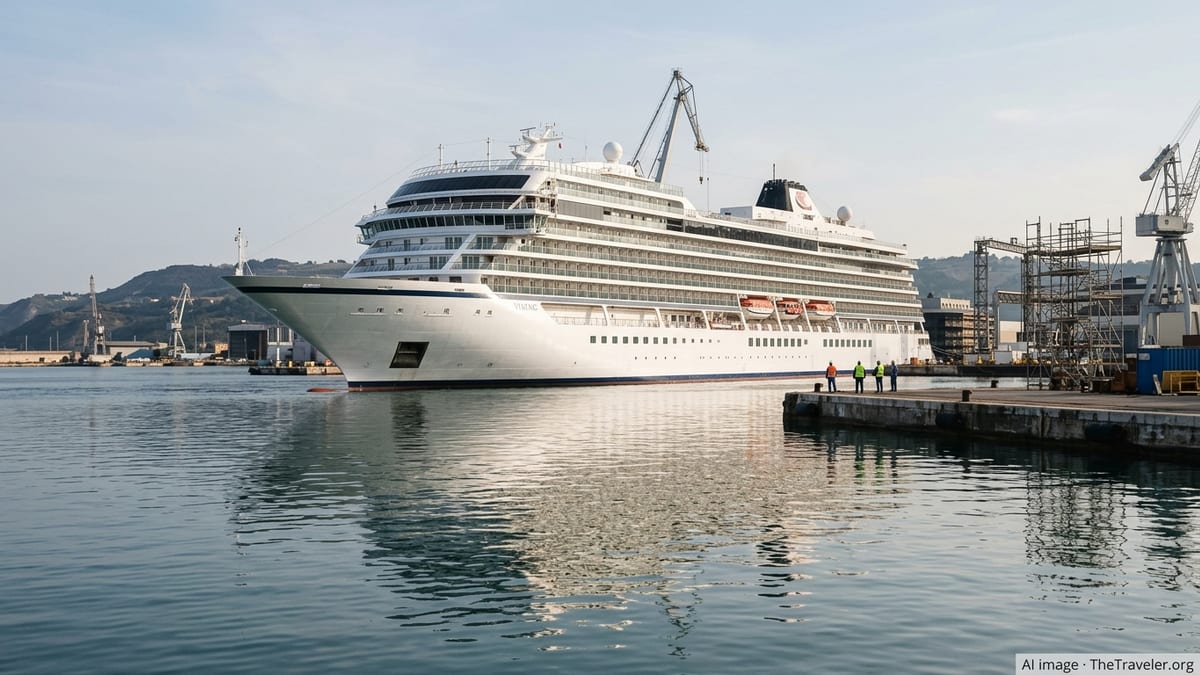
Italy’s Fincantieri shipyard in Ancona has staged the float-out of a new Viking ocean vessel designed to operate with hydrogen fuel cells, a development widely viewed as a potential breakthrough for low- and eventually zero-emission cruising on popular routes in the Mediterranean and Northern Europe.
Get the latest news straight to your inbox!
Float-Out in Ancona Showcases Hydrogen-Ready Design
The float-out at Ancona marks the first time a Viking ocean cruise ship with an integrated hydrogen fuel cell architecture has entered the water, following years of collaboration between Viking and Italian builder Fincantieri on cleaner propulsion concepts. Publicly available technical information indicates that the new ship follows the line’s established small-ship template, at around 54,000 gross tons with capacity for roughly 1,000 guests, but with significant upgrades in its power and emissions profile.
Reports on recent Fincantieri projects describe a modular energy plant in which conventional marine engines are combined with space, systems and safety provisions for hydrogen-based fuel cells. Earlier deliveries such as Viking Neptune incorporated a 100 kW test fuel cell, and the Ancona float-out is being viewed as the point where this research transitions into a platform intended for broader operational deployment on commercial voyages.
The float-out is a key milestone in any cruise ship’s construction, marking the shift from structural work in drydock to outfitting and systems integration afloat. In the case of Viking’s hydrogen-capable ship, this stage will include installation and testing of fuel cell modules, power management software and supporting safety systems designed to meet evolving international rules for alternative fuels.
Hydrogen Fuel Cells Aim to Cut Emissions at Sea and in Port
According to published coverage by specialist maritime and classification society outlets, Viking’s newest vessel has been configured so that hydrogen fuel cells can supplement the main power plant, targeting a progressive reduction in greenhouse gas emissions. In a mature configuration, the technology is expected to supply a significant share of hotel load and, over time, contribute to propulsion under specific operating profiles.
Hydrogen fuel cells generate electricity through an electrochemical reaction, with water as the primary by-product when green hydrogen is used. For cruise ships, this opens the possibility of operating silently and without local emissions while alongside in port or during low-speed coastal transits, where air quality concerns are most acute for destination communities in Italy, Greece, Croatia and other Mediterranean nations.
Industry analyses note that full zero-emission ocean cruising will depend on both vessel technology and shoreside fuel infrastructure. The Ancona-built Viking ship is described as “hydrogen-ready,” reflecting that large-scale adoption will rely on the availability of certified green hydrogen or derivative fuels in key embarkation ports, as well as harmonized safety codes governing storage and handling on board.
New Ship Targets Mediterranean and Northern Europe Routes
Viking’s latest ocean ship is scheduled to enter service on itineraries spanning the Mediterranean and Northern Europe, two regions where regulators and local communities are pressing cruise operators to reduce emissions and visual impact. Public itinerary information for sister ships suggests that the hydrogen-capable vessel will serve marquee ports such as Venice-area gateways, Dubrovnik, Piraeus for Athens, and popular islands in the Adriatic and Aegean.
In Northern Europe, the ship is expected to sail to Scandinavian capitals, the North Sea coastline and selected Baltic and British Isles destinations. These waters are at the forefront of stricter environmental rules, including limitations on sulfur oxides, nitrogen oxides and particulate matter, and growing calls to restrict conventional cruise calls in sensitive fjords and archipelagos.
By introducing a ship that can, in principle, operate with low or zero local emissions for parts of its voyages, Viking positions itself to respond to potential future port requirements for shore power or alternative fuels. The hydrogen-capable configuration may also provide flexibility to adapt as European Union climate policy and national regulations further tighten the framework for maritime greenhouse gas reductions.
Clean Maritime Innovation Accelerates in Italy
The float-out in Ancona underscores Italy’s strategic role in the transition to cleaner maritime technologies. Fincantieri has become a focal point for cruise industry innovation, from energy-efficient hull forms and advanced waste-heat recovery to experimental hydrogen and hybrid systems now being incorporated into large passenger vessels.
Italian shipyards are participating in a wider European push to decarbonize shipping, supported by research programs and classification rules that encourage the testing of low- and zero-emission solutions on commercial tonnage. The Viking project at Ancona is emerging as a high-profile reference, demonstrating that complex, high-comfort cruise ships can be designed from the keel up to accommodate hydrogen fuel cells and alternative energy carriers.
For local and regional stakeholders, the project brings skilled jobs and long-term know-how in clean maritime engineering. It also enhances the Adriatic coast’s reputation as a hub for next-generation passenger shipbuilding, with ripple effects for component suppliers, port development and related tourism infrastructure across Italy and beyond.
Implications for Cruise Travelers and Coastal Destinations
For travelers, the hydrogen-capable Viking ship is intended to deliver the line’s familiar onboard experience while lowering the environmental footprint of each voyage. Passengers are unlikely to notice the technical differences day to day, but marketing materials and sustainability reports are expected to highlight quieter operation, advanced energy systems and the potential to support cleaner air in port cities.
Coastal destinations in the Mediterranean and Northern Europe are watching such projects closely as they balance tourism revenue with environmental and social pressures. Ports that can accommodate alternative-fuel ships and invest in compatible bunkering or shore power systems may gain a competitive advantage in attracting higher-value, lower-impact cruise calls.
While the global cruise fleet still relies predominantly on conventional fuels, the float-out of Viking’s Ancona-built hydrogen-capable ship signals that a new class of vessels is emerging. As more itineraries incorporate ships designed around alternative energy and emissions reduction, the prospect of cleaner maritime travel across Europe moves from long-term ambition toward practical reality for both operators and guests.