

More news on this day
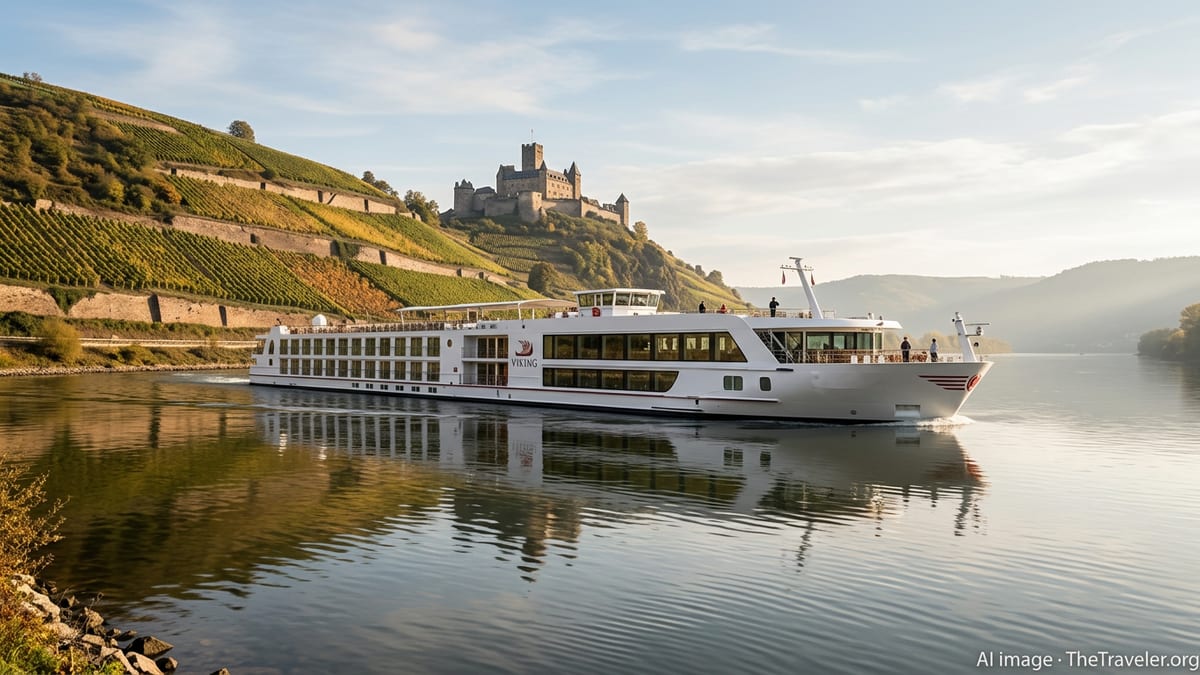
Viking has taken delivery of the Viking Eldir, a new 190-guest Longship built in Germany that will sail popular river itineraries across the Rhine, Main and Danube, underscoring the company’s accelerating growth in Europe.
Get the latest news straight to your inbox!
Delivery Ceremony at Neptun Werft in Germany
The newest Viking Longship was formally delivered this week at Neptun Werft in Rostock-Warnemünde, on Germany’s Baltic coast, where many of the company’s river vessels have been constructed. Shipyard representatives and Viking executives attended the presentation of Viking Eldir, marking the latest milestone in a long-running partnership between the builder and the cruise line.
The ceremony highlighted the ship’s role in Viking’s river strategy, with the Eldir joining a large class of near-identical sister ships that have become a familiar sight on Europe’s inland waterways. Registered for service in Europe, the vessel will soon reposition to the heart of the continent’s river network ahead of its inaugural season with guests.
Company founder and chairman Torstein Hagen used the occasion to reiterate Viking’s emphasis on destination-focused travel, noting that the line’s exclusive docking locations on major rivers allow its smaller ships to berth close to historic city centers. With the addition of Viking Eldir, he said, even more travelers will be able to experience those ports in what the brand calls “Viking comfort.”
Design Features of the New Viking Eldir
Viking Eldir carries 190 guests in 95 staterooms, consistent with the standard Longship layout that has defined the brand’s river product in Europe. The ship was engineered specifically to navigate the locks, low bridges and seasonal water conditions found on the Rhine, Main and Danube, where careful dimensions and shallow draft are essential.
On board, the vessel showcases Viking’s familiar Scandinavian design language, characterized by clean lines, light woods and a muted color palette that emphasizes natural light. Public spaces include the indoor-outdoor Aquavit Terrace at the bow, which allows guests to dine and relax with views of riverfront scenery in both warm and cooler weather.
Technical features include a space-saving square bow and asymmetric corridor configuration that help maximize interior space within the strict length and width limits of European locks. The ship also offers a selection of true two-room suites as well as French balcony and veranda stateroom categories, aiming to bring an ocean-cruise level of comfort to a river format.
Itineraries on the Rhine, Main and Danube
Once fully introduced into service, Viking Eldir will operate several of Viking’s highest-demand river itineraries in Central and Eastern Europe. These include the Rhine Getaway route between Amsterdam and Basel, which links storybook towns, vineyard-lined slopes and major cultural centers along one of Europe’s busiest waterways.
The ship is also scheduled to join longer combinations such as the Grand European Tour, which connects the Rhine, Main and Danube in a single extended journey between the North Sea and the banks of Eastern Europe. Additional deployments are planned on itineraries like Passage to Eastern Europe and European Sojourn, further increasing Viking’s capacity on routes that frequently sell out in peak season.
Seasonal holiday sailings are part of the program as well. Viking Eldir is expected to feature on Christmas on the Rhine departures, bringing guests to traditional Christmas markets in German and French river cities, a segment that has become an important driver of late-year demand on the Rhine corridor.
Strengthening Viking’s Leadership in River Cruising
The arrival of Viking Eldir comes at a time when Viking’s broader fleet growth is accelerating across river, ocean and expedition segments. The company has reported that it surpassed 100 ships in 2025 and has dozens more on order into the next decade, while maintaining a focus on small-ship, destination-centric travel rather than mass-market cruising.
On the rivers specifically, Viking continues to operate the world’s largest fleet of river cruise vessels and is investing heavily in additional Longships for Europe. Based on its current orderbook, the line expects to take delivery of more than 20 new river ships by 2028, ensuring that its capacity keeps pace with sustained demand from North American and European travelers for cultural itineraries along the continent’s inland waterways.
Viking’s river product has been recognized repeatedly in major reader surveys and industry awards, helping to reinforce its brand position as it adds ships like the Eldir. Strong advance bookings for the 2026 season suggest that the additional capacity provided by the new Longship will be quickly absorbed, particularly on flagship itineraries that already operate at high occupancy.
Germany’s Role in Viking’s Ongoing Expansion
Germany remains central to Viking’s river operations and shipbuilding plans, and the debut of Viking Eldir at Neptun Werft underlines that connection. The country sits at the crossroads of Europe’s inland waterways, with key stretches of the Rhine and Main providing access to both the North Sea and the Danube via the Main-Danube Canal.
For German ports and shipyards, Viking’s continued investment translates into long-term employment and steady orderbooks. Neptun Werft has become a specialist in river cruise construction and refurbishment, and recent contracts for additional Viking vessels mean the yard’s river-focused production lines will remain active for years to come.
For travelers, the new Longship’s arrival means a wider range of departure dates and cabin choices on classic German-inclusive routes, from castle-dotted stretches of the Middle Rhine to cultural capitals such as Cologne, Frankfurt and Nuremberg. Viking Eldir’s introduction in Germany, and its deployment across the Rhine, Main and Danube, signals that the company’s river ambitions in Europe are still very much in full flow.