

More news on this day
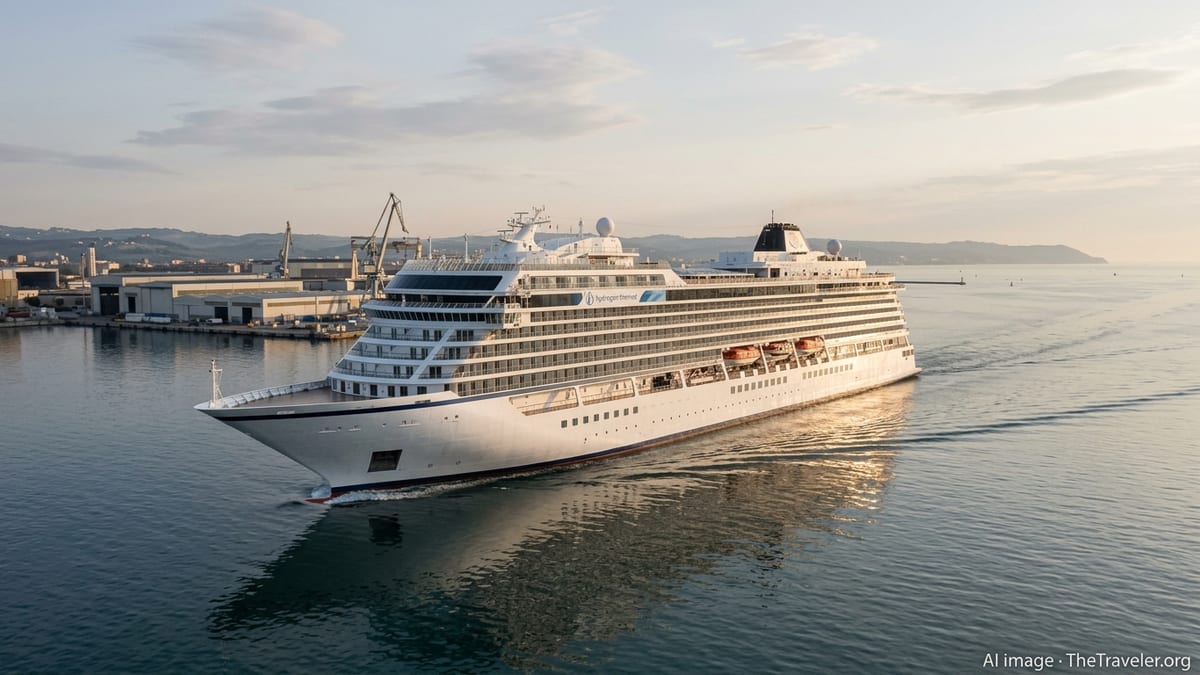
Viking Libra, a 54,300‑gross‑ton cruise ship being built in Italy, is emerging as a pivotal test case for hydrogen at sea, widely described in industry reports as the world’s first hydrogen-powered cruise ship and a potential template for lower-emission ocean travel.
Get the latest news straight to your inbox!
Hydrogen Milestone for Ocean Cruising
Shipbuilder Fincantieri and cruise company Viking are collaborating on Viking Libra at the Ancona shipyard on Italy’s Adriatic coast. Technical papers and trade publications describe the vessel as the first cruise ship designed to use hydrogen stored on board to supply part of its propulsion and hotel power needs, positioning it at the forefront of maritime decarbonization efforts.
Industry analysis indicates that Viking Libra will pair conventional marine engines with a hydrogen fuel cell system integrated into a hybrid power plant. This configuration is intended to allow the ship to operate for portions of a voyage using electricity generated from hydrogen rather than from fossil fuels, significantly cutting direct greenhouse gas emissions during those periods.
Recent coverage of the project notes that the ship is being viewed within the sector less as a one-off experiment and more as a scalable platform. Lessons from Viking Libra’s design, construction, and early operations are expected to inform future cruise ship orders and retrofits as operators face tightening climate regulations and growing public scrutiny over pollution in port cities and fragile coastal regions.
How Viking Libra’s Hydrogen System Works
Technical documentation from classification and engineering sources describes Viking Libra as incorporating liquefied hydrogen storage feeding fuel cell modules capable of generating multiple megawatts of power. The hydrogen system will work in concert with large battery packs and traditional engines, creating an energy management architecture that can shift between fuels according to operational needs.
Reports indicate that the fuel cells are designed to cover both propulsion at low to moderate speeds and so‑called “hotel loads,” the substantial electricity demand for cabins, restaurants, lighting, and air conditioning. By using hydrogen for these high-consumption phases, particularly in and near ports, the ship can sharply reduce local air pollutants such as nitrogen oxides and particulate matter compared with conventional diesel-driven generators.
Available information suggests that the ship will not run on hydrogen alone for an entire long‑distance itinerary. Instead, hydrogen is expected to provide a significant share of power during sensitive legs of a voyage, such as sail‑ins to fjords or historic harbors, while conventional fuel remains available for higher-speed ocean crossings. The hybrid approach reflects both the current cost and limited availability of hydrogen bunkering infrastructure.
Setting a New Benchmark for Cruise Sustainability
Cruise tourism has come under pressure from coastal communities and regulators because of emissions and crowding, particularly in popular destinations in Northern Europe and the Mediterranean. Against this backdrop, analysts describe Viking Libra as a flagship project that could reset expectations for what constitutes best practice in sustainable ship design.
Maritime engineering journals report that the vessel is being outfitted to interface with shore power where available, allowing it to plug into local grids instead of running engines while berthed. Combined with the hydrogen fuel cell system and advanced waste heat recovery, Viking Libra is being positioned as significantly more efficient, on a per-passenger basis, than many existing large cruise ships.
Environmental organizations tracking shipping emissions have highlighted that hydrogen’s climate benefit depends on how it is produced. Commentary on the project notes that if Viking Libra is ultimately supplied with “green” hydrogen generated from renewable electricity, lifecycle emissions could be far lower than for conventional marine fuels. If the hydrogen is made from natural gas without carbon capture, however, upstream emissions could erode much of the climate advantage, underscoring the need for transparent sourcing.
Hydrogen at Sea: Opportunities and Constraints
The cruise sector’s interest in Viking Libra reflects a wider maritime push to test alternative fuels, including hydrogen, methanol, ammonia, and bio-LNG. Analysts point out that hydrogen offers the appealing prospect of zero carbon and zero particulate emissions at the point of use, but it presents engineering and logistical challenges, especially for large passenger ships that require vast amounts of energy over long distances.
Technical commentary on hydrogen ships highlights storage as a central constraint. Liquefied hydrogen must be kept at extremely low temperatures and occupies more space than conventional fuel for the same energy content. Designers of Viking Libra have had to accommodate cryogenic tanks and safety systems while preserving passenger amenities and cabin capacity, an exercise closely watched by naval architects worldwide.
Safety standards are another focus area. Although fuel cells have no combustion processes, hydrogen’s flammability requires careful management of ventilation, leak detection, and segregation of fuel systems from public spaces. Published design notes on hydrogen demonstrator vessels suggest that Viking Libra will contribute to the body of operational experience that regulators and classification societies can use to refine rules for future projects.
A Test Case for the Future of Green Cruising
Financial filings and industry briefings indicate that Viking Libra is part of a broader series of next-generation ships ordered by Viking, some of which are described as having propulsion systems partially based on liquefied hydrogen. The line’s strategy appears to involve gradually increasing the share of alternative fuels and electrification across its fleet as technologies and supply chains mature.
Port authorities and regional tourism bodies in Northern Europe and the Mediterranean are watching such developments as they shape their own climate commitments. Some destinations are beginning to differentiate between ships according to their emissions profile, with the potential in the medium term for preferential access or fee structures that reward vessels like Viking Libra that can operate with sharply reduced local pollution.
For travelers, Viking Libra represents an early opportunity to experience a mainstream cruise product that embeds emerging clean technology at its core. While the ship will not make cruising impact‑free, its hydrogen-based systems, hybrid power plant, and port-focused emissions reductions mark a tangible shift in how new tonnage is conceptualized. As the vessel moves from construction to sea trials and regular service, its real‑world performance is likely to influence investment decisions across the global cruise industry.