

More news on this day
Viking Libra, described in company and shipyard materials as the world’s first hydrogen-powered cruise ship, has completed its float out in Ancona, Italy, marking a major step toward planned near zero-emission voyages across the Mediterranean and Northern Europe from 2026.
Get the latest news straight to your inbox!
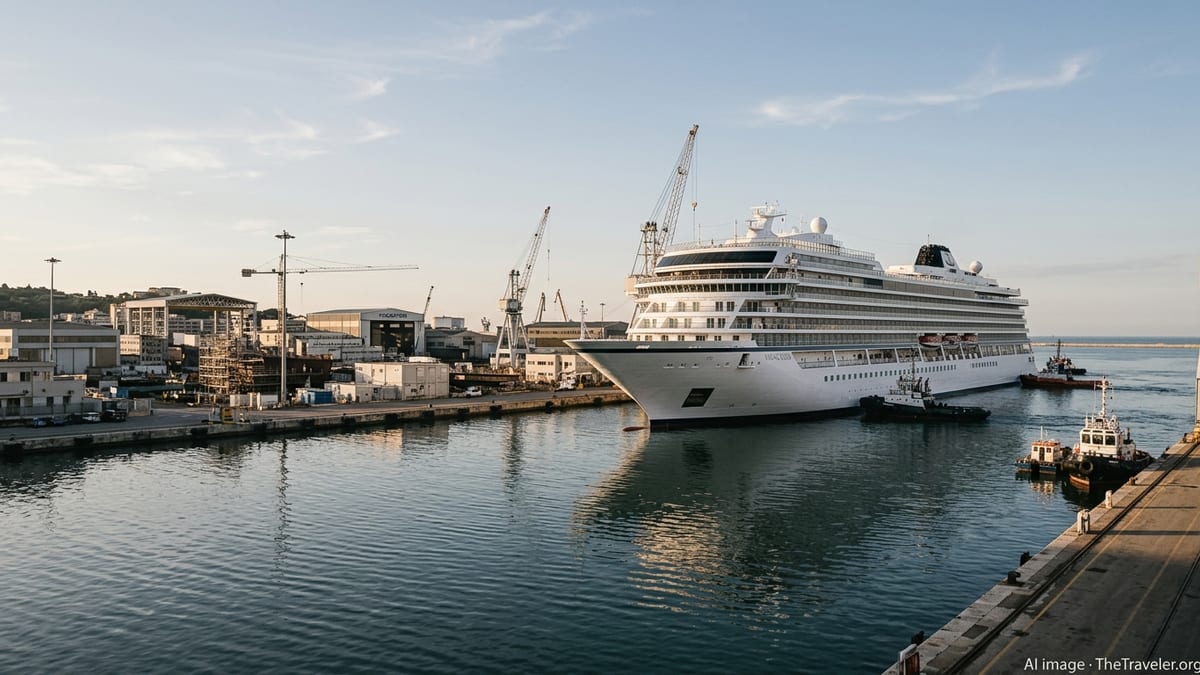
World’s First Hydrogen Cruise Ship Enters the Water
The float out of Viking Libra at Fincantieri’s Ancona shipyard moves the vessel from dry dock to water for the first time, beginning its final outfitting phase ahead of delivery expected in late 2026. Publicly available information from Fincantieri and Viking indicates that the ship is being built as part of a wider collaboration to introduce hydrogen technologies to mainstream ocean cruising.
Shipyard documentation describes Viking Libra as a 54,300-gross-ton ocean vessel, around 238 meters in length, designed to carry just under 1,000 guests. The float out is considered a key construction milestone, allowing work to shift from heavy structural tasks to interior installation, systems integration and extensive testing of its hydrogen and electric power plant.
The project is being closely watched by the maritime and tourism sectors, as it represents one of the first attempts to scale hydrogen fuel cells for a large, international cruise ship. Analysts note that successful commissioning of Viking Libra could influence how quickly similar technologies spread across long-duration passenger routes.
Hydrogen and Electric Systems Aim for Near Zero Emissions
Technical briefs and industry reports indicate that Viking Libra will combine traditional marine engines with an advanced hydrogen fuel cell system, positioning the vessel to operate for extended periods with zero direct emissions when running on hydrogen and electricity. Fincantieri has highlighted the installation of hydrogen storage and fuel cell modules developed and tested at specialized facilities in Italy.
The ship is expected to use liquid or compressed hydrogen stored in dedicated tanks, supplying proton exchange membrane fuel cells that generate electricity for propulsion and onboard services. This arrangement is designed to complement highly efficient engines and a sophisticated energy management system, allowing operators to prioritize hydrogen use in ports and environmentally sensitive areas.
Materials released by the shipbuilder describe Viking Libra as a pilot platform for scalable hydrogen solutions, with systems engineered to be modular and upgradeable as fuel supply chains and regulations evolve. Maritime engineers suggest that the configuration could allow future retrofits to increase the share of power drawn from hydrogen as infrastructure improves.
Mediterranean and Northern Europe Voyages Planned from 2026
Scheduling information from cruise deployment listings shows Viking Libra slated to begin service in late 2026, with initial itineraries focused on the Mediterranean and Northern Europe. These regions are seen as key proving grounds for low-carbon cruising, thanks to dense port networks, active regulatory frameworks and growing passenger interest in environmental performance.
In the Mediterranean, the ship is expected to call at major cruise hubs such as Italian, French and Spanish ports, where shoreside infrastructure and shorter sailing distances can support efficient hydrogen and battery operations. Northern European sailings are anticipated to include routes along the Atlantic coasts and into the North and Baltic Seas, areas where stricter emission controls and green-corridor initiatives are already influencing ship design.
Travel industry observers point out that positioning the first hydrogen-powered cruise ship in these waters aligns with port authority plans to expand alternative fuel bunkering and onshore power. The deployment is likely to provide one of the earliest real-world test cases for hydrogen-compatible port logistics along established cruise routes.
Implications for Cruise Tourism and Sustainability
The debut of Viking Libra comes as the cruise sector faces increasing pressure to cut greenhouse gas emissions and air pollutants. Environmental organizations and industry groups have identified hydrogen fuel cells, alongside advanced biofuels and battery systems, as potential pathways toward climate targets for international shipping.
Publicly available environmental roadmaps from cruise lines and shipyards frame Viking Libra as a bridge between current low-sulfur, high-efficiency ships and future fully climate-neutral fleets. By demonstrating hydrogen operations at scale in regular passenger service, the vessel could help clarify technical, regulatory and economic conditions needed for wider adoption.
For travelers, the ship’s entry into service is expected to expand options for lower-impact cruising without abandoning the amenities associated with modern ocean voyages. Marketing materials and early briefings emphasize quieter operations, reduced stack emissions and the ability to access ports that may tighten restrictions on conventional fossil-fuelled tonnage.
Next Steps in Outfitting and Testing
Following the float out, Viking Libra will remain at the outfitting quay in Ancona for several months of interior construction and system integration. This phase typically includes the installation of guest accommodations, public spaces, restaurants and wellness areas, as well as final work on navigation, safety and hotel systems.
Sea trials in 2026 are expected to play a crucial role in validating the performance of the hydrogen and electric propulsion package under real operating conditions. Maritime testing protocols are likely to cover fuel handling, redundancy, emergency procedures and emissions monitoring, alongside conventional assessments of speed, maneuverability and comfort.
Industry reports also point to the development of a second hydrogen-capable sister ship, indicating that the Libra platform may become a small class within the Viking fleet. As these vessels move from design drawings to active service, their progress is set to become a bellwether for the feasibility of hydrogen-powered cruising on popular European routes.