

More news on this day
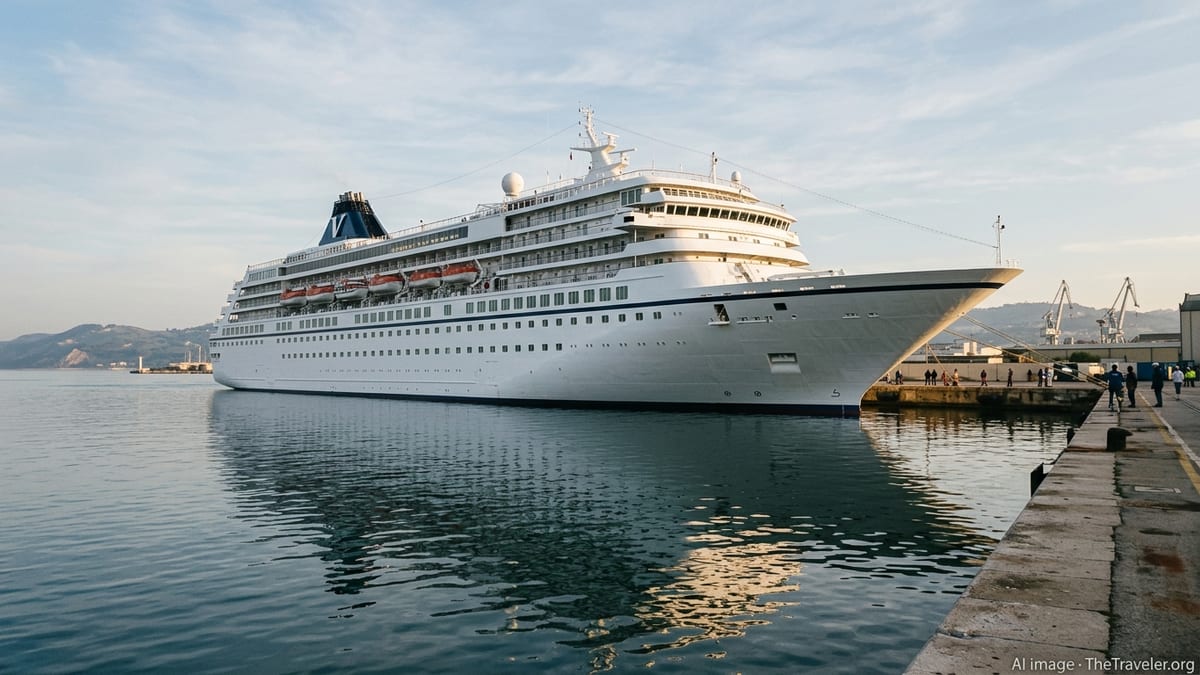
Viking Libra, described in publicly available documents as the world’s first hydrogen-powered cruise ship capable of operating with zero emissions, has floated out from Fincantieri’s Ancona shipyard in Italy, marking a milestone moment for the cruise industry’s shift toward cleaner propulsion.
Get the latest news straight to your inbox!
A Float Out That Signals a New Era
The float out of Viking Libra at Ancona in March 2026 moves the vessel from dry dock into the water for the first time, a key step that typically precedes final outfitting and sea trials. Industry coverage indicates the ship is now entering an intensive phase of interior work, systems integration and testing ahead of its planned delivery in late 2026.
Classified as a small ocean ship, Viking Libra will join Viking’s existing fleet of similarly sized vessels, but with a propulsion concept that is markedly different from conventional cruise tonnage. The float out underscores how far the hydrogen project has advanced from design studies and component testing to a full-scale ocean-going ship.
The ceremony in Ancona also highlights the role of Italian shipbuilding in the global push for greener maritime technologies. The yard has already delivered several energy-efficient ships for Viking, but Libra is viewed as a flagship project demonstrating that hydrogen fuel cells can be scaled up for mainstream cruise service.
Hydrogen and Fuel Cells at the Core
According to technical information shared by Viking and Fincantieri, Viking Libra will use a hybrid propulsion arrangement that combines liquefied hydrogen with fuel cells and conventional power systems. The hydrogen-based section of the plant is expected to generate up to six megawatts of power, enough to enable zero-emission operation in designated modes.
The ship will store liquid hydrogen on board in specialized containers linked to polymer electrolyte membrane fuel cells supplied by Isotta Fraschini Motori, a Fincantieri subsidiary. When operating on hydrogen, the fuel cells are designed to produce electricity with water as the primary byproduct, eliminating carbon dioxide and dramatically cutting local air pollutants in sensitive coastal areas.
The system builds on years of incremental trials with smaller fuel cell installations on earlier Viking vessels. Publicly available material indicates that Viking Libra is the first time this technology has been integrated as a central element of an ocean cruise ship’s power plant, signaling a step change in ambition from pilot projects to commercial deployment.
Designed for Zero-Emission Operation in Sensitive Waters
Corporate filings and sustainability updates describe Viking Libra’s hydrogen capability as a response to tightening environmental rules in regions such as the Norwegian fjords and other protected marine areas. The ship is expected to be able to switch into a dedicated zero-emission mode, allowing it to meet forthcoming requirements that will restrict or phase out conventional fossil-fueled cruise ships in those waters.
By pairing hydrogen fuel cells with a broader suite of efficiency measures, the vessel is positioned as a testbed for low-impact cruising. Viking’s recent disclosures highlight decisions to avoid investments in liquefied natural gas in favor of hydrogen-based solutions, reflecting concerns about methane emissions and the long-term climate profile of LNG-powered ships.
The move also aligns with wider maritime efforts to decarbonize deep-sea transport. While battery-electric solutions dominate on short coastal routes and ferries, larger ocean-going ships require higher energy density. Hydrogen and its derivatives are emerging as one of the main contenders to bridge that gap, even as questions remain about fuel sourcing, infrastructure and cost.
Capacity, Comfort and Familiar Viking Design
Despite the groundbreaking propulsion system, Viking Libra maintains the brand’s established approach to onboard experience. Public specifications indicate a gross tonnage of around 54,300 and 499 staterooms for approximately 998 guests, closely aligned with other Viking ocean ships already in service.
The layout is expected to echo the line’s existing Scandinavian-inspired design, with an emphasis on balcony accommodations, open public spaces and destination-focused amenities rather than large-scale amusement features. This continuity allows the new ship to blend into Viking’s fleet from a guest perspective, while its engineering differs significantly below decks.
For ports and destinations, the arrival of a hydrogen-capable ship of this size may offer a practical example of how environmental performance and upscale cruising can be combined. Viking Libra’s relatively modest scale compared with the largest megaships may also prove advantageous for accessing smaller ports that are sensitive to both crowding and emissions.
Setting a Competitive Benchmark for Green Cruising
Viking Libra is scheduled to be followed by Viking Astrea, another hydrogen-powered ship under construction and targeted for delivery in 2027. Together, they form part of a broader expansion plan that could bring Viking’s ocean fleet past 20 ships by the early 2030s, with sustainability framed as a core differentiator.
For the wider cruise sector, the float out in Ancona establishes a tangible benchmark. Rival lines have invested heavily in LNG and exhaust gas treatment systems, but a functioning hydrogen-powered cruise ship may shift expectations about what is technically and commercially feasible in the race toward net-zero targets.
Industry analysts note that many questions still need to be addressed, from global hydrogen supply chains and bunkering logistics to the carbon intensity of hydrogen production itself. Nonetheless, the physical presence of Viking Libra in the water rather than on paper sends a clear signal that the transition to zero-emission cruising is no longer an abstract aspiration but a visible, steel-and-hydrogen reality.