

More news on this day
Italy’s Adriatic shoreline is emerging as a testbed for a new generation of low‑impact cruise tourism, as the hydrogen-capable Viking Libra moves through final construction in Ancona and positions itself to attract affluent travelers to coastal cities keen to balance economic growth with sustainability.
Get the latest news straight to your inbox!
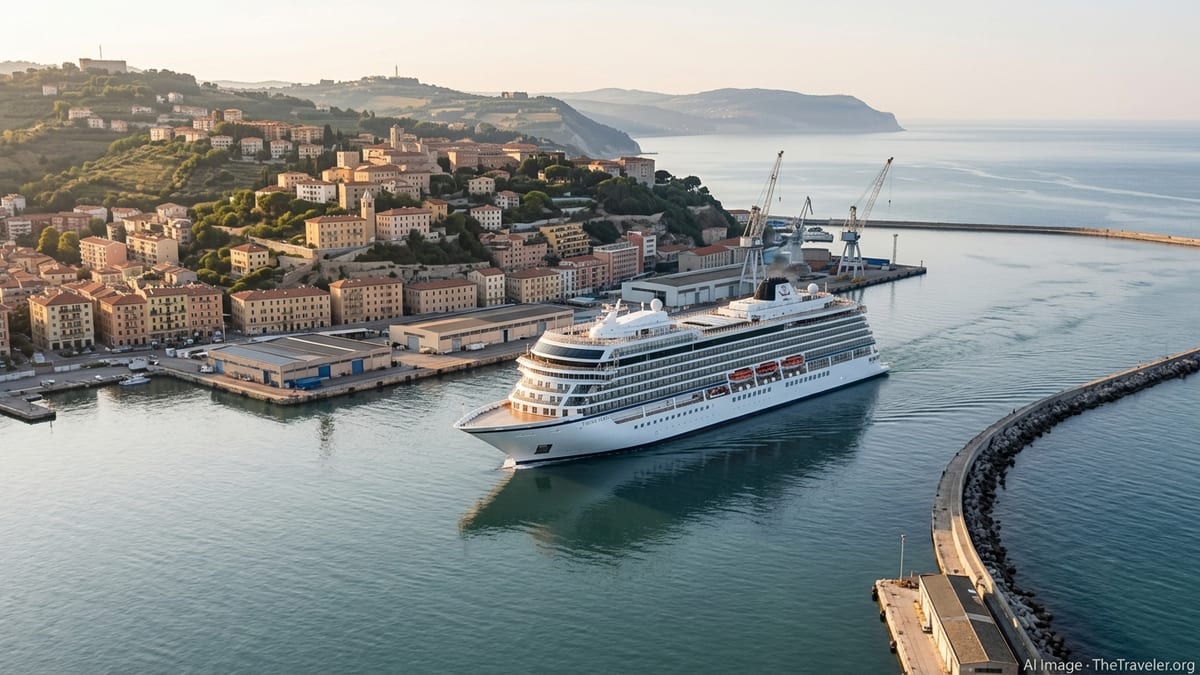
Hydrogen-Powered Flagship Takes Shape in Ancona
Publicly available information from Fincantieri and Viking indicates that Viking Libra is being built at the Fincantieri shipyard in Ancona, on Italy’s central Adriatic coast. The 54,300‑gross‑ton vessel, approximately 239 meters in length and designed for around 998 guests in 499 staterooms, is described as the world’s first cruise ship capable of operating on hydrogen stored onboard for both propulsion and onboard power.
The ship’s advanced fuel-cell system, reported to be able to generate up to six megawatts of power, is designed to allow periods of zero‑emission operation. Industry coverage notes that this capability is expected to be particularly valuable when navigating environmentally sensitive areas or while berthed in port, where conventional exhaust and noise are increasingly under scrutiny.
The project has recently passed a key milestone, with specialist coverage and industry observers reporting that Viking Libra has completed its float‑out from the construction dock in Ancona. The move into the water marks the transition from structural work to interior outfitting and systems integration, putting the vessel on track for a late‑2026 delivery.
For Ancona and the wider central Adriatic, the high‑profile build underscores Italy’s role at the center of a technological shift in cruise ship design. The city’s shipyard has already hosted multiple Viking newbuilds, and the Libra project reinforces the region’s reputation as a hub for advanced, small‑ship luxury tonnage.
Premium Small-Ship Design Targets Italy and the Mediterranean
Industry data shows that Viking Libra shares core design principles with other Viking ocean ships, following a small‑ship model that favors under‑1,000‑passenger capacity, veranda cabins and extensive public spaces over mega‑ship amenities. Cabin counts and layout details suggest an emphasis on balcony staterooms and suites, with interiors oriented toward minimalist Scandinavian design and expansive sea views.
Sample itineraries published by cruise agencies and promotional materials highlight routes that combine Italy with the Adriatic and Greece, positioning Libra as a premium platform for port‑intensive voyages. These programs typically feature overnight or full‑day calls in Italian cultural hubs, complemented by stops in Croatia and Greek islands that are accessible to smaller vessels.
The ship’s compact size relative to mainstream mega‑ships is expected to enable calls at ports that either cannot or prefer not to accommodate much larger vessels. This plays into a broader Mediterranean trend toward managing visitor volumes while maintaining the economic benefits of cruise calls. For destination managers in Italy, a ship like Viking Libra represents high spending per guest with a more controlled passenger footprint.
Within Viking’s broader fleet strategy, publicly available fleet lists show Libra joining a rapidly expanding group of ocean, river and expedition ships serving Europe. The company has stacked orders with Fincantieri and other builders into the next decade, with Libra standing out as the technology‑forward flagship for its Mediterranean‑focused offerings.
Economic Promise for Italian Coastal Cities
For Italian port cities, the arrival of a hydrogen‑capable small cruise ship promises a blend of economic upside and environmental mitigation. Analyses of cruise spending patterns in the Mediterranean consistently find that higher‑end, longer‑staying guests tend to spend more on local tours, dining and boutique shopping, particularly in historic centers.
Port authorities and regional tourism boards along Italy’s Adriatic and Tyrrhenian coasts have been signaling a desire to attract such traffic, as reflected in recent season outlooks published by networks like MedCruise. These outlooks point to a growing mix of traditional mass‑market lines and smaller luxury brands, with operators such as Viking increasingly visible in port schedules for Ancona and other central Adriatic gateways.
Viking Libra’s operating concept aligns closely with this strategy. The ship’s itineraries typically emphasize guided shore experiences that channel passengers into historic districts, museums and archaeological sites, often in shoulder seasons when coastal communities are seeking to extend tourism beyond peak summer months. That pattern fits with efforts by Italian regions to smooth seasonal swings and support local businesses year‑round.
The construction work in Ancona also delivers a direct economic effect before the ship ever carries a guest. Fincantieri’s reporting highlights order books with Viking extending to 2031 and beyond, helping sustain skilled employment across several Italian yards. Specialized suppliers in hydrogen systems, fuel cells and energy‑efficiency technologies are being drawn into the Italian maritime cluster as a result of projects such as Libra.
Sustainability Credentials and Coastal Protection
The environmental profile of Viking Libra is central to its narrative and to the tourism potential it brings to Italy’s coastline. Technical descriptions released by Fincantieri and industry publications indicate that the ship is designed to run on hydrogen in combination with advanced fuel cells, battery systems and efficient conventional engines, enabling low‑ or zero‑emission operations for significant portions of a voyage.
In practical terms, this mix is intended to reduce greenhouse gas emissions, particulate matter and nitrogen oxides, particularly when the ship is maneuvering in ports or spending hours alongside city waterfronts. Ports along Italy’s coasts, from larger hubs to smaller heritage harbors, are increasingly attentive to air quality, noise and wake impacts, especially where cruise terminals sit close to residential districts and historic sites.
The ship’s size and technical capability may help it comply with tightening European environmental regulations and local guidelines that are reshaping cruise access in parts of the Mediterranean. Observers note that hydrogen‑ready and hybrid power systems are fast becoming a differentiator for new vessels seeking priority berthing and long‑term partnerships with sustainability‑focused ports.
As Italy continues to position itself as a leader in maritime decarbonization, Viking Libra provides a high‑visibility case study. The ship showcases how advanced propulsion can be paired with a luxury product that still delivers the coastal access and comfort demanded by international travelers, without repeating the high‑emission profile associated with previous generations of cruise vessels.
Repositioning Italy as a High-End Gateway to the Adriatic
Once delivered, Viking Libra is scheduled to enter commercial service in late 2026, with trade publications pointing to an initial program using Piraeus in Greece as a key homeport before the vessel settles into Western Mediterranean and Northern Europe routes. Given Italy’s central position on these itineraries, ports on both the Adriatic and Tyrrhenian coasts are expected to feature prominently in the ship’s deployment.
Published itineraries across Viking’s ocean fleet already highlight Venice alternatives, Adriatic cities and smaller Italian ports that offer access to UNESCO‑listed old towns and wine regions. Libra’s small‑ship profile suggests that demand for these itineraries could help spread visitor traffic beyond the most heavily touristed centers and into lesser‑known destinations with capacity for growth.
For regional planners and destination marketers, the ship’s profile provides an opportunity to reset the narrative around cruise tourism in Italy. Instead of focusing on high‑volume day calls, the emphasis is shifting toward smaller ships, longer port stays and curated experiences that foreground culture, gastronomy and local guides.
With Viking Libra now afloat in Ancona and progressing toward delivery, Italy’s coastline stands to gain a showcase for this evolving model. The vessel’s blend of hydrogen‑enabled propulsion, small‑ship luxury and culturally rich itineraries offers one template for how Mediterranean cruise tourism might pursue growth while remaining compatible with fragile coastal environments and historic cityscapes.