

More news on this day
Viking is preparing to resume its flagship Nile River cruises between Cairo and Luxor after a short, high-profile halt triggered by confusion over the latest U.S. security guidance for Egypt and the wider Middle East.
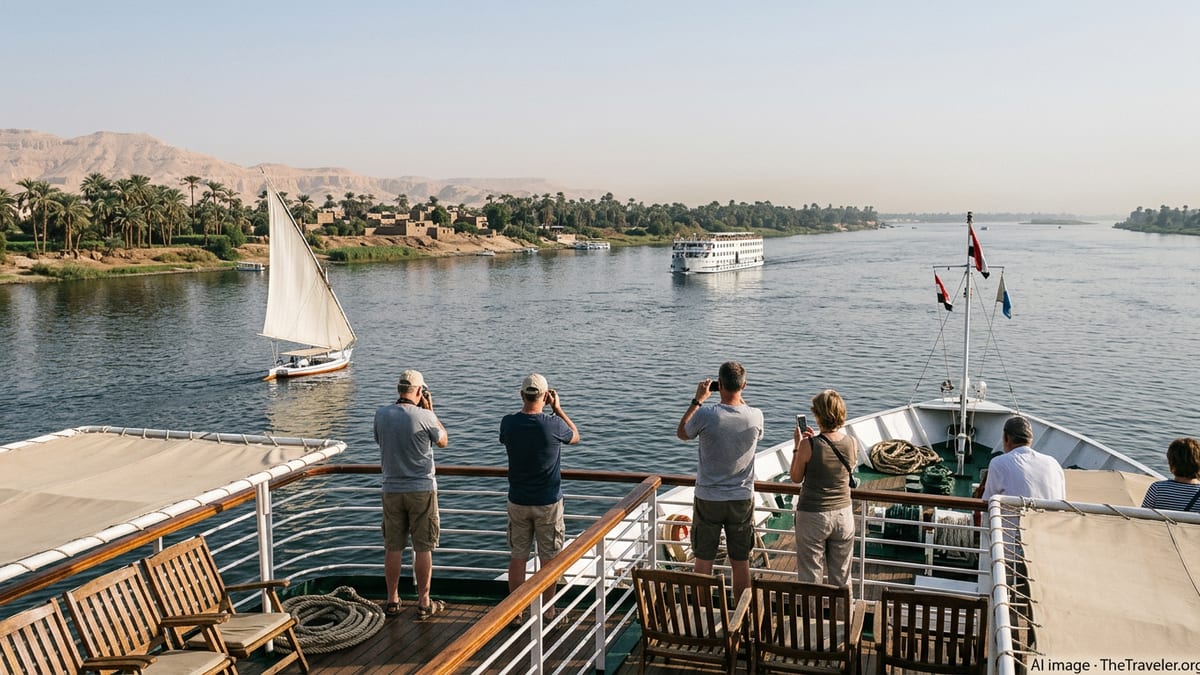
Brief Pause on the Nile After Middle East Security Alerts
Viking temporarily paused its Egypt river operations in early March, just as fresh global security alerts heightened anxiety around travel across the Middle East. The decision affected its popular Pharaohs & Pyramids itinerary, which combines time in Cairo with a cruise between Luxor and Aswan, and left many travelers scrambling to rework spring holiday plans.
The pause came in the wake of a new worldwide caution from the U.S. Department of State on February 28, advising Americans to be vigilant amid escalating tensions involving Iran and its neighbors. For some travelers and travel advisors, the broad wording of the alert, combined with existing regional conflicts, was interpreted as an effective signal to avoid nonessential trips to the region altogether, including to Egypt.
Industry observers say that in the days that followed, major river cruise brands and tour operators weighed fast-moving security assessments, airspace changes and client sentiment. Several companies opted to suspend Nile sailings through March, a move that rippled across Egypt’s tourism sector, particularly in Cairo, Luxor and the Nile Valley, where river cruising supports a dense ecosystem of hotels, guides and local businesses.
Clarified U.S. Advisory Shows No New Egypt-Specific Warning
As the initial shock of the global alerts settled, closer scrutiny of country-by-country guidance revealed that Washington’s risk assessment for Egypt itself had not fundamentally changed. The State Department’s Egypt advisory remains at Level 2, “exercise increased caution,” with long-standing Level 4 “do not travel” warnings confined to the Northern and Middle Sinai Peninsula, parts of the Western Desert and sensitive border zones, rather than Cairo, Luxor or the main Nile cruise corridor.
That nuance was initially lost amid headlines about broader Middle East danger and calls for Americans to leave certain neighboring countries. The resulting confusion prompted concern in Cairo, where officials and tourism stakeholders argued that key visitor hubs remain heavily secured and far removed from active conflict zones. Travel analysts note that while regional risk has clearly risen, the underlying advisory language for Egypt’s main tourism heartland remains consistent with guidance that has been in place for several years.
Travel advisors report that once clients understood that the Egypt-specific rating had not shifted to a higher tier, questions became more focused on practical safety management rather than wholesale trip cancellations. Attention has turned to flight reliability, potential airspace disruptions and the importance of flexible booking terms, rather than to an assumption that the Nile itself has suddenly become off limits.
Viking Sets March 12 Restart for Iconic Nile Itineraries
Following an internal reassessment, Viking has now confirmed that its Nile voyages are slated to resume from March 12, restoring one of the line’s highest-profile bucket-list products. In a statement, the company said that official travel advisories had been clarified and that the current advisory for Egypt remains unchanged from levels that applied before the most recent regional flare-up.
The restart covers the cruise component of the Pharaohs & Pyramids program, which pairs stays in Cairo with visits to the Giza Pyramids and the Egyptian Museum before guests fly south to board Viking’s purpose-built river vessels for visits to Luxor’s temples and the Valley of the Kings. Viking has emphasized that it will continue to monitor conditions closely and adjust future departures if required, but for now it expects itineraries after March 12 to operate as scheduled.
Travel industry analysts see the move as a signal that, at least for now, operators consider the security and logistical environment in core Nile tourism zones sufficiently stable to support a controlled return. It also underscores the company’s confidence in local partners, including security providers and ground agents in Cairo and Luxor, who play a central role in managing movements on shore excursions and transfers.
Mixed Picture for Egypt’s Cruise and Tour Market
Not all operators are moving as quickly as Viking to restore full programs. Some river cruise and tour companies have extended pauses on Egypt departures into late March, citing a desire to wait out potential aftershocks from recent military developments in the region. Others are proceeding with reduced capacity or modified itineraries that build in greater flexibility around flights and pre- or post-cruise land stays.
The result is a patchwork landscape of policies that can be confusing for travelers comparing options. In Luxor and Cairo, hoteliers and local guides say the on-again, off-again nature of international bookings has complicated staffing and planning. While Egypt’s tourism industry has become practiced at navigating geopolitical swings, the latest disruption arrives just as the country was counting on a robust spring season.
Regional travel advisories outside the United States add another layer. Some governments now urge their citizens to reconsider nonessential travel to parts of Egypt, including Cairo and the Nile Valley, largely because of the possibility of spillover from conflicts elsewhere in the Middle East and the risk of airspace closures. That divergence in official guidance can leave multinational travel parties facing different insurance conditions and risk thresholds, even when booked on the same sailing.
What Travelers Need to Know Before Sailing Between Cairo and Luxor
For American travelers weighing a Nile cruise in the coming weeks, experts stress the importance of separating perception from policy. The current U.S. advisory for Egypt remains at a moderate Level 2 for most tourist areas, meaning travelers are urged to exercise increased caution but are not told to avoid the country outright. The most stringent “do not travel” warnings continue to apply only to specific regions far from mainstream Nile cruise routes.
Security specialists recommend registering with the State Department’s traveler enrollment program so that embassy staff in Cairo can reach U.S. citizens rapidly if conditions change. They also urge travelers to monitor airline updates closely, build buffer time into itineraries in case of schedule disruptions and ensure that travel insurance includes robust coverage for both medical emergencies and trip interruption linked to security events.
Within Egypt, industry veterans say guests on organized programs such as Viking’s typically move within tightly managed bubbles, especially in Cairo and Luxor, with private transfers, vetted local guides and coordinated timing for visits to major sites. While no trip can be entirely risk free, many advisors argue that such structure, combined with Egypt’s heavy visible security presence around key attractions, helps keep actual risk in line with the current advisory level.
For now, the resumption of Viking’s Nile sailings from March 12 is being watched closely by the wider cruise and tour community as an early indicator of how quickly confidence will return. If operations proceed smoothly and regional tensions do not escalate further, tourism leaders in Cairo and Luxor hope the episode will be remembered less as the start of a prolonged shutdown and more as a brief, confusing interruption in one of the world’s classic river journeys.