

More news on this day
The Port of Dover is preparing to welcome Viking Vela as one of the headline ships opening its 2026 cruise season, marking a symbolic milestone for the UK’s booming ocean-cruise market and reinforcing Dover’s role as a key gateway between Northern Europe and the British Isles.
Get the latest news straight to your inbox!
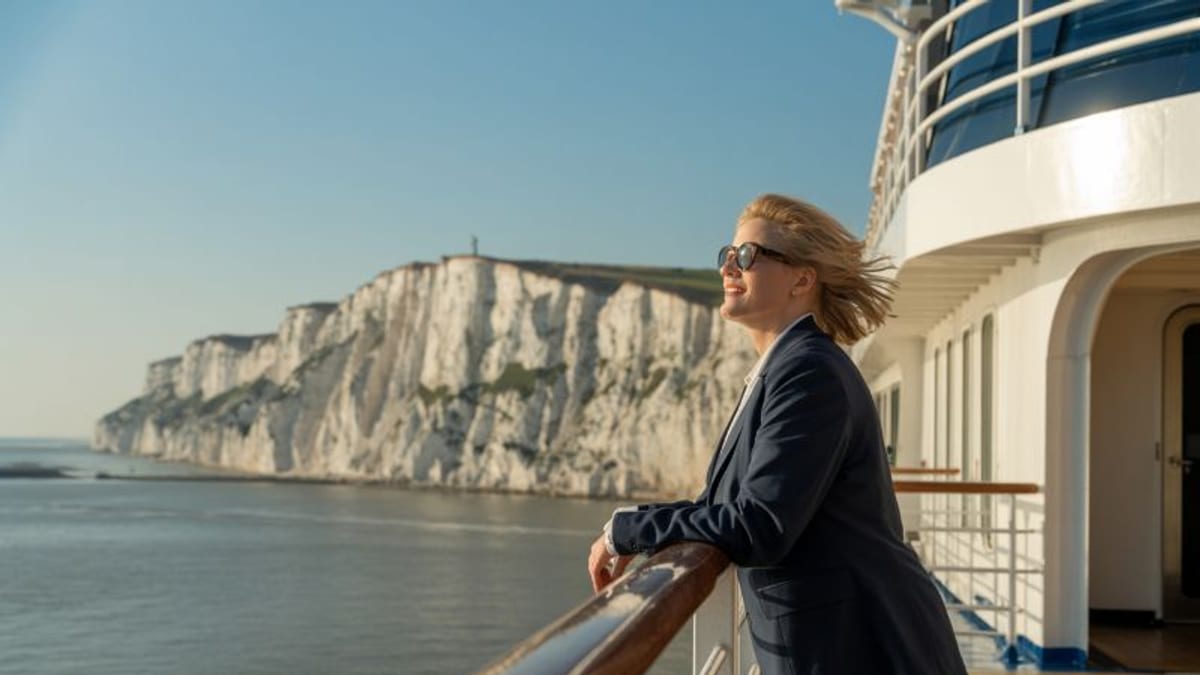
Image by International Cruise News: Latest Cruise Line & Cruise Ship News
A New Flagship Moment for the UK Cruise Market
Viking Vela, delivered in late 2024 and already active on Northern European routes, is scheduled across published cruise calendars as a regular caller to UK ports in 2026, with Dover positioned as one of its most high-profile English gateways. Publicly available schedules for several British and European ports show the ship operating a mix of North Sea, Atlantic and British Isles itineraries, underscoring how strongly the vessel is being integrated into the region’s cruise network.
Industry reporting on Viking’s order book indicates that Vela is the first in a slightly larger generation of Viking ocean ships, at around 54,300 gross tons and carrying close to 1,000 guests. The ship’s presence at Dover at the start of the 2026 season is being viewed by sector analysts as a sign of confidence in UK demand, coming on the heels of record or near-record cruise calls reported at ports across Britain and Western Europe in 2025.
Port planning documents and regional tourism forecasts suggest that 2026 is likely to maintain, if not exceed, those recent highs. By anchoring one of its premium ocean vessels to a series of UK-inclusive itineraries, Viking is aligning its deployment strategy with that growth, and Dover stands to be one of the clearest beneficiaries.
What Makes Viking Vela Stand Out
Viking Vela has been described in specialist cruise coverage as a “future-proof” ocean ship, designed with more spacious public areas and a slightly increased overall footprint compared with earlier Viking ocean vessels. The layout continues the line’s hallmark approach of an all-veranda stateroom configuration, a restrained, Scandinavian-influenced interior design and an emphasis on destination-focused amenities such as expansive observation lounges and indoor-outdoor spa and pool spaces.
Technical summaries from shipyard and cruise-industry reports note that the vessel is equipped with high-efficiency engines, advanced waste-heat recovery and optimized hull and propulsion systems intended to reduce fuel consumption and emissions. These features position the ship in line with evolving regulatory expectations in Northern Europe, where environmental requirements are tightening across both coastal states and port authorities.
For guests embarking or calling at Dover, that combination of quiet, modern engineering and a relatively intimate capacity by contemporary ocean standards translates into a more low-key onboard environment than the mega-ships often associated with mass-market cruising. Observers in earlier ports of call have highlighted Vela’s focus on longer days in port, enrichment programming tied to destinations and a strong emphasis on inclusive elements such as Wi-Fi and select excursions, attributes likely to appeal to the predominantly international audience sailing into the UK.
Dover’s Strategic Role on Vela’s 2026 Routes
While full 2026 itineraries are still being refined, multiple published cruise-call lists in the UK and across Northern Europe already show Viking Vela visiting a series of ports around the British Isles, the North Sea and the Atlantic coasts. Documentation for other UK ports, such as Holyhead in Wales, lists Vela calls in early April 2026, indicating that the ship will be operating a circuit of British and Irish destinations around that time.
In this context, Dover’s status as one of the main English turnaround and port-of-call options gives it a central role in the ship’s deployment. Travel trade sources point out that Dover offers both strong transport connectivity to London and the southeast of England and short routing to near-continental ports in France, Belgium and the Netherlands. That makes it a natural base for itineraries that stitch together UK heritage stops with classic Northern European city calls.
For the local economy, each Vela visit translates into hundreds of internationally sourced passengers moving through the port and into Kent’s tourism infrastructure. According to various regional tourism briefings, passengers typically book excursions not only into Dover and its famed white cliffs, but also into the cathedral cities, castles and coastal landscapes across the county. With Viking Vela positioned as a headline vessel at the start of the 2026 season, operators in accommodation, food, retail and guiding services are expected to see tangible benefits.
Sustainability and Port Readiness
The environmental performance of visiting cruise ships has become a defining issue for many UK ports, and Dover is no exception. Public statements and planning documents from both Viking and European shipbuilding sources emphasize that Vela incorporates upgraded emissions-control technologies, energy-efficient lighting and systems designed to support the use of alternative fuels where available.
At the same time, ports across the UK and Northern Europe are accelerating work on shore-side infrastructure, including shore-power connections and optimized berthing operations. Industry commentators note that while progress varies from port to port, vessels like Viking Vela are being built with the flexibility to plug into future green technologies, positioning them to comply with incoming regional rules on emissions at berth.
For travelers, the practical effect of these measures is largely invisible, but they shape itinerary planning and port selection across the region. In choosing to feature Dover prominently on Vela’s 2026 schedule, Viking is aligning the ship’s operations with a port that has been publicly associated with efforts to modernize and future-proof its cruise facilities in a highly competitive North Sea market.
What Passengers Can Expect From a Dover Call
Travelers joining or meeting Viking Vela in Dover in 2026 can expect a blend of coastal scenery, historic sites and straightforward logistics. The port occupies a compact footprint beneath the White Cliffs of Dover, with cruise berths positioned a short transfer from the town center. From there, guests can access Dover Castle, wartime tunnels and waterfront promenades, as well as rail links and road connections to London and other parts of southeast England.
Based on recent seasons, publicly available excursion programs for similar UK calls typically include half-day and full-day options throughout Kent, ranging from Canterbury’s cathedral and medieval streets to coastal villages and countryside estates. Given Viking’s established emphasis on cultural and historical experiences, observers expect Vela’s Dover program in 2026 to follow a similar pattern, pairing guided visits with opportunities for independent exploration.
With the ship positioned as a key player in the early 2026 cruise calendar, Dover’s welcome of Viking Vela is more than a single high-profile arrival. It reflects a broader pattern of investment and confidence in the UK cruise sector, as operators deploy their newest hardware on routes that showcase Britain’s ports, landscapes and heritage to a global audience.