

More news on this day
Viking is expanding its footprint in Greece with a land-based Greek Traditions extension that steers guests beyond Athens and the islands into the heritage-rich landscapes of Nafplio, Nemea and the wider Peloponnese, blending archaeological icons with wine country, coastal vistas and contemporary Greek life.
Get the latest news straight to your inbox!
What the Greek Traditions Extension Includes
Publicly available information indicates that Viking’s Greek Traditions offering is designed as a pre- or post-cruise land extension that connects seamlessly with select Eastern Mediterranean itineraries. Guests typically travel by coach from Athens into the Peloponnese, where the focus shifts from capital-city sightseeing to smaller coastal towns, ancient sanctuaries and local food and wine culture. The structure mirrors Viking’s broader strategy of using extensions to add regional depth before or after time at sea.
The extension centers on Nafplio, a harbor town on the Argolic Gulf that has become a frequent base for cultural programs and study tours thanks to its layered history and compact, walkable old town. From here, participants can reach major archaeological sites such as Mycenae, Epidaurus and Nemea, long favored in academic itineraries that combine classical history with everyday Greek life. Reports indicate that guided touring, transfers and selected meals are typically bundled into a single package price, in line with Viking’s other extensions.
While day-by-day details can vary by departure, guests can expect a mix of coach sightseeing, guided walks, tastings and blocks of free time to explore on their own. The extension is positioned as an opportunity to slow down after a port-intensive cruise, exchanging shipboard schedules for a more immersive look at the countryside, villages and vineyard regions that underpin Greek traditions in food, religion and community life.
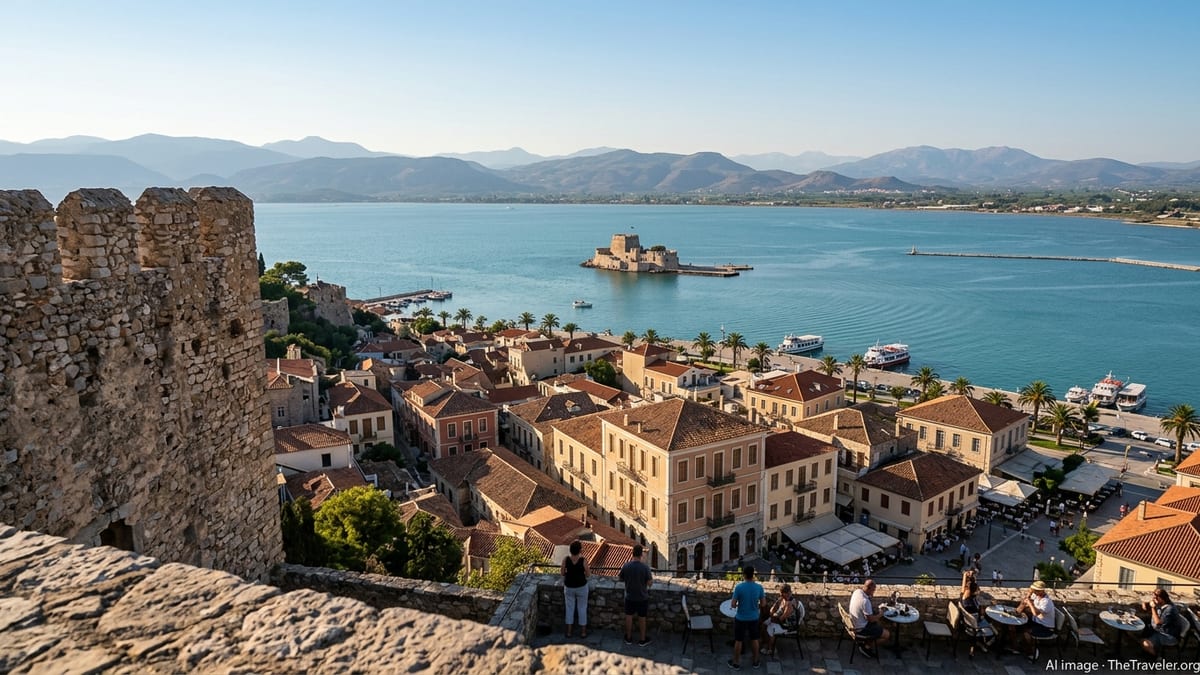
Nafplio: Fortresses, Seafront Strolls and Living History
Nafplio has emerged as a key stop for cultural travel in Greece, and the town is now a recurring feature in a range of university, alumni and specialist itineraries that emphasize Greek history across the ages. Its Venetian-era harbor, neoclassical mansions and Ottoman fountains provide a visual timeline of the powers that once controlled this corner of the Mediterranean. Many programs use Nafplio as an overnight base, citing its combination of infrastructure, charm and proximity to world-famous archaeological sites.
Travelers on Viking’s Greek Traditions extension can expect structured touring alongside opportunities to explore the old town at their own pace. Nafplio’s waterfront promenade, narrow lanes and café-lined squares make it easy to experience contemporary Greek leisure culture, from evening strolls to late-night gelato and coffee. Above the town, the hillside Palamidi Fortress and the older Larisa Castle provide sweeping views of the Argolid plain, the gulf and the surrounding mountains, underscoring why the location has been strategically important since antiquity.
For visitors interested in architecture and urban history, Nafplio offers a compact case study in how Greek towns evolved from fortified strongholds into modern resorts. Neoclassical façades, Orthodox churches and vestiges of Venetian and Ottoman rule coexist within a tight geographic area. Extension guests who want additional context may find that local museums, small galleries and informal walking routes help connect the dots between the archaeological narrative presented at nearby sites and the living traditions evident in the town today.
Nemea and the Deeper Roots of Greek Wine Culture
Beyond the coast, the Greek Traditions extension highlights Nemea, a fertile upland valley that combines myth, archaeology and viticulture. Published itineraries for cultural tours in the region often include the Sanctuary of Zeus at Nemea, the ancient stadium and the small on-site museum, where visitors can trace the history of the Nemean Games, one of the major Panhellenic athletic festivals of the classical world. These sites help frame how religious practice, sport and regional identity intertwined in ancient Greece.
Nemea today is equally known for its vineyards, especially red wines made from the agiorgitiko grape. Travel programs across operators increasingly pair archaeological visits with tastings at local wineries, presenting Greek wine as both an economic mainstay and a continuation of millennia-old cultivation traditions. Reports from recent regional itineraries show that visitors are often introduced to modern winemaking techniques, cellar tours and guided tastings that emphasize terroir, varietal characteristics and food pairings.
For Viking guests, the combination of ruin and vineyard is designed to move the focus beyond headline monuments and into the everyday landscape of Greek life. Standing in a modern winery within sight of ancient stonework underscores how the Peloponnese remains an agricultural heartland as well as a cultural treasure. Travelers who are particularly interested in gastronomy may find this portion of the extension especially compelling, as it situates Greek cuisine within its broader agricultural and historical context.
Practical Details: Timing, Fitness Level and Seasonality
Before booking, travelers are encouraged to consider the physical and seasonal demands of the Greek Traditions extension. Archaeological sites in the Peloponnese frequently involve uneven terrain, stone steps and limited shade, conditions that are common across major Greek ruins. Summer temperatures can climb sharply, particularly in inland areas like Nemea and on exposed hillsides at fortresses and ancient stadia. Comfortable walking shoes, sun protection and reusable water bottles are considered essential for most visitors.
Most extension itineraries are scheduled to dovetail with cruise departures and arrivals during the main Mediterranean season, typically from spring through autumn. Shoulder months often provide milder temperatures and fewer crowds at high-profile sites around Nafplio, Mycenae and Epidaurus compared with peak summer. Weather patterns in the region are generally dry and sunny in-season, but travelers should still be prepared for occasional windy conditions along the coast and cooler evenings, especially early and late in the operating year.
Logistics such as airport transfers, coach transportation and hotel stays are usually organized in advance by the cruise operator, reducing the need for guests to arrange local travel on their own. However, extension participants should review their daily schedules carefully, paying attention to included meals, free-time windows and any optional activities that may carry additional charges. Those with mobility concerns or specific accessibility needs may wish to clarify details about walking distances and site access before confirming their reservation.
How to Decide if This Extension Is Right for You
Viking positions its land extensions as educationally focused add-ons rather than beach breaks, and the Greek Traditions program follows that pattern. Travelers who are primarily seeking additional sea time or resort-style downtime may find that the planned touring, archaeological visits and tastings place more emphasis on culture than on passive relaxation. By contrast, guests with an interest in classical history, architecture, wine and everyday Greek life are likely to regard the extension as a valuable enhancement to their cruise.
Budget is another consideration. Extensions generally increase the overall cost of a voyage, but they can consolidate multiple experiences, such as guided site visits and regional tastings, into a single, pre-arranged package. Published coverage of similar Peloponnese programs indicates that independent travelers can visit many of the same destinations on their own, yet they must handle logistics, driving and ticketing personally. For some guests, the convenience and curated pacing of an organized extension may justify the additional expense.
Finally, travelers should consider their personal travel style. The Greek Traditions extension brings together structured learning, scenic drives and moments of unplanned discovery along coastal promenades and in village cafés. Those who enjoy asking questions of local guides, taking unhurried walks through historic quarters and sampling regional food and wine are likely to find that this land segment adds depth and resonance to the broader story of their time in Greece and the Eastern Mediterranean.